What does Matthew 5:9 mean?
“Blessed are the peacemakers: for they shall be called the children of God.” — Matthew 5:9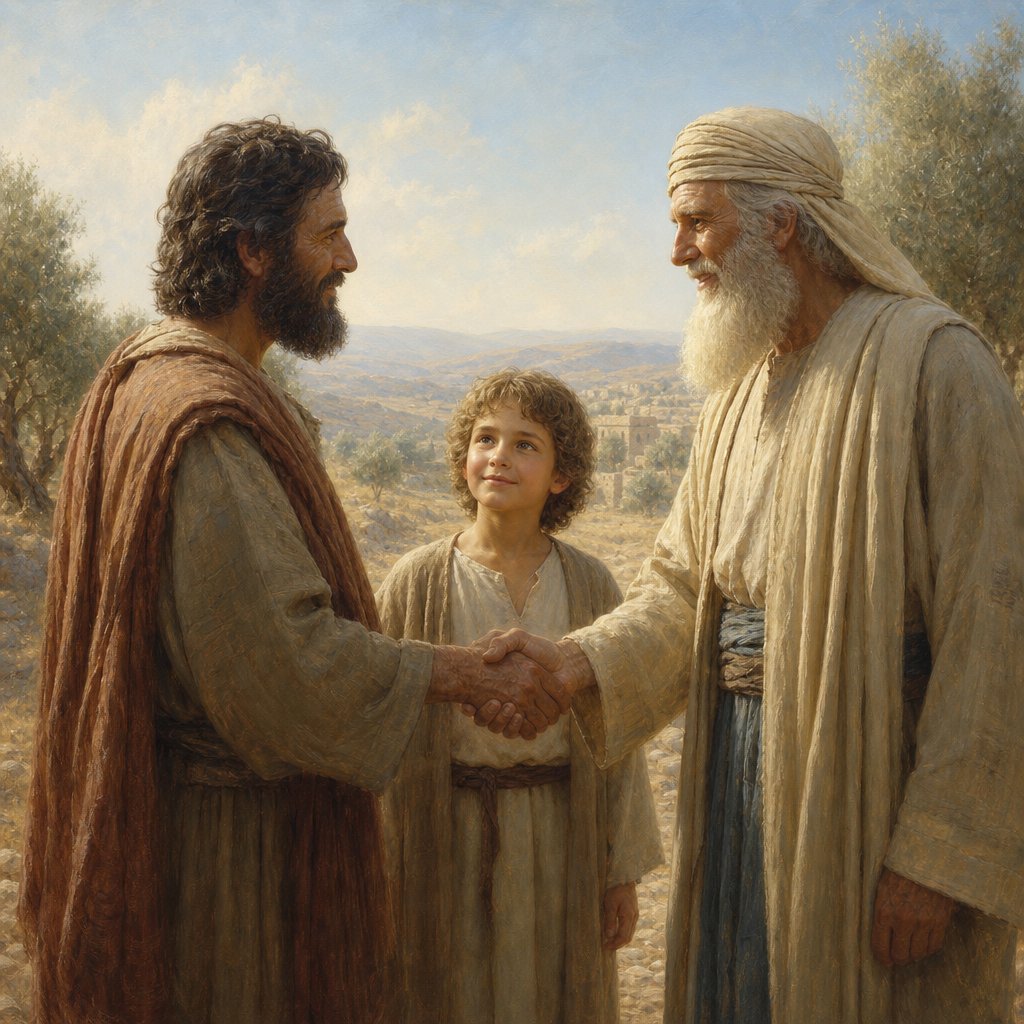
“Blessed are the peacemakers: for they shall be called the children of God.” Matthew 5:9 stands in the midst of the Beatitudes, the opening portion of Christ’s sermon in Matthew 5, where He declares the kind of life that is truly “blessed.” In the KJV, “blessed” carries more than the sense of temporary happiness; it speaks of a state of divine favour, of a life approved by God even when outward circumstances are hard. The verse therefore does not merely commend a pleasant temperament or a talent for keeping conversations calm. It sets peacemaking among the marks of those upon whom God’s favour rests, because peacemaking reflects God’s own character and God’s own work in the world.
The immediate context of Matthew 5 shows that these blessings belong to a kingdom that often looks upside down compared with ordinary human ambition. The poor in spirit, they that mourn, the meek, they which do hunger and thirst after righteousness, the merciful, the pure in heart: these are not described as blessed because the world applauds them, but because God’s kingdom does. When “peacemakers” are named, they appear among qualities that are inward and spiritual, not merely social. That placement matters. Peacemaking in Christ’s mouth is not a thin call to avoid conflict at any price, or to keep peace by ignoring truth. It is a work that flows out of a heart being shaped by the righteousness of the kingdom, joined to mercy and purity, and willing to accept reproach for Christ’s sake as the passage soon describes. In other words, the peacemaker is not simply one who dislikes tension; he is one who actively seeks peace in a way that accords with God.
The wording “peacemakers” is active. It is not “peacekeepers,” as though the goal were merely to maintain the appearance of calm, nor “peace-lovers,” as though peace were only a private preference. A peacemaker does something. He labours to reconcile what is divided. He seeks to quiet enmity where it can be quieted righteously. He aims, as far as he is able, to turn hearts away from wrath and toward concord. Yet because this verse is part of the sermon where Christ will also deepen the law—addressing anger, contempt, retaliation, and love toward enemies—the peacemaking He blesses includes the hard, spiritual work of dealing with the roots of strife. The beginning of outward quarrels is often inward pride, inward injury, inward envy, and inward bitterness. In the same chapter Christ goes on to address anger and insults, and to speak of reconciliation. That means peacemaking is tied to the discipline of the heart and tongue, not merely to diplomacy.
The promise attached to peacemaking is striking: “for they shall be called the children of God.” This is both identity and recognition. “Called” indicates that such people will be acknowledged as belonging to God’s family, because their resemblance to God will be evident. In Scripture, “children” often implies likeness in character as well as relationship. A child bears the family name and, in some measure, the family features. So when Christ says peacemakers “shall be called the children of God,” He is teaching that peacemaking is a family trait of God’s household. God is the God of peace, and those who truly belong to Him will, by grace, share in that disposition and in that work. The verse therefore gives a moral test as well as a comfort: where God is at work, His children will be recognizable by their pursuit of peace.
The symbolism is also rich. Peace in Scripture is not merely the absence of fighting; it is wholeness, the binding up of what has been torn, the settling of what has been unsettled. To make peace is to mend a breach. That breach may be between man and man, but behind human conflict Scripture repeatedly shows a deeper fracture between man and God. Against that background, the peacemaker’s role becomes more than social harmony; it becomes a shadow of God’s own reconciling purpose. The highest peace is not a truce built on denial, but peace built on truth and righteousness. That is why, in the same sermon, Christ speaks of hungering and thirsting after righteousness and of being persecuted for righteousness’ sake. The peace Christ blesses does not come by sacrificing righteousness; rather, it is the peace that can stand in the light.
There is also an implied cost. In the Beatitudes, those who live according to the kingdom are often met with opposition. Peacemaking can invite misunderstanding from both sides of a conflict, because it refuses to feed hatred and refuses to flatter sin. The peacemaker must sometimes absorb injury without returning it, speak gently when provoked, and attempt reconciliation where pride would rather win. Such conduct looks like weakness to the world, but in the kingdom it is strength under God’s rule. This aligns with the wider movement of Matthew 5, where Christ calls His disciples to a righteousness exceeding the common measures, a righteousness that addresses motives, speech, and retaliation, and that even stretches to loving enemies. Peacemaking, then, is not passive neutrality; it is active, costly love that seeks restoration.
Finally, the significance of Matthew 5:9 is that it ties Christian identity to God’s own reconciling nature. The verse does not say peacemakers become God’s children by their peacemaking, as though the act earns sonship; it says they “shall be called” the children of God, pointing to the visible mark of a deeper relationship. Those who belong to God will, in the pattern of their lives, value peace as God values it, pursue it as God pursues it, and seek it in a way that honours God’s truth. To be a peacemaker, in the sense Christ blesses, is therefore to bear the family likeness of the Father and to walk in a manner that makes His name credible before men. This is why the peacemaker is “blessed”: not because peace is always easy, but because such a life mirrors the kingdom of heaven and is owned by God as the life of His children.
Get our apps


Artwork for Matthew 5:9

Matthew 5:9 - "Blessed are the peacemakers: for they shall be called the children of God."

Matthew 5-9: Blessed are the peacemakers, for they will be called children of God.
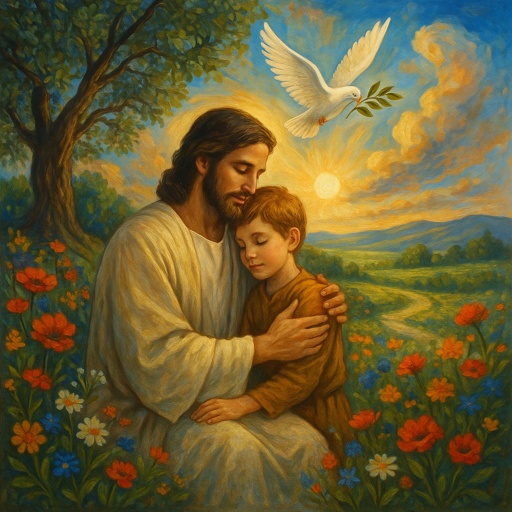
"Blessed are the peacemakers: for they shall be called the children of God." - Matthew 5:9
"Blessed are the peacemakers: for they shall be called the children of God." - Matthew 5:9

Matthew 9:5 - "For whether is easier, to say, Thy sins be forgiven thee; or to say, Arise, and walk?"
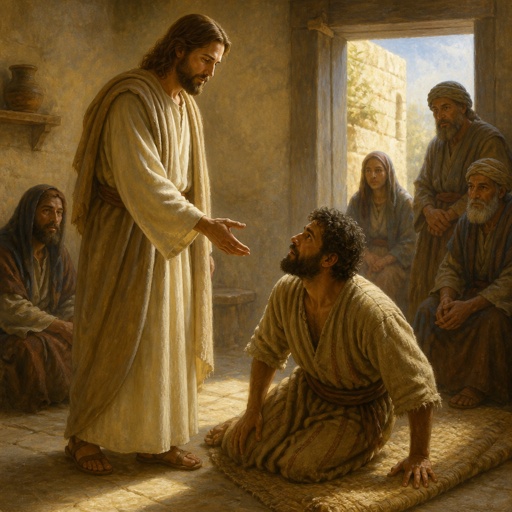
"For whether is easier, to say, Thy sins be forgiven thee; or to say, Arise, and walk?" - Matthew 9:5

Matthew 9:21

Matthew 5:5 - "Blessed are the meek: for they shall inherit the earth."

Matthew 5:44

Matthew 5:44

Matthew 5

Matthew 5

Matthew 9:21-22

Matthew 9:21-22

Matthew 9:21-22

Matthew 9:21-22

Matthew 9:21-22

Matthew 5:44

Matthew 5:44

Matthew 5

Matthew 2:9

Matthew 9:9 - "¶ And as Jesus passed forth from thence, he saw a man, named Matthew, sitting at the receipt of custom: and he saith unto him, Follow me. And he arose, and followed him."

Matthew 2:9

Matthew 5:44

Matthew 5:44

Matthew 5:14

Matthew 5:44

Matthew 6:5

Matthew 5:14

Matthew 5:38