What does Matthew 6:33-34 mean?
“But seek ye first the kingdom of God, and his righteousness; and all these things shall be added unto you. Take therefore no thought for the morrow: for the morrow shall take thought for the things of itself. Sufficient unto the day is the evil thereof.” — Matthew 6:33-34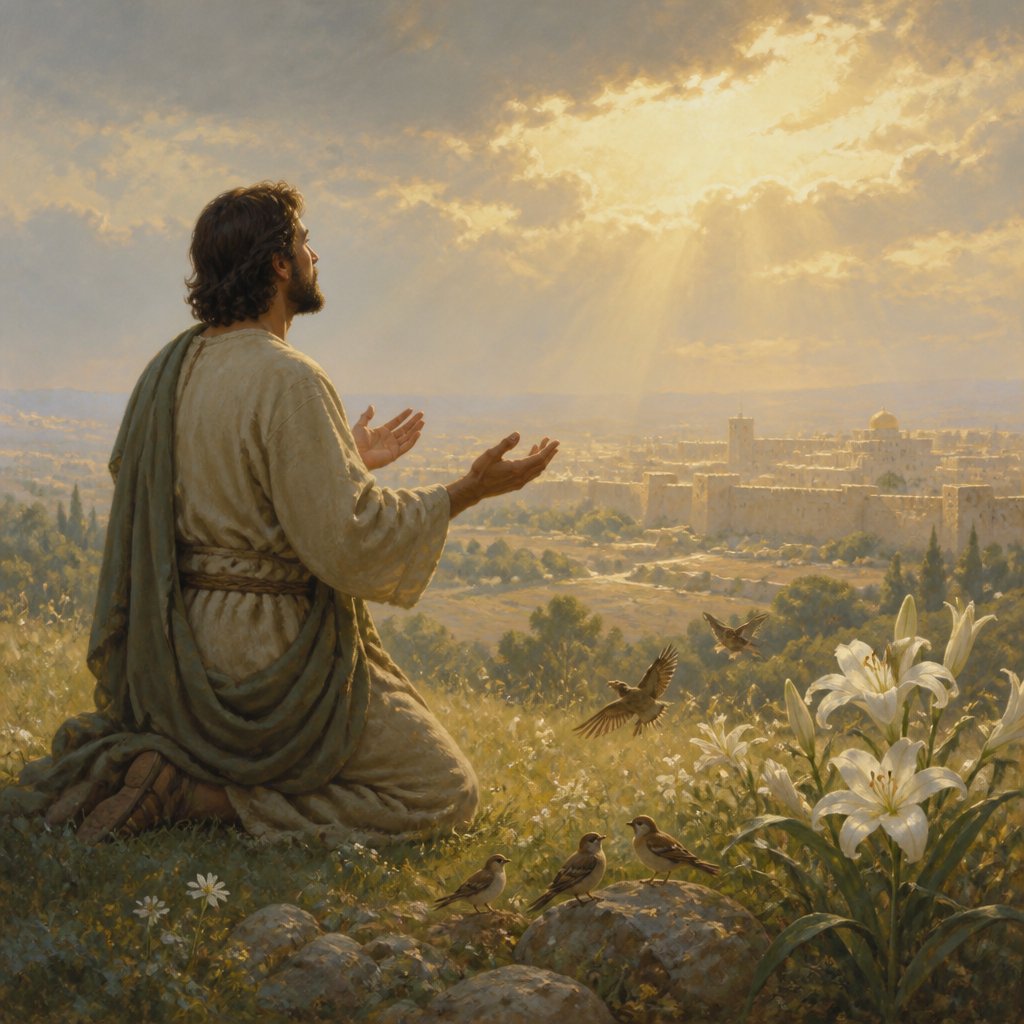
Matthew 6:33–34 in the KJV reads, “But seek ye first the kingdom of God, and his righteousness; and all these things shall be added unto you. Take therefore no thought for the morrow: for the morrow shall take thought for the things of itself. Sufficient unto the day is the evil thereof.”
These words stand near the close of a longer portion of Christ’s Sermon on the Mount in which He addresses the common, pressing anxieties of ordinary life. The immediate context is His teaching on treasures, the single or divided eye, and the impossibility of serving “God and mammon,” followed by His command, “Take no thought” for food, drink, and clothing. He points to the fowls of the air, which are fed, and the lilies of the field, which are clothed, and then He names the root of the anxious striving He is correcting: “your heavenly Father knoweth that ye have need of all these things.” Against the restless calculating of the Gentiles, who “seek” these necessities as if life were secured by worry and acquisition, Christ gives His people a different seeking, a different order, and a different ground of confidence.
The heart of the passage is the word “seek.” In this setting it does not mean a casual interest but a ruling pursuit, the deliberate orientation of life. Christ contrasts two kinds of seeking: one that is consumed with “What shall we eat?… What shall we drink?… Wherewithal shall we be clothed?” and another that is set upon “the kingdom of God, and his righteousness.” The symbolism of seeking is that of a traveler choosing a road, or of a person directing the gaze of the soul toward what is ultimate. In the earlier part of the chapter He has already spoken of laying up treasure in heaven and of the eye being “single”; here the same inner direction is expressed as a commanded priority. What rules the desire rules the life.
To “seek ye first the kingdom of God” places God’s reign, God’s rule, and God’s purposes ahead of everything else. In the Sermon on the Mount, “kingdom” is not a mere idea but the reality of God’s authority over the heart, the community of those who belong to Him, and the coming fulfillment of His will. Seeking that kingdom “first” is not simply doing religious acts before secular ones; it is giving the first place in value, loyalty, and confidence to God Himself. It means that the disciple’s central question becomes not, “How do I secure myself?” but, “How do I live under God’s rule?” In this sermon Jesus has already described what life under that rule looks like: poverty of spirit, meekness, mercy, purity of heart, hunger and thirst “after righteousness,” reconciliation, truthfulness, humble piety, forgiving from the heart. The kingdom is therefore not separated from daily living; it reorders daily living from the inside out.
The phrase “and his righteousness” deepens and guards the meaning of seeking the kingdom. In Matthew 6 the word “righteousness” has already appeared in Christ’s warning, “Take heed that ye do not your alms before men, to be seen of them.” He is not praising a righteousness that is performed for applause, but a righteousness that is truly “his,” belonging to God in its source, standard, and aim. To seek “his righteousness” is to desire the kind of life that corresponds to God’s character and God’s will, not merely an external conformity. It includes the inward reality Jesus has been pressing throughout the sermon: the heart not driven by lust, hatred, hypocrisy, or pride, but shaped by obedience, integrity, and trust. In other words, Christ does not comfort anxiety by offering a technique; He cures it by calling the disciple into a different allegiance and a truer goodness.
“And all these things shall be added unto you” refers back to the “these things” of the preceding verses: food, drink, and raiment, the practical necessities that anxiety clutches. The wording “added” is significant. Necessities are not denied; they are relocated. They become additions rather than foundations, gifts rather than gods, provisions rather than purposes. Christ is not teaching idleness, as though seeking the kingdom meant refusing work; rather, He is teaching freedom from the tyranny of anxious self-preservation. The promise rests on the Fatherhood of God already asserted: because “your heavenly Father knoweth,” the disciple can pursue the Father’s reign without the fear that obedience will result in abandonment. The verse therefore carries a quiet reversal: the world says, “Secure the material first, then you may attend to God”; Christ says, “Attend to God first, and you may trust Him with the material.”
Verse 34 applies the principle to time. “Take therefore no thought for the morrow” does not forbid prudence or planning, but it forbids the kind of care that is anxious, dividing the heart and attempting to live tomorrow in advance. The language assumes a human tendency to borrow trouble, to drag the unknown future into the present as a burden. Christ answers that the future is not improved by present anxiety: “for the morrow shall take thought for the things of itself.” Each day carries its own responsibilities, and when tomorrow arrives it will bring its own duties and, by implication, its own mercies and provisions from God. In the flow of the sermon this is the practical outworking of seeking first the kingdom: the disciple is called to present faithfulness rather than future-consuming worry.
“Sufficient unto the day is the evil thereof” gives the sober realism that keeps the passage from being sentimental. Jesus does not claim that days will be painless; He names “evil” as part of daily experience. Yet He also sets a boundary: the day’s evil is sufficient for the day. It is as though He teaches a holy restraint, refusing to multiply affliction by imagination. There is a kind of humility in accepting that one is not meant to manage all possible futures at once. The kingdom-seeker is not promised the absence of hardship, but is taught the right way of carrying hardship: one day at a time, under the Father’s care, in obedience to the King.
Taken together, Matthew 6:33–34 gathers major themes of the Sermon on the Mount into a single, pointed summons. It confronts idolatry by naming mammon as a rival master, and it confronts anxiety by restoring God as Father and King. It teaches that the root problem beneath worry is often misplaced seeking—treating necessities as ultimates—and it offers the remedy of reordered desire: the kingdom first, righteousness as the aim, and the rest as God’s addition. It also teaches a sanctified view of time: the disciple’s life is not to be fractured by tomorrow’s shadows but steadied by today’s obedience. The significance of the passage is that it presents trust not as vague optimism but as a moral and spiritual realignment. To seek first the kingdom and his righteousness is to live as though God is truly God, and to discover that such a life is not diminished but sustained, because the Father who reigns also knows, provides, and carries His people through the evil that is sufficient for each day.
Get our apps


Artwork for Matthew 6:33-34

Matthew 6:33-34 - "But seek first his kingdom and his righteousness, and all these things will be given to you as well. Therefore do not worry about tomorrow, for tomorrow will worry about itself. Each day has enough trouble of its own."
"But seek first his kingdom and his righteousness, and all these things will be given to you as well. Therefore do not worry about tomorrow, for tomorrow will worry about itself. Each day has enough trouble of its own." - Matthew 6:33-34
!["But seek ye first the kingdom of God, and his righteousness; and all these things shall be added unto you.
Take therefore no thought for the morrow: for the morrow shall take thought for the things of itself. Sufficient unto the day [is] the evil thereof." - Matthew 6:33-34](https://media.bible.art/ca75ad3c-0e26-4665-b32c-2a7c90ed682d-thumbnail.jpg)
"But seek ye first the kingdom of God, and his righteousness; and all these things shall be added unto you. Take therefore no thought for the morrow: for the morrow shall take thought for the things of itself. Sufficient unto the day [is] the evil thereof." - Matthew 6:33-34

Matthew 6:34

Matthew 6:33. Seeking God's righteousness

Matthew 6:34

Matthew 6:34

Matthew 6:34

Matthew 6:34

Matthew 6:25 – 34

Matthew 6:33 - "But seek ye first the kingdom of God, and his righteousness; and all these things shall be added unto you."

Matthew 6:34 - "Take therefore no thought for the morrow: for the morrow shall take thought for the things of itself. Sufficient unto the day is the evil thereof."
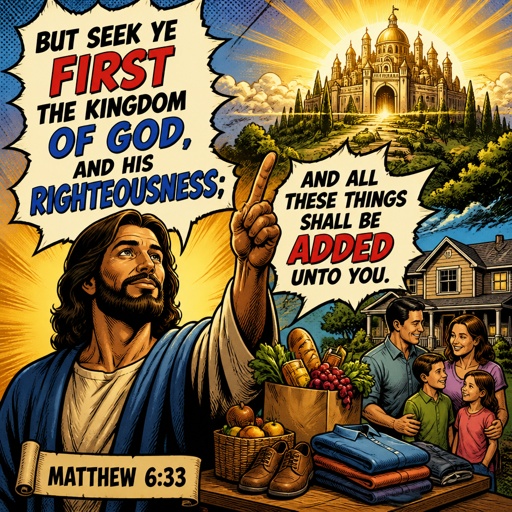
But seek ye first the kingdom of God, and his righteousness; and all these things shall be added unto you. Matthew 6:33

"But seek ye first the kingdom of God, and his righteousness; and all these things shall be added unto you." - Matthew 6:33

Numbers 33:34 - "And they removed from Jotbathah, and encamped at Ebronah."

But seek ye first the kingdom of God, and his righteousness; and all these things shall be added unto you. Matthew 6:33

"But seek ye first the kingdom of God, and his righteousness; and all these things shall be added unto you." - Matthew 6:33
"But seek ye first the kingdom of God, and his righteousness; and all these things shall be added unto you." - Matthew 6:33

Matthew 18:23-34

Matthew 18:23-34

Matthew 18:23-34

Matthew 20:29-34

Exodus 34:33 - "And till Moses had done speaking with them, he put a vail on his face."

Matthew 14:22-33
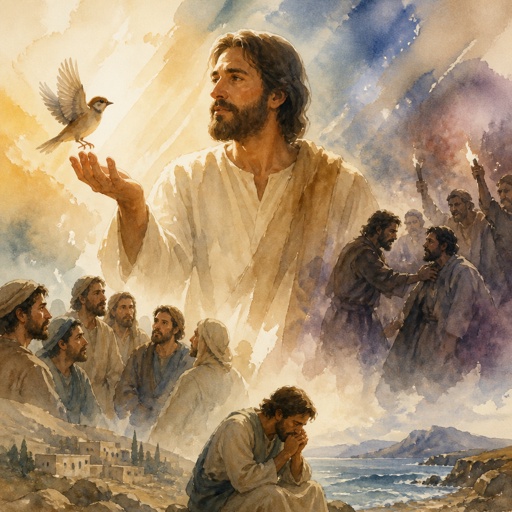
Matthew 10:26-33

"And they removed from Jotbathah, and encamped at Ebronah." - Numbers 33:34

Matthew 18:23-34

Mathew 6:33

Matthew 22:33 - "And when the multitude heard this, they were astonished at his doctrine."

"Take therefore no thought for the morrow: for the morrow shall take thought for the things of itself. Sufficient unto the day is the evil thereof." - Matthew 6:34