What does Matthew 8:5 mean?
“And when Jesus was entered into Capernaum, there came unto him a centurion, beseeching him,” — Matthew 8:5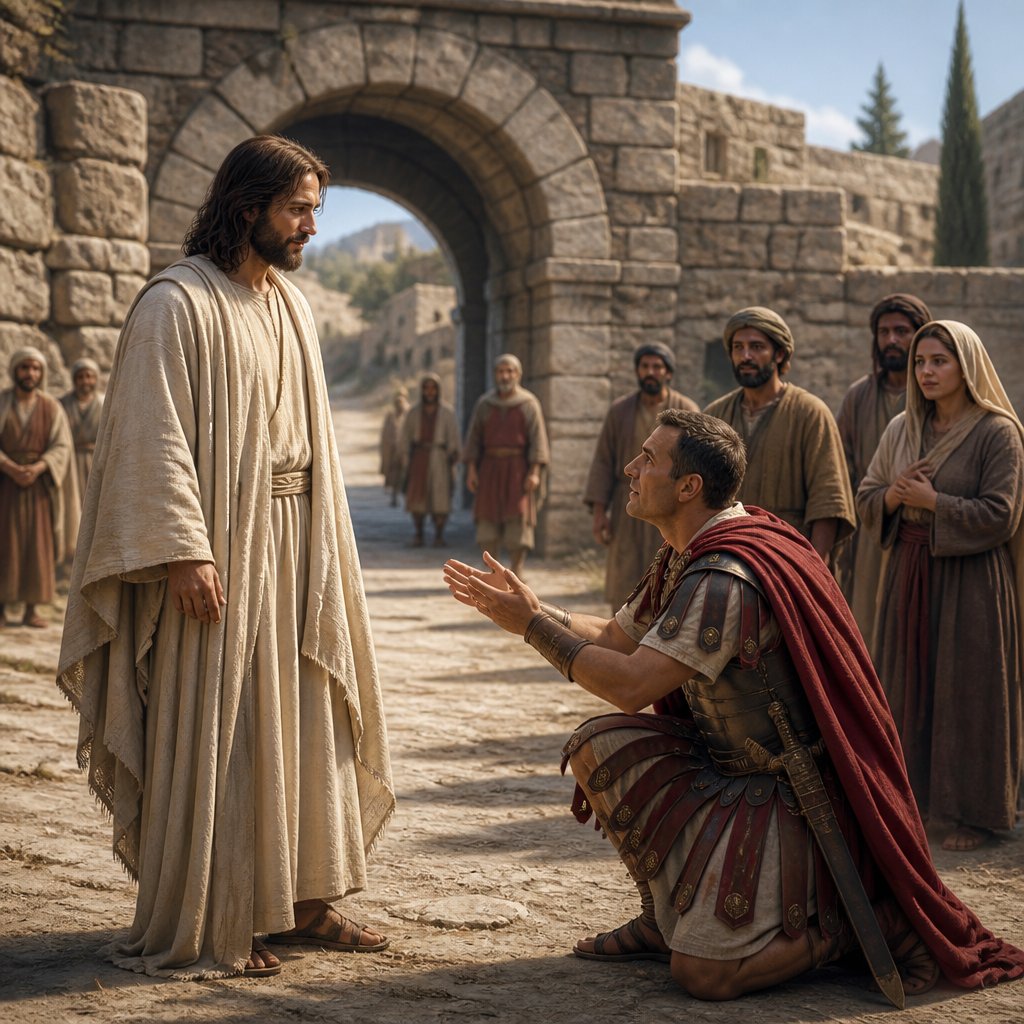
Matthew 8:5 in the King James Version reads: "And when Jesus was entered into Capernaum, there came unto him a centurion, beseeching him."
This verse presents a powerful image of a Roman centurion who approaches Jesus in Capernaum, expressing his deep need for help. The centurion, who was typically a commander in the Roman army, represents the Gentiles, or non-Jews, coming to Jesus to seek healing and salvation. This small but significant encounter serves as an important precursor to the theme of inclusivity and the universal nature of Jesus's message and mission.
The narrative of the centurion approaching Jesus takes place in Capernaum, a town located on the northern shore of the Sea of Galilee. This setting is significant as Capernaum served as a hub for Jesus's ministry, and it was here that many of his miracles and teachings took place. By choosing Capernaum as the location for this encounter, the Gospel writer highlights the importance of this interaction and its relevance for Jesus's ministry as a whole.
The centurion's act of beseeching Jesus is also noteworthy. The term "beseeching" suggests a sense of urgency and desperation in the centurion's plea. Despite his position of power and authority in the Roman army, the centurion humbly approaches Jesus, acknowledging his need for divine intervention. This act of humility and vulnerability reflects a key theme in the Gospel – the idea that true faith requires us to recognize our own limitations and to approach God with complete dependence.
Furthermore, this encounter between the centurion and Jesus speaks to the broader themes of faith and belief. The centurion's faith is particularly remarkable, as he demonstrates a profound understanding of Jesus's authority and ability to heal. In the subsequent verses (Matthew 8:6-13), the centurion expresses his belief that Jesus only needs to speak a word for his servant to be healed, showcasing a deep trust in Jesus's power and word. This demonstration of unwavering faith is praised by Jesus, who commends the centurion for having "great faith" (Matthew 8:10).
The broader context of this passage also holds significant implications. In the historical and cultural context of first-century Palestine, the interaction between a Jewish rabbi like Jesus and a Roman centurion would have been highly unconventional. The Roman presence in the region was often associated with oppression and subjugation, creating tensions between the Jewish people and their Roman rulers. The fact that a centurion, representing the Roman authority, approaches Jesus with humility and faith challenges the traditional boundaries and divisions of the time. This encounter serves as a foreshadowing of Jesus's universal message of salvation, which transcends cultural, social, and religious divides.
Symbolically, the centurion's plea for help can be seen as a metaphor for all those who seek salvation and healing. The centurion, despite his status and power, recognizes his own inadequacy and turns to Jesus in search of divine intervention. This act serves as a powerful symbol for anyone who recognizes their need for spiritual healing, regardless of social status or background.
In conclusion, Matthew 8:5 and the subsequent verses present a rich tapestry of themes, including faith, humility, inclusivity, and the universal nature of Jesus's message. The encounter between the Roman centurion and Jesus challenges societal norms and highlights the transformative power of faith. This passage serves as a reminder that all are welcome to approach Jesus with sincerity and faith, and that his healing and salvation are available to all who seek him.
Get our apps


Artwork for Matthew 8:5

Matthew 8:5 - "¶ And when Jesus was entered into Capernaum, there came unto him a centurion, beseeching him,"
"¶ And when Jesus was entered into Capernaum, there came unto him a centurion, beseeching him," - Matthew 8:5

Matthew 5:8-12

Matthew 5:8 - "Blessed are the pure in heart: for they shall see God."
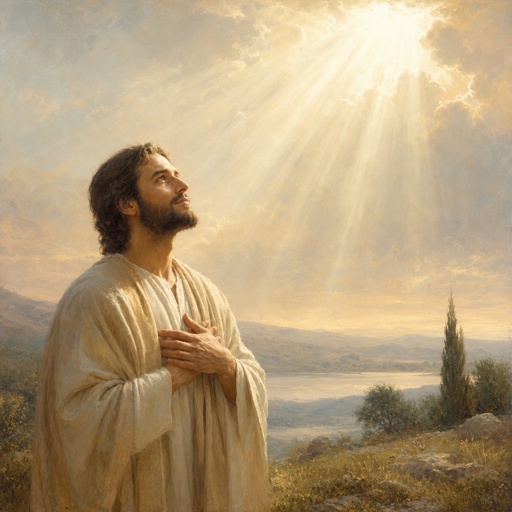
"Blessed are the pure in heart: for they shall see God." - Matthew 5:8

Matthew 8:13

Matthew 8:13

Matthew 8:13

Matthew 8:32

Matthew 8:32

Matthew 5:5 - "Blessed are the meek: for they shall inherit the earth."

Matthew 8:32

Matthew 5:44

Matthew 5:44

Matthew 5

Matthew 5

Matthew 5:44

Matthew 5:44

Matthew 5

Matthew 24:8

Matthew 13:8

matthew 8:28

Matthew 5:44

Matthew 5:44

Matthew 5:14

Matthew 5:44

Matthew 6:5

Matthew 5:14

Matthew 5:38

Matthew 5:30