What does Matthew 9:20-22 mean?
"And, behold, a woman, which was diseased with an issue of blood twelve years, came behind [him], and touched the hem of his garment: For she said within herself, If I may but touch his garment, I shall be whole. But Jesus turned him about, and when he saw her, he said, Daughter, be of good comfort; thy faith hath made thee whole. And the woman was made whole from that hour." - Matthew 9:20-22
!["And, behold, a woman, which was diseased with an issue of blood twelve years, came behind [him], and touched the hem of his garment:
For she said within herself, If I may but touch his garment, I shall be whole.
But Jesus turned him about, and when he saw her, he said, Daughter, be of good comfort; thy faith hath made thee whole. And the woman was made whole from that hour." - Matthew 9:20-22](https://media.bible.art/3b68683f-6e44-46b9-b0e8-566b1a82b256-compressed.jpg)
Matthew 9:20–22 (KJV) is a brief scene, yet it carries a concentrated weight of meaning. It occurs while Jesus is on the way to answer an urgent plea from a ruler whose daughter has just died (or is at the point of death). In that pressing moment, another need interrupts the journey: “And, behold, a woman, which was diseased with an issue of blood twelve years, came behind him, and touched the hem of his garment: For she said within herself, If I may but touch his garment, I shall be whole. But Jesus turned him about, and when he saw her, he said, Daughter, be of good comfort; thy faith hath made thee whole. And the woman was made whole from that hour.”
The context matters because it frames Jesus as moving toward one desperate household when another desperate life reaches out to him. The ruler’s crisis is public and prominent; the woman’s crisis is private, long, and wearing. Her “issue of blood twelve years” suggests not only physical suffering but also continual depletion, a chronic condition that has shaped her entire life for as long as the ruler’s daughter has lived. The narrative sets these two “twelve years” in quiet parallel: one life has been fading for twelve years while another has been growing for twelve years. Jesus is Lord over both kinds of human extremity, over long affliction and sudden catastrophe, over hidden pain and visible grief. The interruption does not delay mercy; it reveals the breadth of it.
The woman “came behind him,” which is both a literal movement and a spiritual posture. She approaches from behind, not demanding an audience, not calling attention to herself, but seeking help with trembling hope. The text adds, “For she said within herself,” which draws the reader into the inward chamber of faith. Her words are simple and intense: “If I may but touch his garment, I shall be whole.” Faith here is not presented as mere optimism; it is a settled persuasion that the life and power of Christ are sufficient. She does not bargain. She does not name any other source of remedy. Her faith is focused entirely upon him.
The specific act of touching “the hem of his garment” is rich with significance. It is a minimal contact, almost the least she could do, yet she believes it will be enough. This shows the nature of true faith as reaching for Christ even when one has nothing else to bring. The hem is the boundary of what is outward and visible; by touching it she is confessing, in her own way, that virtue belongs to him, and that even the least connection to him is more effective than the fullest efforts apart from him. Her action also reflects humility: she does not seize, she touches; she does not stop him with a shout, she reaches for the edge. And yet the story does not allow her to remain hidden, because Jesus will not let her healing be merely private or merely physical.
When the KJV says, “But Jesus turned him about, and when he saw her,” it signals that the true turning point of the passage is not only her touch, but his attention. The woman initiates contact, but Jesus completes the encounter. He looks at her, sees her, and speaks to her. The gaze of Christ is not a threat to the trembling seeker; it is the beginning of reassurance and restoration. The one who tried to come unnoticed is now brought into personal relationship with the one she sought.
Jesus addresses her with a word of tender adoption: “Daughter.” That single word gathers her into belonging. It is more than courtesy; it is identity. The woman who has been defined by an “issue” is no longer reduced to her affliction; she is named by relation. In the middle of a crowd and on the way to another crisis, Jesus gives her the dignity of being personally addressed and publicly received. The word “Daughter” also suggests safety. Her approach from behind might imply fear, shame, or the feeling that she has no right to come close; Jesus answers with family language, indicating that she is not an intruder to him.
Then comes the comfort: “be of good comfort.” The command is not to deny her pain, but to let fear loosen its grip because she stands before Christ with faith. Her inward sentence, “I shall be whole,” is met by Christ’s outward sentence: “thy faith hath made thee whole.” The KJV phrase does not mean that faith is a power independent of Jesus; the whole story makes clear that the healing is found in him. Rather, Jesus honors faith as the means by which she lays hold of what is in him. He draws attention away from superstition or mere contact with cloth and onto the spiritual reality: her confidence in him was not misplaced. He also relieves her conscience. If she feared that she had taken something she should not have taken, his words declare that what occurred was not theft but grace received through faith.
The passage also shows that Jesus is not only a healer of bodies but a restorer of persons. He could have let the healing remain unspoken, but instead he turns, sees, speaks, names, comforts, and interprets what has happened. In doing so, he gives her more than physical relief; he gives her peace, courage, and a new standing. The conclusion, “And the woman was made whole from that hour,” places the healing in time as a decisive act. “From that hour” implies a permanent turning point, not a brief reprieve. It is a marker of the kingdom of God breaking into the ordinary flow of life: one moment she is bound to twelve years of suffering, and from that hour she enters another kind of life.
Symbolically, the scene portrays faith reaching out to Christ amid pressing crowds, personal shame, and long delay. It teaches that Christ is approachable even when one feels unworthy, that the smallest true reaching toward him is met by his full attention, and that he does not merely grant benefits; he gives himself in personal recognition and comfort. The significance of Matthew 9:20–22 (KJV) is that it reveals Jesus as the compassionate Lord whose power is not diminished by demand and whose mercy is not reserved for the prominent. He receives the hidden sufferer, honors her faith, calls her “Daughter,” and makes her whole.
Have questions about Matthew 9:20-22?
Dive deeper into this scripture with Bible Chat — an AI-powered tool for exploring God's Word through conversation. Ask questions, get context, and grow in your understanding of the Bible.
Get Our Apps


Matthew 9:20-22 Artwork
!["And, behold, a woman, which was diseased with an issue of blood twelve years, came behind [him], and touched the hem of his garment:
For she said within herself, If I may but touch his garment, I shall be whole.
But Jesus turned him about, and when he saw her, he said, Daughter, be of good comfort; thy faith hath made thee whole. And the woman was made whole from that hour." - Matthew 9:20-22](https://media.bible.art/ed179904-4006-4e91-a8bb-b5f308f00f75-thumbnail.jpg)
"And, behold, a woman, which was diseased with an issue of blood twelve years, came behind [him], and touched the hem of his garment: For she said within herself, If I may but touch his garment, I shall be whole. But Jesus turned him about, and when he saw her, he said, Daughter, be of good comfort; thy faith hath made thee whole. And the woman was made whole from that hour." - Matthew 9:20-22
!["And, behold, a woman, which was diseased with an issue of blood twelve years, came behind [him], and touched the hem of his garment:
For she said within herself, If I may but touch his garment, I shall be whole.
But Jesus turned him about, and when he saw her, he said, Daughter, be of good comfort; thy faith hath made thee whole. And the woman was made whole from that hour." - Matthew 9:20-22](https://media.bible.art/d3848e19-b576-46f9-9b41-fc47d84fff5e-thumbnail.jpg)
"And, behold, a woman, which was diseased with an issue of blood twelve years, came behind [him], and touched the hem of his garment: For she said within herself, If I may but touch his garment, I shall be whole. But Jesus turned him about, and when he saw her, he said, Daughter, be of good comfort; thy faith hath made thee whole. And the woman was made whole from that hour." - Matthew 9:20-22

Matthew 9:21-22

Matthew 9:21-22

Matthew 9:21-22

Matthew 9:21-22

Matthew 9:21-22

Matthew 22:20 - "And he saith unto them, Whose is this image and superscription?"

Matthew 22:9 - "Go ye therefore into the highways, and as many as ye shall find, bid to the marriage."

Matthew 20:9 - "And when they came that were hired about the eleventh hour, they received every man a penny."

"And he saith unto them, Whose is this image and superscription?" - Matthew 22:20

Matthew 9:20 - "¶ And, behold, a woman, which was diseased with an issue of blood twelve years, came behind him, and touched the hem of his garment:" The image should not depict explicit or offensive content but be symbolic.
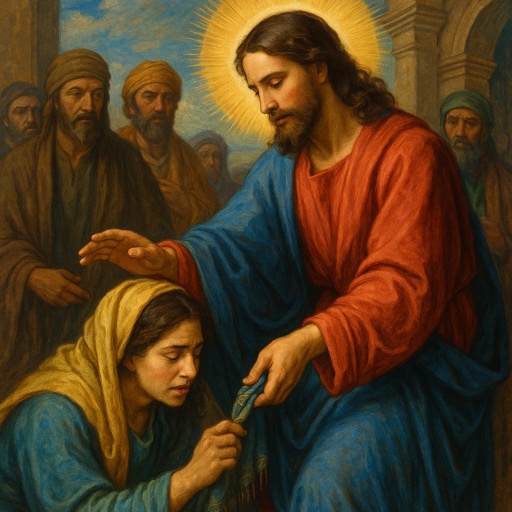
"But Jesus turned him about, and when he saw her, he said, Daughter, be of good comfort; thy faith hath made thee whole. And the woman was made whole from that hour." - Matthew 9:22

Matthew 20:22 - "But Jesus answered and said, Ye know not what ye ask. Are ye able to drink of the cup that I shall drink of, and to be baptized with the baptism that I am baptized with? They say unto him, We are able."
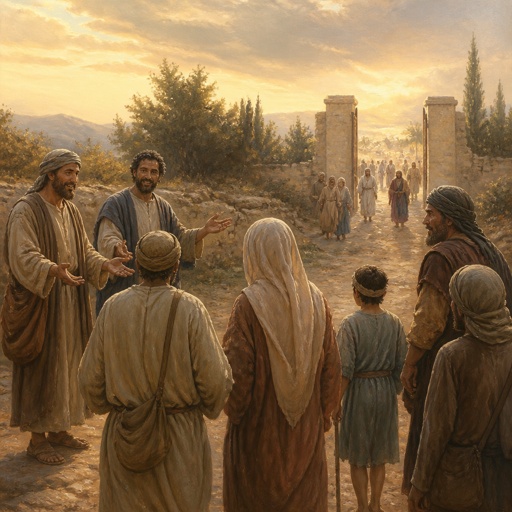
"Go ye therefore into the highways, and as many as ye shall find, bid to the marriage." - Matthew 22:9
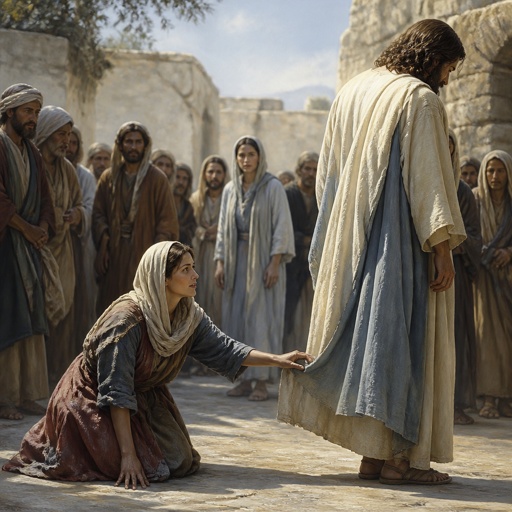
"¶ And, behold, a woman, which was diseased with an issue of blood twelve years, came behind him, and touched the hem of his garment:" - Matthew 9:20

Matthew 9:22 - "But Jesus turned him about, and when he saw her, he said, Daughter, be of good comfort; thy faith hath made thee whole. And the woman was made whole from that hour."
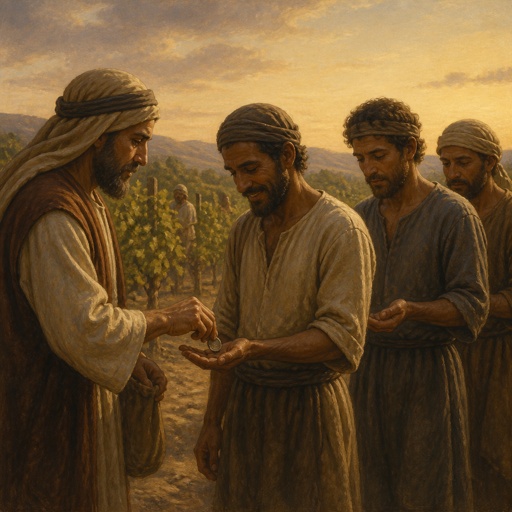
"And when they came that were hired about the eleventh hour, they received every man a penny." - Matthew 20:9

Matthew 22:22 - "When they had heard these words, they marvelled, and left him, and went their way."

Matthew 6:22

Matthew 6:22

Matthew 18:20

Matthew 17:20

Matthew 6:22

matthew 20:3

Matthew 18:20

Matthew 18:20

Matthew 17:20

Genesis 22-20

Matthew 22:38 - "This is the first and great commandment."