What does Matthew 9:23 mean?
"And when Jesus came into the ruler's house, and saw the minstrels and the people making a noise," - Matthew 9:23
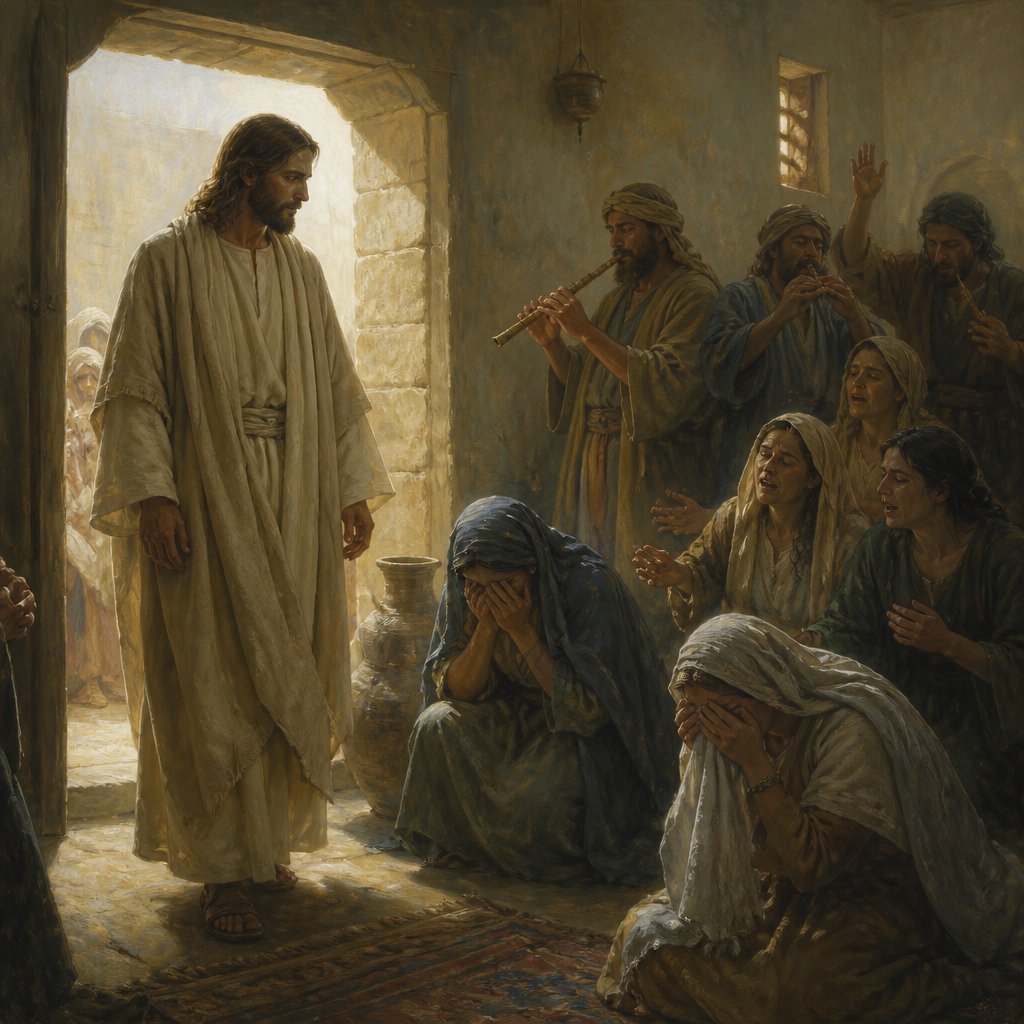
Matthew 9:23 in the King James Version (KJV) of the Bible reads, "And when Jesus came into the ruler's house, and saw the minstrels and the people making a noise."
This verse is part of the larger story of Jesus' healing of the ruler's daughter, found in Matthew 9:18-26. In this passage, Jairus, a synagogue leader, comes to Jesus and begs for him to come and heal his daughter, who has just died. Jesus agrees to go to the ruler's house and heal the girl.
The verse begins with "And when Jesus came into the ruler's house," which sets the stage for the miraculous events that are about to take place. As Jesus enters the house, he is met with "minstrels and the people making a noise." This indicates that there is quite a commotion, as would be expected at the death of a young girl. The minstrels and people making a noise are likely professional mourners, who were commonly hired to express grief and lamentation at funerals in ancient Jewish culture. They are a symbol of the sorrow and despair that surrounds death.
The placement of this verse in the larger story is significant. Just before this, Jesus has healed a woman who had been suffering from a bleeding disorder for twelve years. This act of healing demonstrates his power and authority over sickness and disease. Now, as he enters the ruler's house, he is about to demonstrate his authority over death itself.
The theme of this verse revolves around the contrast between human mourning and divine power. The mourning and noise in the ruler's house reflect the despair and hopelessness that often accompany death. The presence of professional mourners and the loud commotion emphasize the finality of the girl's death and the sorrow of her family and friends. However, in the midst of this mourning, Jesus is about to perform a miracle that will bring hope and joy.
The context of this verse also points to the faith of Jairus, the ruler. Despite the apparent hopelessness of his daughter's situation, he seeks out Jesus and begs for his help. He is willing to go against societal norms and seek out a controversial figure like Jesus because he believes in the power of Jesus to heal his daughter. The presence of the mourners and the noisy crowd in the ruler's house serves to highlight the contrast between human despair and divine hope.
The symbolism in this verse is significant as well. The mourning and noise can be seen as a representation of the despair and hopelessness that often accompany death. The professional mourners, hired to express grief and lamentation, serve as a tangible reminder of the finality of death. In contrast, Jesus' presence in the house represents hope and life. His ability to bring the girl back to life demonstrates his power over death and his ability to bring joy and restoration in the midst of despair.
Overall, Matthew 9:23 in the KJV is a powerful and evocative verse that sets the stage for the miraculous event that is about to take place. It highlights the contrast between human mourning and divine power, and serves as a testament to the faith of the ruler and the hope that Jesus brings in the face of death. This verse is a powerful reminder of the hope and joy that comes from placing our faith in Jesus, even in the darkest of circumstances.
Have questions about Matthew 9:23?
Dive deeper into this scripture with Bible Chat — an AI-powered tool for exploring God's Word through conversation. Ask questions, get context, and grow in your understanding of the Bible.
Get Our Apps


Matthew 9:23 Artwork

Matthew 9:23 - "And when Jesus came into the ruler's house, and saw the minstrels and the people making a noise,"
"And when Jesus came into the ruler's house, and saw the minstrels and the people making a noise," - Matthew 9:23

Matthew 23:9 - "And call no man your father upon the earth: for one is your Father, which is in heaven."
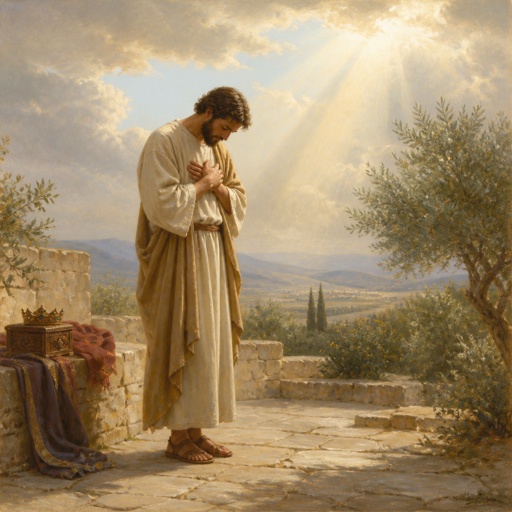
"And call no man your father upon the earth: for one is your Father, which is in heaven." - Matthew 23:9

Matthew 6:23

Matthew 25:23

Matthew 2:23

Matthew 15:23

Matthew 2:23

Matthew 23:12

Matthew 23:12

Matthew 2:23

Matthew 23:28

Matthew 25:23

MATTHEW 28: 23

Matthew 15:23

matthew 7:23

Matthew 2:23

Matthew 23:28

Matthew 18:23-34

Matthew 18:23-34

Matthew 18:23-34

Matthew 18:23-34

Matthew 9:21

Matthew 23:7 - "And greetings in the markets, and to be called of men, Rabbi, Rabbi."

Matthew 23:32 - "Fill ye up then the measure of your fathers."

Matthew 23:2 - "Saying, The scribes and the Pharisees sit in Moses' seat:"

Matthew 9:21-22

Matthew 23:1 - "Then spake Jesus to the multitude, and to his disciples,"

Matthew 9:21-22