What does Matthew 9:20 mean?
"¶ And, behold, a woman, which was diseased with an issue of blood twelve years, came behind him, and touched the hem of his garment:" - Matthew 9:20
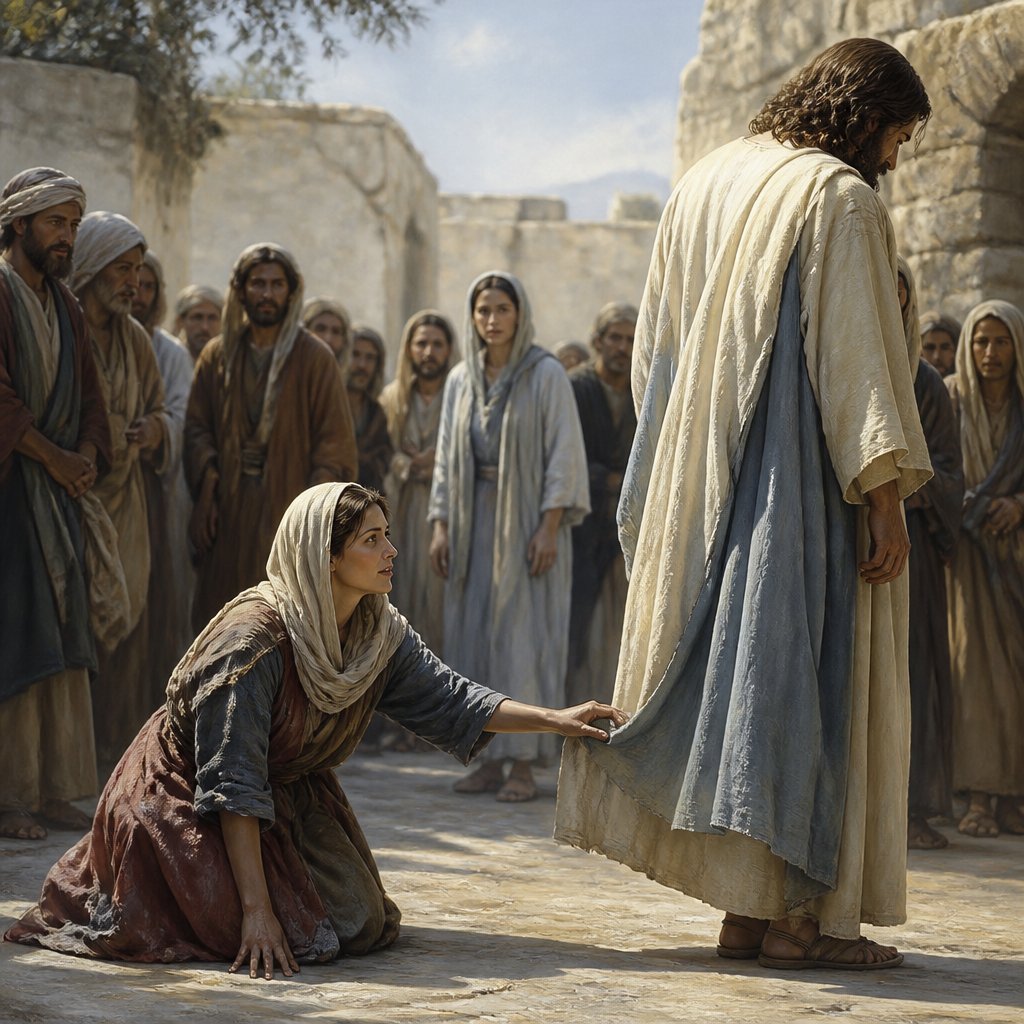
Matthew 9:20 from the King James Version of the Bible reads, "And, behold, a woman, which was diseased with an issue of blood twelve years, came behind him, and touched the hem of his garment."
This verse is part of a larger story in the New Testament where Jesus performs a miracle for a woman who had been suffering from a prolonged illness. This woman had been suffering from a hemorrhage for twelve years, a condition that caused her to bleed continuously. In Jewish culture, this would have made her ceremonially unclean and she would have been ostracized from society. Her condition would have made her ineligible to participate in community events, including religious observances and temple worship.
The fact that she had been suffering for twelve years is significant, as the number twelve holds great importance in the Bible. The number is often associated with completeness and fullness, as seen in the twelve tribes of Israel and the twelve apostles. The woman's affliction for twelve years not only emphasizes the duration of her suffering, but also aligns her with the broader narrative of divine restoration and completeness that is found throughout the Bible.
Despite her condition, the woman demonstrates great faith and determination. In the preceding verses, we learn that she had heard of Jesus and believed that if she could just touch the hem of his garment, she would be healed. This act of reaching out to Jesus in faith and desperation is a powerful expression of her belief in his ability to heal her.
The detail of the woman touching the hem of Jesus' garment is symbolic and holds deeper significance. In Jewish tradition, the hem of a garment represented the individual's identity and authority. In this context, the woman's action can be seen as an acknowledgment of Jesus' authority and power to heal. This belief in the healing power of Jesus is a central theme in the gospels, as it speaks to the larger message of faith and salvation.
The symbolism of the garment also extends to the concept of the Messiah. In the Old Testament, the coming of the Messiah was associated with healing and restoration. Isaiah 61:1 speaks of the Messiah bringing "good news to the afflicted" and "binding up the broken-hearted." By reaching out to touch the hem of Jesus' garment, the woman is not only seeking physical healing, but also expressing her recognition of Jesus as the promised Messiah.
Furthermore, the act of touching the hem of Jesus' garment can also be interpreted as an act of humility. By approaching Jesus from behind and not directly addressing him, the woman shows great reverence and respect. This humility is a recurring theme in the New Testament, as it is often through humble acts of faith that people receive healing and grace from Jesus.
The larger context of this verse is also important to consider. In the surrounding verses, we see that Jesus not only heals the woman, but also commends her for her faith. This demonstrates Jesus' compassion and willingness to meet individuals in their time of need. The story serves as a powerful example of Jesus' accessibility and willingness to heal and restore all who come to him in faith.
In conclusion, the story of the woman with the issue of blood and her touching the hem of Jesus' garment is a rich and multi-layered passage in the New Testament. It speaks to themes of faith, healing, humility, and the identity of Jesus as the promised Messiah. The symbolism in this verse, along with its broader context in the gospels, offers profound insights into the nature of Jesus' ministry and the transformative power of faith.
Have questions about Matthew 9:20?
Dive deeper into this scripture with Bible Chat — an AI-powered tool for exploring God's Word through conversation. Ask questions, get context, and grow in your understanding of the Bible.
Get Our Apps


Matthew 9:20 Artwork

Matthew 9:20 - "¶ And, behold, a woman, which was diseased with an issue of blood twelve years, came behind him, and touched the hem of his garment:" The image should not depict explicit or offensive content but be symbolic.
"¶ And, behold, a woman, which was diseased with an issue of blood twelve years, came behind him, and touched the hem of his garment:" - Matthew 9:20
!["And, behold, a woman, which was diseased with an issue of blood twelve years, came behind [him], and touched the hem of his garment:
For she said within herself, If I may but touch his garment, I shall be whole.
But Jesus turned him about, and when he saw her, he said, Daughter, be of good comfort; thy faith hath made thee whole. And the woman was made whole from that hour." - Matthew 9:20-22](https://media.bible.art/ed179904-4006-4e91-a8bb-b5f308f00f75-thumbnail.jpg)
"And, behold, a woman, which was diseased with an issue of blood twelve years, came behind [him], and touched the hem of his garment: For she said within herself, If I may but touch his garment, I shall be whole. But Jesus turned him about, and when he saw her, he said, Daughter, be of good comfort; thy faith hath made thee whole. And the woman was made whole from that hour." - Matthew 9:20-22
!["And, behold, a woman, which was diseased with an issue of blood twelve years, came behind [him], and touched the hem of his garment:
For she said within herself, If I may but touch his garment, I shall be whole.
But Jesus turned him about, and when he saw her, he said, Daughter, be of good comfort; thy faith hath made thee whole. And the woman was made whole from that hour." - Matthew 9:20-22](https://media.bible.art/d3848e19-b576-46f9-9b41-fc47d84fff5e-thumbnail.jpg)
"And, behold, a woman, which was diseased with an issue of blood twelve years, came behind [him], and touched the hem of his garment: For she said within herself, If I may but touch his garment, I shall be whole. But Jesus turned him about, and when he saw her, he said, Daughter, be of good comfort; thy faith hath made thee whole. And the woman was made whole from that hour." - Matthew 9:20-22

Matthew 20:9 - "And when they came that were hired about the eleventh hour, they received every man a penny."
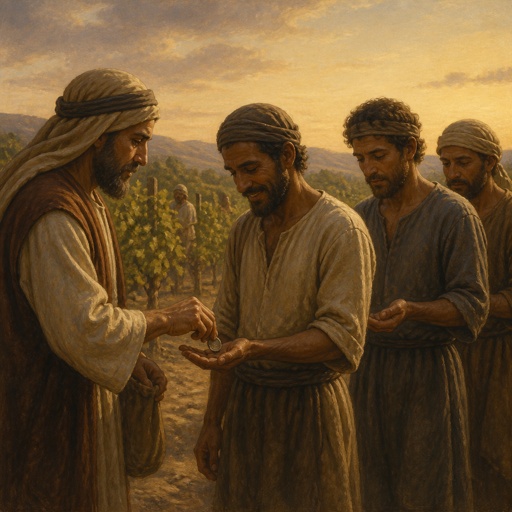
"And when they came that were hired about the eleventh hour, they received every man a penny." - Matthew 20:9

Matthew 18:20

Matthew 17:20

matthew 20:3

Matthew 18:20

Matthew 18:20

Matthew 17:20

Matthew 9:21

matthew 5 13-20

Matthew 28:19-20

Matthew 20:29-34

Matthew 28:19-20

Matthew 28: 19-20

Matthew 28:19-20

Matthew 15 : 1-20

Matthew 9:21-22

Matthew 20:20 - "¶ Then came to him the mother of Zebedee's children with her sons, worshipping him, and desiring a certain thing of him."

Matthew 9:21-22

Matthew 9:21-22

Matthew 9:21-22

Matthew 9:21-22

Matthew 4:20 - "And they straightway left their nets, and followed him."

Matthew 2:9

Matthew 9:9 - "¶ And as Jesus passed forth from thence, he saw a man, named Matthew, sitting at the receipt of custom: and he saith unto him, Follow me. And he arose, and followed him."

Matthew 2:9