What does Matthew 9:24 mean?
“He said unto them, Give place: for the maid is not dead, but sleepeth. And they laughed him to scorn.” — Matthew 9:24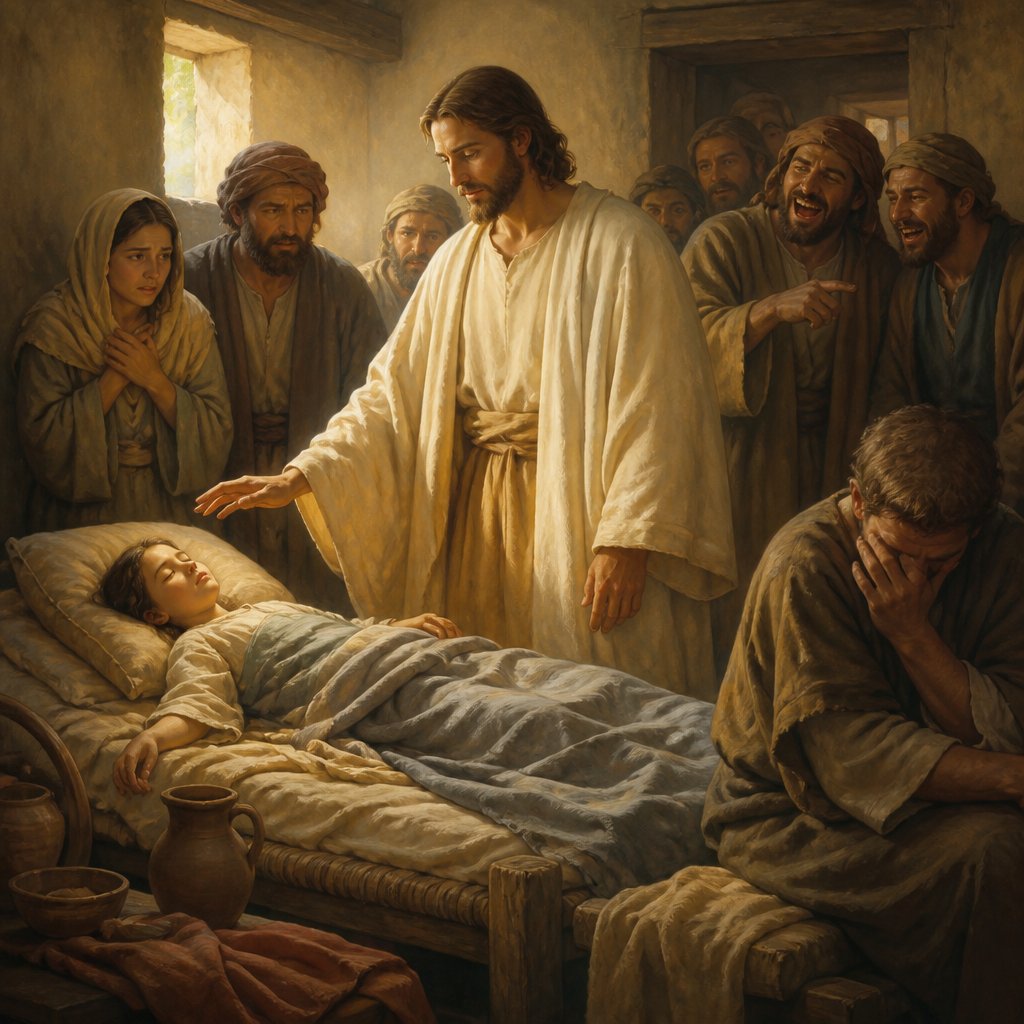
Matthew 9:24 (KJV) states, "He said unto them, Give place: for the maid is not dead, but sleepeth. And they laughed him to scorn." This verse is a part of the larger story of Jesus' ministry and miracles, specifically the resurrection of Jairus' daughter. The verse carries several important themes, contexts, and symbols that are crucial to understanding its significance in the larger biblical narrative.
The context of this verse is set in the larger narrative of Jesus' ministry, where he performed numerous miracles and healed many people. In this particular story, Jairus, a synagogue leader, came to Jesus and begged him to come and heal his daughter who was dying. As they were on their way, messengers came and informed Jairus that his daughter had died. However, Jesus encouraged Jairus, saying, "Fear not: believe only, and she shall be made whole" (Luke 8:50). When they arrived at Jairus' home, mourners were already weeping and wailing for the deceased girl. It is in this context that Jesus uttered the words in Matthew 9:24.
The verse conveys the theme of faith and belief in the power of Jesus. When Jesus entered the house, he saw the mourners and told them that the girl was not dead, but only sleeping. The crowd laughed at him, not understanding the true power of Jesus. However, Jesus proved them wrong by taking the girl by the hand and raising her from the dead. This story emphasizes the importance of having unwavering faith in Jesus, even when circumstances seem bleak and hopeless. It encourages believers to trust in the power of God to bring about miraculous interventions, even in the face of death.
The symbolism in this verse lies in the contrast between the perception of death and the reality of spiritual awakening. Jesus likened the girl's state to sleep, indicating that death is not the end for those who believe in him. This symbolizes the hope of eternal life and resurrection that Jesus offers to his followers. It also represents the spiritual awakening and renewal that comes from faith in Jesus. Just as Jesus awakened the girl from her physical death, he can awaken believers from spiritual death and bring them into new life.
Furthermore, the laughter and scorn of the mourners symbolize the disbelief and lack of understanding that often accompanies the miraculous works of Jesus. It highlights the skepticism and cynicism that can hinder one's ability to recognize the power of God at work. The laughter also represents the mocking and ridicule that Jesus endured throughout his ministry. Despite the ridicule, Jesus demonstrated his authority over death and his ability to bring about new life, proving the skeptics wrong.
In conclusion, Matthew 9:24 encapsulates the themes of faith, belief in Jesus' power, and the hope of resurrection and spiritual awakening. It provides a powerful demonstration of Jesus' ability to overcome death and offers a message of hope and renewal for believers. The verse also contains rich symbolism that underscores the transformative power of Jesus and the importance of unwavering faith in the face of doubt and skepticism. Overall, it serves as a testament to the profound impact of Jesus' ministry and his ability to bring about new life in the midst of death.
Get our apps


Artwork for Matthew 9:24

Matthew 9:24 - "He said unto them, Give place: for the maid is not dead, but sleepeth. And they laughed him to scorn."
"He said unto them, Give place: for the maid is not dead, but sleepeth. And they laughed him to scorn." - Matthew 9:24
Matthew 24:9 - "Then shall they deliver you up to be afflicted, and shall kill you: and ye shall be hated of all nations for my name's sake."

Matthew 24:35

Matthew 24:35

Matthew 24:35

Matthew 24:35

Matthew 24:35

Matthew 24:35

Matthew 24:35

Matthew 24:35

Matthew 24:35

Matthew 24:35

Matthew 24:15

Matthew 24:27

Matthew 6:24

Matthew 24:8

Matthew 6:24

Matthew 6:24

Matthew 6:24

Matthew 24:8 - "All these are the beginning of sorrows."

Matthew 24:30-31

Matthew 24:30-31

Matthew 24:30-31

Matthew 24:30-31

Matthew 24:30-31

Matthew 24:30-31

Matthew 24:30-31

Matthew 24:30-31

Matthew 7:24-29