What does Micah 1:8 mean?
“Therefore I will wail and howl, I will go stripped and naked: I will make a wailing like the dragons, and mourning as the owls.” — Micah 1:8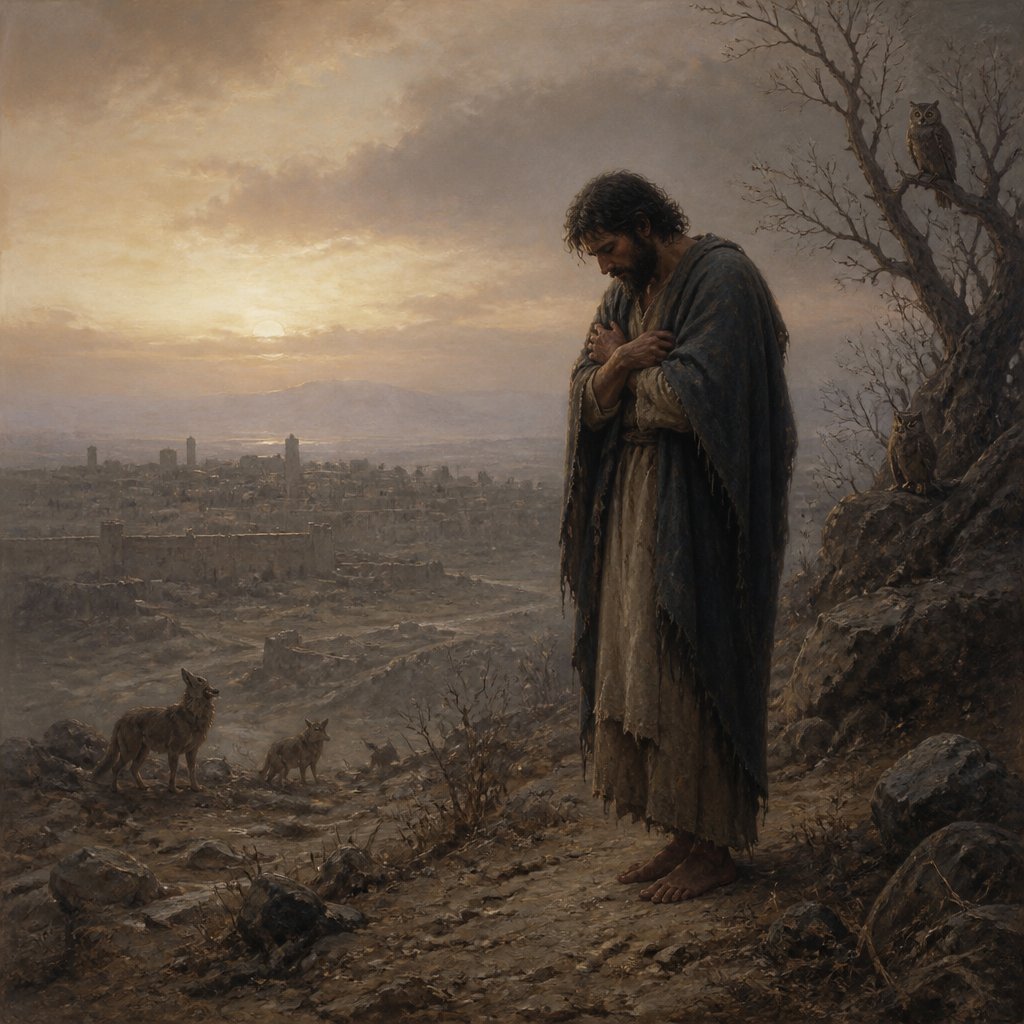
In the book of Micah, the prophet Micah delivers a message of judgment and restoration to the people of Judah. In Micah 1:8, the King James Version (KJV) reads, "Therefore I will wail and howl, I will go stripped and naked: I will make a wailing like the dragons, and mourning as the owls."
This verse is part of a larger passage in which Micah describes the impending destruction and exile of Judah because of their disobedience and unfaithfulness to God. The imagery in this verse is striking and evocative, as Micah describes his own response to the impending disaster.
The phrase "I will wail and howl" speaks to the deep grief and anguish that Micah feels for his people. The language he uses is raw and emotional, conveying the depth of his sorrow. This imagery is reflective of the prophet's own anguish and emotional turmoil as he delivers his message of judgment. It also serves to underscore the severity of the impending judgment that the people of Judah will face.
The phrase "I will go stripped and naked" is a symbolic portrayal of vulnerability and shame. In ancient Hebrew culture, being stripped and naked was a sign of disgrace and humiliation. Here, Micah is essentially declaring that he will be stripped of his dignity and pride as he mourns for his people. This vivid imagery conveys the depth of his emotional and spiritual distress and serves as a dramatic expression of his grief.
The mention of "wailing like the dragons, and mourning as the owls" adds another layer of symbolism to the verse. In ancient Near Eastern cultures, both dragons and owls were associated with desolation and mourning. The image of wailing like dragons and mourning like owls suggests a profound and pervasive sense of sorrow and lamentation. It also reinforces the idea of impending doom and devastation.
Furthermore, this verse captures the theme of divine judgment and the consequences of disobedience. The prophet Micah is not only expressing his own despair and anguish, but he is also conveying the weight of the judgment that is to come upon the people of Judah. The imagery and language used in this verse are meant to evoke a sense of dread and sorrow, as well as a sobering reminder of the consequences of turning away from God.
In a broader context, this verse is a poignant reminder of the human experience of grief and despair. It speaks to the universal emotions of pain, loss, and lamentation, and the deep sense of vulnerability that accompanies them. It also highlights the role of prophets as messengers of divine judgment and the burden they carry in delivering difficult messages to their people.
The symbolism in this verse serves as a powerful literary device that conveys the depth of Micah's emotions and the severity of the impending judgment. The use of vivid and evocative imagery helps to captivate the reader and draw them into the emotional and spiritual reality of the prophet's message.
In conclusion, Micah 1:8 is a verse that is both deeply emotive and thematically significant. It captures the prophet's profound grief and lamentation, as well as the impending judgment and consequences of disobedience. The imagery and symbolism in this verse serve to convey the weight of the message and the emotional intensity of the prophet's words, making it a powerful and resonant passage in the book of Micah.
Get our apps


Artwork for Micah 1:8

Micah 1:8 - "Therefore I will wail and howl, I will go stripped and naked: I will make a wailing like the dragons, and mourning as the owls."
"Therefore I will wail and howl, I will go stripped and naked: I will make a wailing like the dragons, and mourning as the owls." - Micah 1:8

1 Chronicles 8:35 - "And the sons of Micah were, Pithon, and Melech, and Tarea, and Ahaz."

1 Chronicles 8:34 - "And the son of Jonathan was Merib-baal; and Merib-baal begat Micah."

Micah 6:8

"And the sons of Micah were, Pithon, and Melech, and Tarea, and Ahaz." - 1 Chronicles 8:35

"And the son of Jonathan was Merib-baal; and Merib-baal begat Micah." - 1 Chronicles 8:34

Micah 1:1 - "The word of the LORD that came to Micah the Morasthite in the days of Jotham, Ahaz, and Hezekiah, kings of Judah, which he saw concerning Samaria and Jerusalem."

Micah 5:2-5

Judges 17:1 - "And there was a man of mount Ephraim, whose name was Micah."

Micah 3:8 - "¶ But truly I am full of power by the spirit of the LORD, and of judgment, and of might, to declare unto Jacob his transgression, and to Israel his sin."

1 Chronicles 9:41 - "And the sons of Micah were, Pithon, and Melech, and Tahrea, and Ahaz."

1 Chronicles 9:40 - "And the son of Jonathan was Merib-baal: and Merib-baal begat Micah."

"The word of the LORD that came to Micah the Morasthite in the days of Jotham, Ahaz, and Hezekiah, kings of Judah, which he saw concerning Samaria and Jerusalem." - Micah 1:1

Micah 4:8 - "¶ And thou, O tower of the flock, the strong hold of the daughter of Zion, unto thee shall it come, even the first dominion; the kingdom shall come to the daughter of Jerusalem."

Micah 2:8 - "Even of late my people is risen up as an enemy: ye pull off the robe with the garment from them that pass by securely as men averse from war."

1 Chronicles 5:5 - "Micah his son, Reaia his son, Baal his son,"

Micah 7:8 - "¶ Rejoice not against me, O mine enemy: when I fall, I shall arise; when I sit in darkness, the LORD shall be a light unto me."

Micah 6:8 - "He hath shewed thee, O man, what is good; and what doth the LORD require of thee, but to do justly, and to love mercy, and to walk humbly with thy God?"

1 Chronicles 9:15 - "And Bakbakkar, Heresh, and Galal, and Mattaniah the son of Micah, the son of Zichri, the son of Asaph;"

Micah 1:10 - "¶ Declare ye it not at Gath, weep ye not at all: in the house of Aphrah roll thyself in the dust."

Judges 17:8 - "And the man departed out of the city from Beth-lehem-judah to sojourn where he could find a place: and he came to mount Ephraim to the house of Micah, as he journeyed."

Micah 1:14 - "Therefore shalt thou give presents to Moresheth-gath: the houses of Achzib shall be a lie to the kings of Israel."

Micah 1:12 - "For the inhabitant of Maroth waited carefully for good: but evil came down from the LORD unto the gate of Jerusalem."

Micah 1:9 - "For her wound is incurable; for it is come unto Judah; he is come unto the gate of my people, even to Jerusalem."

Micah 1:3 - "For, behold, the LORD cometh forth out of his place, and will come down, and tread upon the high places of the earth."

"And there was a man of mount Ephraim, whose name was Micah." - Judges 17:1

Micah 2:1 - "Woe to them that devise iniquity, and work evil upon their beds! when the morning is light, they practise it, because it is in the power of their hand."

Micah 1:5 - "For the transgression of Jacob is all this, and for the sins of the house of Israel. What is the transgression of Jacob? is it not Samaria? and what are the high places of Judah? are they not Jerusalem?"

Micah 3:1 - "And I said, Hear, I pray you, O heads of Jacob, and ye princes of the house of Israel; Is it not for you to know judgment?"