What does Micah 5:2 mean?
“But thou, Beth-lehem Ephratah, though thou be little among the thousands of Judah, yet out of thee shall he come forth unto me that is to be ruler in Israel; whose goings forth have been from of old, from everlasting.” — Micah 5:2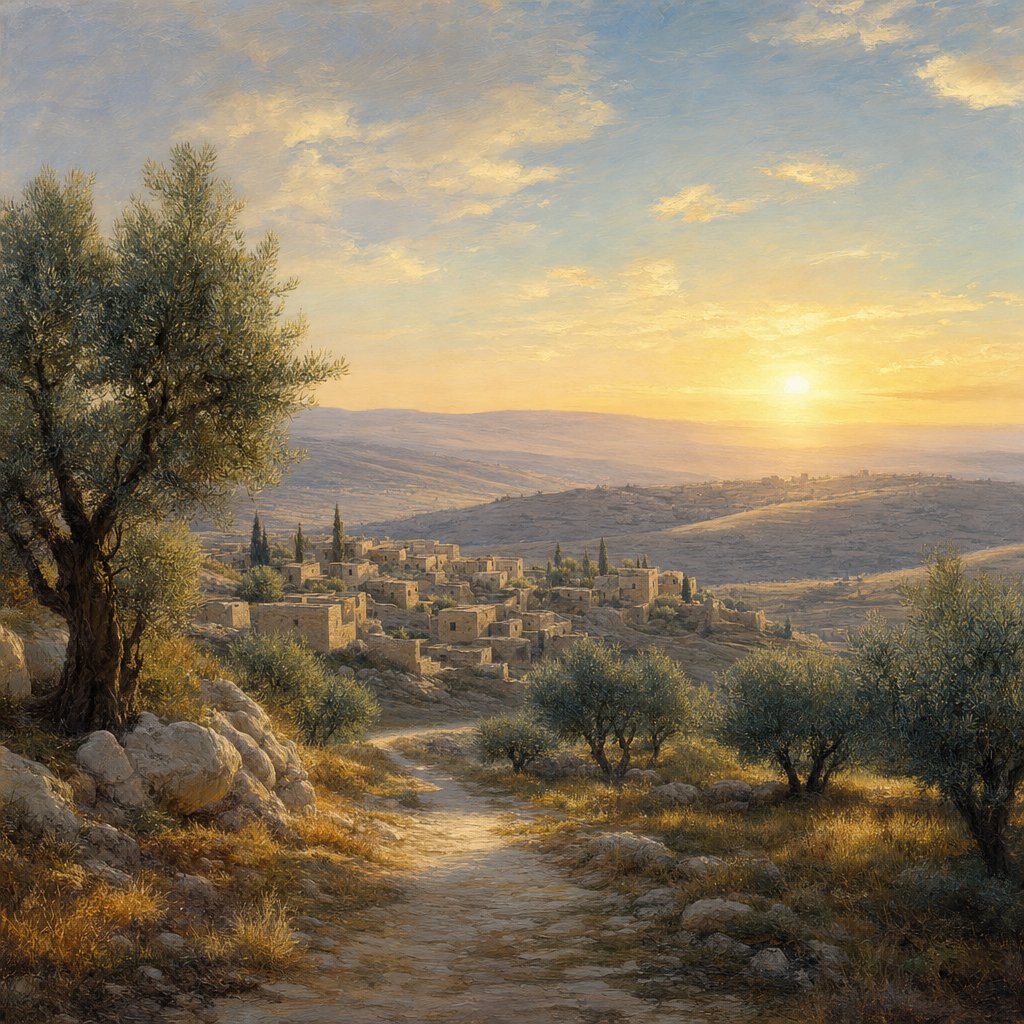
Micah 5:2 in the King James Version reads, “But thou, Bethlehem Ephratah, though thou be little among the thousands of Judah, yet out of thee shall he come forth unto me that is to be ruler in Israel; whose goings forth have been from of old, from everlasting.”
The verse speaks with deliberate contrast: Bethlehem is addressed as “little,” yet it is chosen as the place from which the promised “ruler in Israel” will come. “Bethlehem Ephratah” identifies the specific Bethlehem in Judah, distinguishing it from any other place of the same name, and recalling its older associations in Israel’s story. Bethlehem is the town tied to David’s line, the setting of David’s own beginnings, and thus it carries a quiet symbolism of God’s habit of raising what seems small into something decisive for his purposes. The phrase “little among the thousands of Judah” uses the language of clans and divisions within the tribe; Bethlehem is not pictured as a leading city or a dominant power-center. It is obscure by human measures, yet it becomes the stage for God’s chosen act. The meaning is not merely geographical; it is theological. God’s rule does not depend on earthly prominence, and his deliverance often comes from what appears least significant.
When the verse says, “yet out of thee shall he come forth unto me,” the coming forth of the ruler is presented as an act that is ultimately “unto” the LORD. The ruler’s emergence is not simply a political event for Israel’s benefit; it is framed as a matter of divine purpose and divine commissioning. The ruler is not self-appointed. His appearing serves God’s intention, and his authority is inseparable from the LORD’s claim upon him. In the broader movement of Micah’s prophecy, this matters because Micah is speaking into a time marked by failure of leadership and looming judgment; the people’s confidence in kings, princes, and cities is being shaken. Against that dark background, the promise of a true ruler functions as hope, but it is hope grounded in God’s action rather than human strength.
The most striking line is the description of this ruler: “whose goings forth have been from of old, from everlasting.” In prose, Micah is not content merely to predict that a future leader will be born in Bethlehem. He asserts that the one who comes has a mysterious prior reality. “Goings forth” suggests activity, origin, or proceeding, and it reaches back beyond recent history into ancient, even eternal, depths. The pairing of “from of old” with “from everlasting” intensifies the claim, moving from antiquity to eternity, and it gives the promised ruler a significance that exceeds ordinary kingship. In the prophetic imagination of Micah, this ruler is connected to God’s long, unfolding purpose—something anchored before the crises of the prophet’s own day and not limited by them. The language invites the reader to see that the ruler’s arrival in Bethlehem is not the beginning of his significance, but the manifestation in time of what has been purposed “from everlasting.”
Within the immediate context of Micah, this verse sits amid themes of siege, humiliation of present leadership, and the longing for restoration. Micah’s message includes sharp rebukes of corruption and injustice and foretellings of national distress, but it also holds out a future in which God shepherds and restores his people. Micah 5:2 is a hinge of that hope: it assures that God’s answer to failed rulers will be a ruler of his own choosing, arising from David’s homeland, yet bearing a scope that reaches beyond David’s merely human beginnings. Bethlehem therefore becomes a symbol of both continuity and surprise: continuity, because it ties the promise to Judah and the Davidic story; surprise, because God chooses what is “little” to bring forth what is weighty, and because the promised one is described in terms that transcend ordinary time.
The significance of Micah 5:2, then, is that it gathers several lines into a single prophetic sentence: God’s preference for the humble over the exalted, God’s sovereign initiative in raising up a true ruler, the anchoring of that ruler in the history of Judah and David, and the suggestion of an eternal dimension to his identity and mission. It is a promise that the future deliverance and governance of Israel will not come from the proud centers of power but from a place deemed small, and that the one who comes will not be a mere product of the moment, but one whose “goings forth” reach back “from everlasting.”
Get our apps


Artwork for Micah 5:2

Micah 5:2-5

Micah 5:2 - "But thou, Beth-lehem Ephratah, though thou be little among the thousands of Judah, yet out of thee shall he come forth unto me that is to be ruler in Israel; whose goings forth have been from of old, from everlasting."

Micah 5:2 '“But you, Bethlehem Ephrathah, though you are small among the clans of Judah, out of you will come for me one who will be ruler over Israel, whose origins are from of old, from ancient times.”
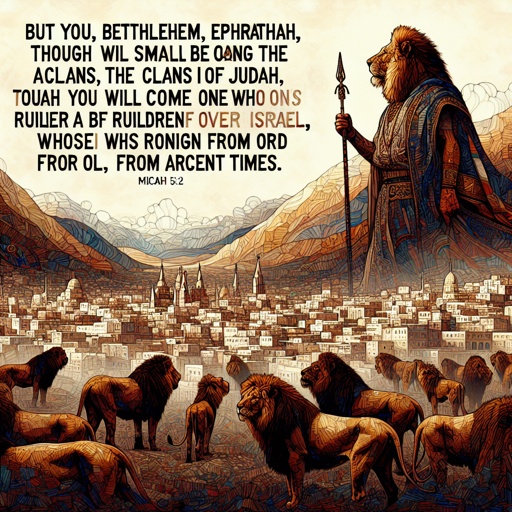
「以法他的伯利恆啊, 你在猶大各城中毫不起眼, 但將有一位從你那裡出來, 為我統治以色列; 祂的根源自亙古,來自太初。」 彌迦書 5:2 CCB https://bible.com/bible/1392/mic.5.2.CCB
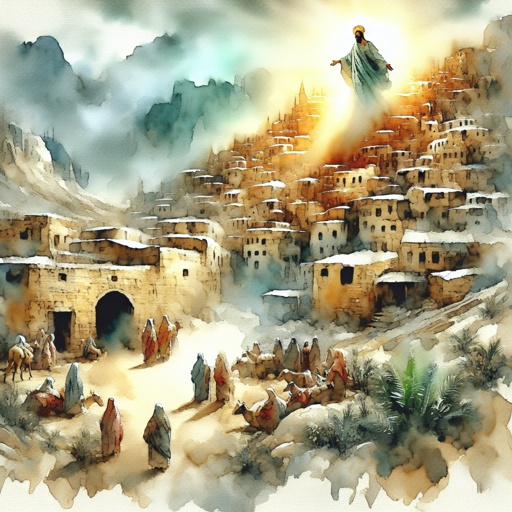
「以法他的伯利恆啊, 你在猶大各城中毫不起眼, 但將有一位從你那裡出來, 為我統治以色列; 祂的根源自亙古,來自太初。」 彌迦書 5:2 CCB https://bible.com/bible/1392/mic.5.2.CCB
!["But thou, Beth-lehem Ephratah, [though] thou be little among the thousands of Judah, [yet] out of thee shall he come forth unto me [that is] to be ruler in Israel; whose goings forth [have been] from of old, from everlasting." - Micah 5:2](https://media.bible.art/0f51f3fc-6119-4601-987f-c1800184f91e-thumbnail.jpg)
"But thou, Beth-lehem Ephratah, [though] thou be little among the thousands of Judah, [yet] out of thee shall he come forth unto me [that is] to be ruler in Israel; whose goings forth [have been] from of old, from everlasting." - Micah 5:2
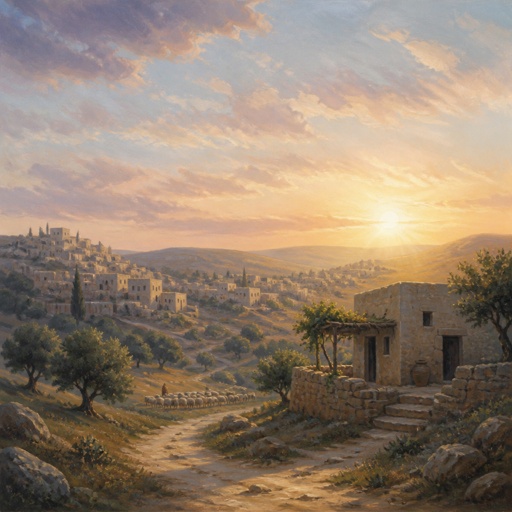
"But thou, Beth-lehem Ephratah, though thou be little among the thousands of Judah, yet out of thee shall he come forth unto me that is to be ruler in Israel; whose goings forth have been from of old, from everlasting." - Micah 5:2

Micah 2:5 - "Therefore thou shalt have none that shall cast a cord by lot in the congregation of the LORD."

1 Chronicles 5:5 - "Micah his son, Reaia his son, Baal his son,"

"Therefore thou shalt have none that shall cast a cord by lot in the congregation of the LORD." - Micah 2:5

Micah 5:15 - "And I will execute vengeance in anger and fury upon the heathen, such as they have not heard."

Micah 5:11 - "And I will cut off the cities of thy land, and throw down all thy strong holds:"

Micah 5:12 - "And I will cut off witchcrafts out of thine hand; and thou shalt have no more soothsayers:"

Micah 5:14 - "And I will pluck up thy groves out of the midst of thee: so will I destroy thy cities."

Micah 5:9 - "Thine hand shall be lifted up upon thine adversaries, and all thine enemies shall be cut off."

"Micah his son, Reaia his son, Baal his son," - 1 Chronicles 5:5

Micah 1:5 - "For the transgression of Jacob is all this, and for the sins of the house of Israel. What is the transgression of Jacob? is it not Samaria? and what are the high places of Judah? are they not Jerusalem?"

Micah 4:5 - "For all people will walk every one in the name of his god, and we will walk in the name of the LORD our God for ever and ever."

Micah 7:5 - "¶ Trust ye not in a friend, put ye not confidence in a guide: keep the doors of thy mouth from her that lieth in thy bosom."

Judges 17:5 - "And the man Micah had an house of gods, and made an ephod, and teraphim, and consecrated one of his sons, who became his priest."

Micah 5:5 - "And this man shall be the peace, when the Assyrian shall come into our land: and when he shall tread in our palaces, then shall we raise against him seven shepherds, and eight principal men."

Micah 5:7 - "And the remnant of Jacob shall be in the midst of many people as a dew from the LORD, as the showers upon the grass, that tarrieth not for man, nor waiteth for the sons of men."

Micah 2:6 - "Prophesy ye not, say they to them that prophesy: they shall not prophesy to them, that they shall not take shame."

Micah 5:10 - "And it shall come to pass in that day, saith the LORD, that I will cut off thy horses out of the midst of thee, and I will destroy thy chariots:"

Micah 5:4 - "¶ And he shall stand and feed in the strength of the LORD, in the majesty of the name of the LORD his God; and they shall abide: for now shall he be great unto the ends of the earth."

Micah 2:2 - "And they covet fields, and take them by violence; and houses, and take them away: so they oppress a man and his house, even a man and his heritage."

Micah 5:1 - "Now gather thyself in troops, O daughter of troops: he hath laid siege against us: they shall smite the judge of Israel with a rod upon the cheek."

Micah 5:13 - "Thy graven images also will I cut off, and thy standing images out of the midst of thee; and thou shalt no more worship the work of thine hands."

Micah 5:3 - "Therefore will he give them up, until the time that she which travaileth hath brought forth: then the remnant of his brethren shall return unto the children of Israel."

Micah 2:10 - "Arise ye, and depart; for this is not your rest: because it is polluted, it shall destroy you, even with a sore destruction."