What does Nehemiah 10:29 mean?
“They clave to their brethren, their nobles, and entered into a curse, and into an oath, to walk in God’s law, which was given by Moses the servant of God, and to observe and do all the commandments of the LORD our Lord, and his judgments and his statutes;” — Nehemiah 10:29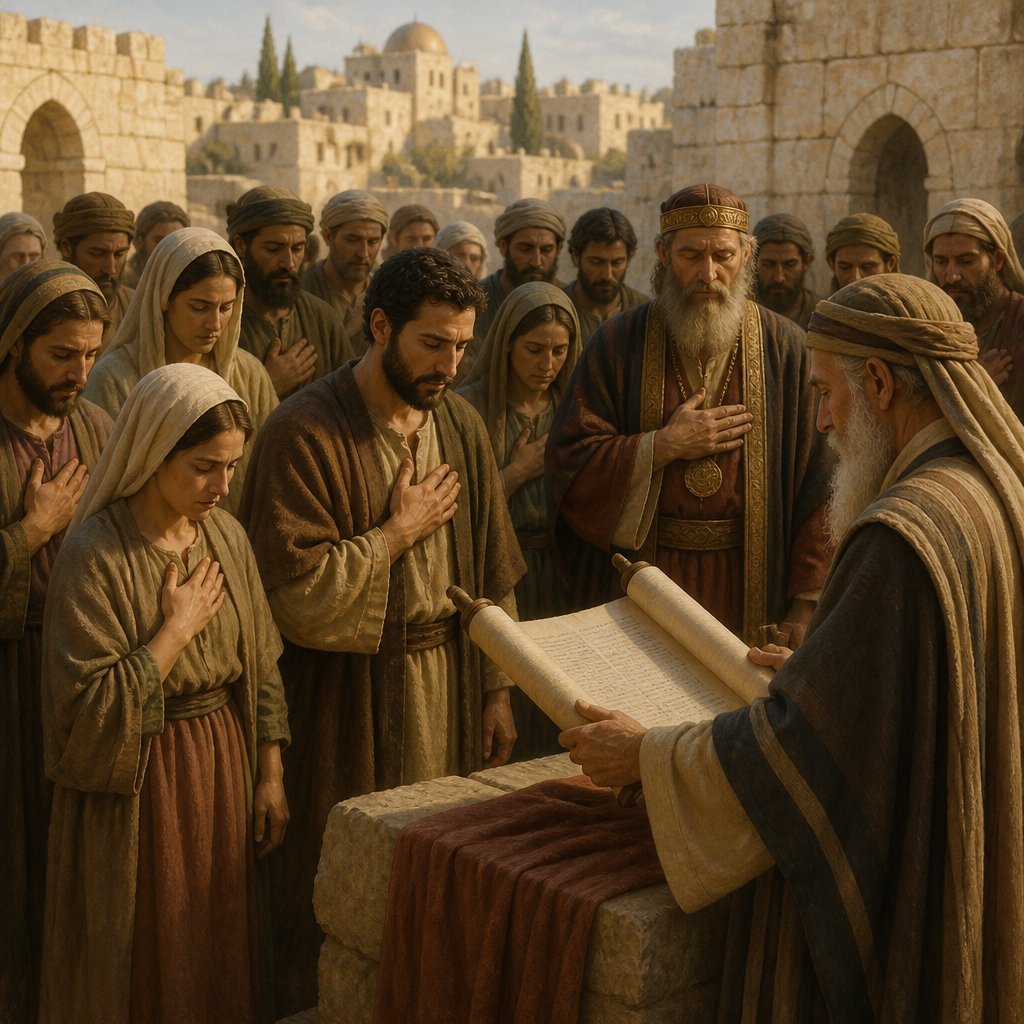
Nehemiah 10:29 from the King James Version of the Bible reads, "They clave to their brethren, their nobles, and entered into a curse, and into an oath, to walk in God's law, which was given by Moses the servant of God, and to observe and do all the commandments of the Lord our Lord, and his judgments and his statutes."
This verse comes from the book of Nehemiah, which is a historical account of the rebuilding of the walls of Jerusalem and the restoration of the city following the Babylonian exile. The context of this particular verse is a commitment made by the people of Israel to uphold and obey God's laws as given to Moses. In doing so, they entered into a formal covenant with God, binding themselves to walk in His ways and follow His commandments.
One of the key themes of this verse is the idea of covenant and commitment. The people of Israel made a deliberate and conscious choice to align themselves with God and His laws. This was not a passive or superficial agreement, but a deep and solemn pledge to live according to God's standards. This covenant was not taken lightly, as they willingly entered into both a curse and an oath, demonstrating their seriousness and determination to honor their commitment.
The concept of covenant is a recurring theme throughout the Bible, particularly in the Old Testament. It represents a binding agreement between God and His people, often accompanied by rituals and symbols to signify its importance. In this verse, the people of Israel affirmed their covenant relationship with God by publicly declaring their commitment to His laws and commandments.
Another important theme in this verse is obedience to God's laws. The people made a specific commitment to observe and do all the commandments of the Lord, as well as His judgments and statutes. This speaks to the importance of not only knowing God's laws, but also actively living them out in daily life. Obedience to God's laws was central to the covenant relationship between God and His people, and it was a key aspect of their commitment to Him.
Symbolism plays a significant role in this verse as well. The act of "cleaving" to their brethren and their nobles symbolizes unity and solidarity among the people of Israel. They were not making this covenant as individuals, but as a community, aligning themselves together in their commitment to God. Additionally, the use of a curse and an oath as part of the covenant serves as a symbol of the seriousness and consequences of breaking their commitment to God. It underscores the weight and gravity of their pledge to walk in God's law.
In a broader sense, this verse also serves as a reminder of the importance of upholding God's laws and commandments. It emphasizes the need for intentional and wholehearted commitment to living according to God's standards, rather than simply going through the motions. The example of the people of Israel in making this covenant with God serves as a model for believers today in the importance of actively and faithfully obeying God's word.
In conclusion, Nehemiah 10:29 conveys the themes of covenant and commitment, obedience to God's laws, and the importance of unity among believers. It emphasizes the depth and seriousness of the covenant relationship between God and His people, as well as the responsibility of believers to actively live according to His standards. This verse serves as a reminder of the significance of aligning ourselves with God and His ways, and the importance of honoring our commitments to Him.
Get our apps


Artwork for Nehemiah 10:29

Nehemiah 10:29 - "They clave to their brethren, their nobles, and entered into a curse, and into an oath, to walk in God's law, which was given by Moses the servant of God, and to observe and do all the commandments of the LORD our Lord, and his judgments and his statutes;"
"They clave to their brethren, their nobles, and entered into a curse, and into an oath, to walk in God's law, which was given by Moses the servant of God, and to observe and do all the commandments of the LORD our Lord, and his judgments and his statutes;" - Nehemiah 10:29

Nehemiah 11:29 - "And at En-rimmon, and at Zareah, and at Jarmuth,"

Nehemiah 10:1 - "Now those that sealed were, Nehemiah, the Tirshatha, the son of Hachaliah, and Zidkijah,"

Nehemiah 7:29 - "The men of Kirjath-jearim, Chephirah, and Beeroth, seven hundred forty and three."

Nehemiah 10:10 - "And their brethren, Shebaniah, Hodijah, Kelita, Pelaiah, Hanan,"

"And at En-rimmon, and at Zareah, and at Jarmuth," - Nehemiah 11:29

Nehemiah 8:10

Nehemiah 8:10

Nehemiah 8:10

Nehemiah 13:29 - "Remember them, O my God, because they have defiled the priesthood, and the covenant of the priesthood, and of the Levites."

Nehemiah 10:24 - "Hallohesh, Pileha, Shobek,"

Nehemiah 10:22 - "Pelatiah, Hanan, Anaiah,"

Nehemiah 10:5 - "Harim, Meremoth, Obadiah,"

Nehemiah 10:23 - "Hoshea, Hananiah, Hashub,"

Nehemiah 10:21 - "Meshezabeel, Zadok, Jaddua,"

Nehemiah 10:7 - "Meshullam, Abijah, Mijamin,"

Nehemiah 10:11 - "Micha, Rehob, Hashabiah,"

Nehemiah 10:27 - "Malluch, Harim, Baanah."

Nehemiah 10:25 - "Rehum, Hashabnah, Maaseiah,"

Nehemiah 10:19 - "Hariph, Anathoth, Nebai,"

Nehemiah 10:6 - "Daniel, Ginnethon, Baruch,"

Nehemiah 10:26 - "And Ahijah, Hanan, Anan,"

Nehemiah 10:16 - "Adonijah, Bigvai, Adin,"

Nehemiah 10:18 - "Hodijah, Hashum, Bezai,"

Nehemiah 10:20 - "Magpiash, Meshullam, Hezir,"

Nehemiah 10:3 - "Pashur, Amariah, Malchijah,"

Nehemiah 10:17 - "Ater, Hizkijah, Azzur,"

Nehemiah 10:4 - "Hattush, Shebaniah, Malluch,"

Nehemiah 10:2 - "Seraiah, Azariah, Jeremiah,"