What does Nehemiah 10:33 mean?
“For the shewbread, and for the continual meat offering, and for the continual burnt offering, of the sabbaths, of the new moons, for the set feasts, and for the holy things, and for the sin offerings to make an atonement for Israel, and for all the work of the house of our God.” — Nehemiah 10:33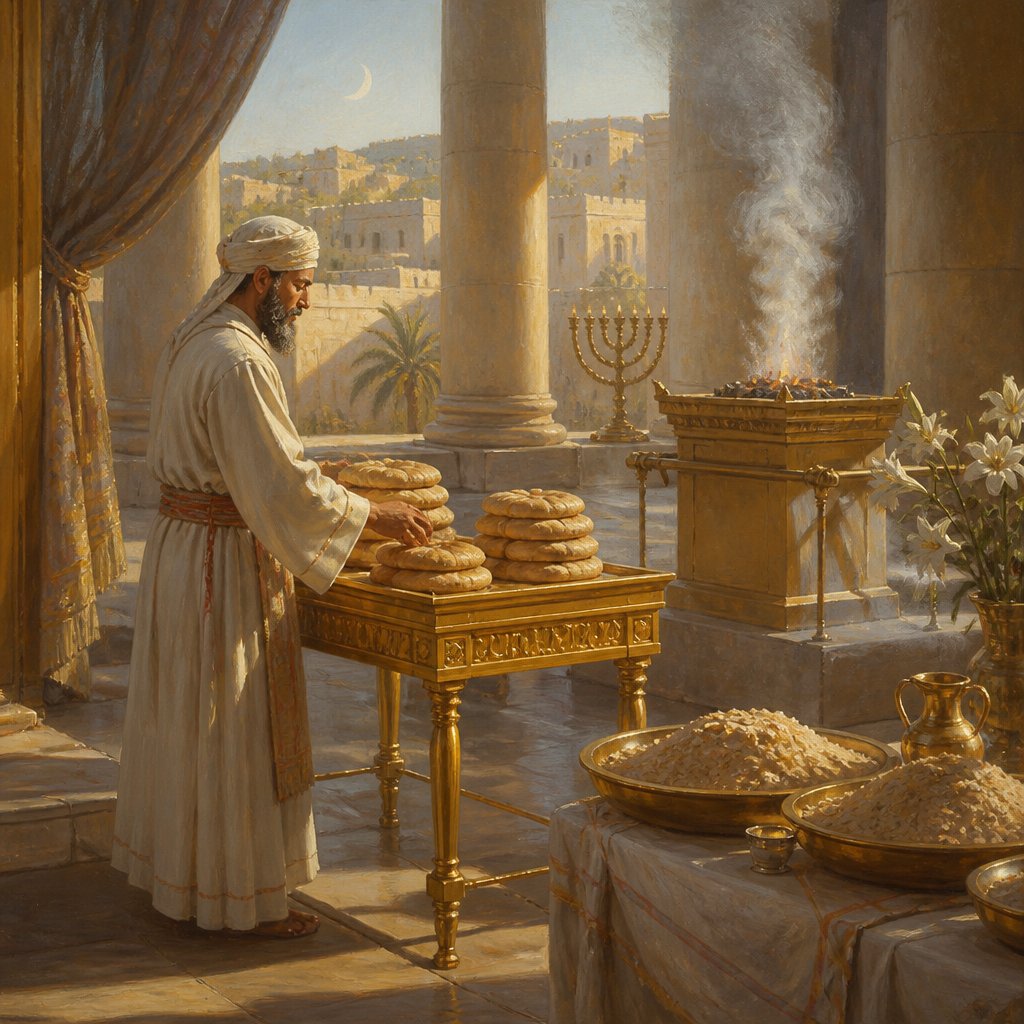
Nehemiah 10:33 from the King James Version of the Bible reads: "For the shewbread, and for the continual meat offering, and for the continual burnt offering, of the sabbaths, of the new moons, for the set feasts, and for the holy things, and for the sin offerings to make an atonement for Israel, and for all the work of the house of our God."
This verse comes from the book of Nehemiah, which is a historical and prophetic book in the Old Testament. The context of this verse is a list of the agreements made by the people of Israel as they rededicated themselves to the covenant with God and committed to obeying His laws. This verse specifically refers to the offerings and sacrifices that were to be made as part of the worship and rituals in the tabernacle and later the temple.
The themes present in this verse include obedience to God's commands, atonement for sin, and the holiness of God's dwelling place. The people of Israel were making a renewed commitment to observing the Sabbath and the various feasts and offerings commanded by God. They understood the importance of maintaining the continual burnt offerings and meat offerings as a way of expressing their dedication to God and seeking forgiveness for their sins.
The concept of atonement for sin is central to this verse, as it mentions the sin offerings that were to be made to make atonement for Israel. In the Old Testament, atonement for sin involved the shedding of blood and the offering of sacrifices as a way of cleansing the people from their transgressions and restoring their relationship with God. The ultimate fulfillment of this concept of atonement is found in the New Testament, with the sacrificial death of Jesus Christ on the cross, which provided eternal atonement for all who believe in Him.
The mention of the "shewbread" in this verse is also significant, as it was a symbol of God's provision and sustenance for His people. The continual presence of the shewbread in the tabernacle represented God's faithfulness to provide for the needs of His people, both physically and spiritually. This theme of God's provision and faithfulness is echoed throughout the Bible, ultimately finding its fulfillment in the person of Jesus Christ, who is the bread of life.
The reference to the "holy things" in this verse speaks to the sacredness of the offerings and the rituals performed in the house of God. The people of Israel were recognizing the holiness of God and the need to approach Him with reverence and awe. This theme of holiness and reverence for God is a recurring theme throughout the Bible, emphasizing the need for God's people to live lives that are set apart and dedicated to Him.
Overall, Nehemiah 10:33 is a reminder of the importance of obedience to God's commands, the necessity of atonement for sin, and the holiness of God's dwelling place. It reflects the commitment of the people of Israel to uphold the worship and rituals prescribed by God and to acknowledge His faithfulness and provision. Ultimately, this verse points to the redemptive work of Jesus Christ and the eternal atonement He provides for all who believe in Him.
Get our apps


Artwork for Nehemiah 10:33
Nehemiah 10:33 - "For the shewbread, and for the continual meat offering, and for the continual burnt offering, of the sabbaths, of the new moons, for the set feasts, and for the holy things, and for the sin offerings to make an atonement for Israel, and for all the work of the house of our God."
"For the shewbread, and for the continual meat offering, and for the continual burnt offering, of the sabbaths, of the new moons, for the set feasts, and for the holy things, and for the sin offerings to make an atonement for Israel, and for all the work of the house of our God." - Nehemiah 10:33

Nehemiah 12:33 - "And Azariah, Ezra, and Meshullam,"

Nehemiah 11:33 - "Hazor, Ramah, Gittaim,"

Nehemiah 7:33 - "The men of the other Nebo, fifty and two."

"And Azariah, Ezra, and Meshullam," - Nehemiah 12:33

"Hazor, Ramah, Gittaim," - Nehemiah 11:33

Nehemiah 10:1 - "Now those that sealed were, Nehemiah, the Tirshatha, the son of Hachaliah, and Zidkijah,"

"The men of the other Nebo, fifty and two." - Nehemiah 7:33

Nehemiah 10:10 - "And their brethren, Shebaniah, Hodijah, Kelita, Pelaiah, Hanan,"

Nehemiah 8:10

Nehemiah 8:10

Nehemiah 8:10

Nehemiah 9:33 - "Howbeit thou art just in all that is brought upon us; for thou hast done right, but we have done wickedly:"

Nehemiah 10:22 - "Pelatiah, Hanan, Anaiah,"

Nehemiah 10:24 - "Hallohesh, Pileha, Shobek,"

Nehemiah 10:5 - "Harim, Meremoth, Obadiah,"

Nehemiah 10:21 - "Meshezabeel, Zadok, Jaddua,"

Nehemiah 10:23 - "Hoshea, Hananiah, Hashub,"

Nehemiah 10:7 - "Meshullam, Abijah, Mijamin,"

Nehemiah 10:25 - "Rehum, Hashabnah, Maaseiah,"

Nehemiah 10:11 - "Micha, Rehob, Hashabiah,"

Nehemiah 10:27 - "Malluch, Harim, Baanah."

Nehemiah 10:19 - "Hariph, Anathoth, Nebai,"

Nehemiah 10:6 - "Daniel, Ginnethon, Baruch,"

Nehemiah 10:26 - "And Ahijah, Hanan, Anan,"

Nehemiah 10:16 - "Adonijah, Bigvai, Adin,"

Nehemiah 10:18 - "Hodijah, Hashum, Bezai,"

Nehemiah 10:4 - "Hattush, Shebaniah, Malluch,"

Nehemiah 10:2 - "Seraiah, Azariah, Jeremiah,"