What does Nehemiah 11:11 mean?
“Seraiah the son of Hilkiah, the son of Meshullam, the son of Zadok, the son of Meraioth, the son of Ahitub, was the ruler of the house of God.” — Nehemiah 11:11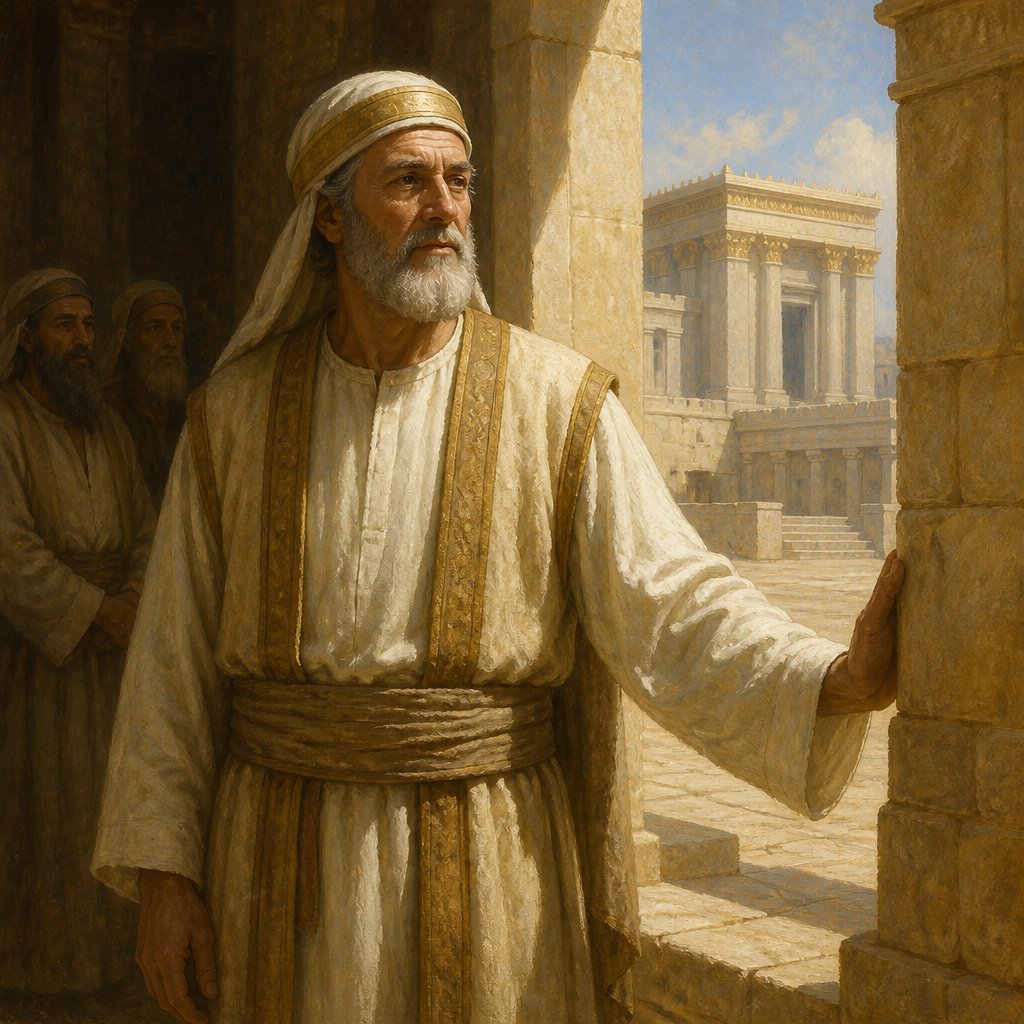
Nehemiah 11:11 (KJV)
"Seraiah the son of Hilkiah, the son of Meshullam, the son of Zadok, the son of Meraioth, the son of Ahitub, was the ruler of the house of God."
The book of Nehemiah in the Old Testament tells the story of Nehemiah, a Jewish man who served as the cupbearer to the Persian king Artaxerxes. When Nehemiah hears about the desolate state of Jerusalem, he feels called by God to return to his homeland and lead the effort to rebuild the city's walls and restore the people's faith.
In Nehemiah 11:11, we are given a genealogy of a man named Seraiah. While it may seem like just a list of names, this verse provides important context for the story of the restoration of Jerusalem. Understanding the significance of Seraiah's lineage can help us appreciate the themes of devotion, leadership, and continuity that are present in this passage.
The mention of Seraiah's ancestors, including his father Hilkiah and his forefathers Meshullam, Zadok, Meraioth, and Ahitub, signifies his connection to the priestly line. This lineage is significant in the biblical narrative as the role of the priest was crucial in the religious and social life of Israel. The ruler of the house of God was a position of great responsibility, overseeing the administration of the temple and the spiritual welfare of the people.
The theme of devotion is evident in Seraiah's lineage, as it highlights his family's commitment to serving God and their dedication to the priesthood. The names mentioned in the genealogy carry the weight of history and tradition, emphasizing the continuity of faith and the importance of passing down religious duties from one generation to the next. Seraiah's position as the ruler of the house of God is not just a matter of personal achievement, but a reflection of his family's enduring commitment to the service of God.
Furthermore, the mention of Seraiah in this passage also underscores the theme of leadership. As the ruler of the house of God, Seraiah would have been responsible for guiding the religious community and upholding the traditions of the temple. His leadership would have been essential in maintaining the spiritual integrity of the people, especially during the challenging times of the city's restoration.
In addition to these themes, the symbolism of the temple itself holds great significance in this verse. The temple was the central place of worship and the presence of God among the Israelites. As the ruler of the house of God, Seraiah held a position of sacred trust, overseeing the holiest place in Jerusalem and facilitating the spiritual life of the community.
From a broader historical and cultural context, the genealogy of Seraiah in this verse also serves to validate the legitimacy of his leadership role. In ancient Israelite society, one's lineage and ancestry were of utmost importance in determining one's position and authority. By tracing Seraiah's ancestry back to the priestly line, the verse establishes his right to rule over the house of God and to fulfill the duties of the priesthood.
In conclusion, Nehemiah 11:11 offers a brief but significant glimpse into the life of Seraiah and the powerful themes of devotion, leadership, and continuity that are woven throughout this passage. Seraiah's genealogy symbolizes the enduring commitment of his family to serving God, and his role as the ruler of the house of God underscores the importance of spiritual leadership and the preservation of religious traditions. This verse not only enriches our understanding of the historical context of the restoration of Jerusalem but also provides timeless truths about faith, service, and the sacred call to lead and uphold the worship of God.
Get our apps


Artwork for Nehemiah 11:11

Nehemiah 11:11-14

Nehemiah 11:11 - "Seraiah the son of Hilkiah, the son of Meshullam, the son of Zadok, the son of Meraioth, the son of Ahitub, was the ruler of the house of God."
"Seraiah the son of Hilkiah, the son of Meshullam, the son of Zadok, the son of Meraioth, the son of Ahitub, was the ruler of the house of God." - Nehemiah 11:11

Nehemiah 11:13

Nehemiah 11:34 - "Hadid, Zeboim, Neballat,"

Nehemiah 10:11 - "Micha, Rehob, Hashabiah,"

Nehemiah 11:33 - "Hazor, Ramah, Gittaim,"

Nehemiah 11:32 - "And at Anathoth, Nob, Ananiah,"

Nehemiah 11:1-19

Nehemiah 11:26 - "And at Jeshua, and at Moladah, and at Beth-phelet,"

Nehemiah 11:29 - "And at En-rimmon, and at Zareah, and at Jarmuth,"

Nehemiah 11:35 - "Lod, and Ono, the valley of craftsmen."

Nehemiah 11:28 - "And at Ziklag, and at Mekonah, and in the villages thereof,"

Nehemiah 11:36 - "And of the Levites were divisions in Judah, and in Benjamin."

Nehemiah 11:10 - "Of the priests: Jedaiah the son of Joiarib, Jachin."

Nehemiah 12:11 - "And Joiada begat Jonathan, and Jonathan begat Jaddua."

Nehemiah 11:27 - "And at Hazar-shual, and at Beer-sheba, and in the villages thereof,"

Nehemiah 2:11 - "So I came to Jerusalem, and was there three days."

"And at Anathoth, Nob, Ananiah," - Nehemiah 11:32

Nehemiah 11:21 - "But the Nethinims dwelt in Ophel: and Ziha and Gispa were over the Nethinims."

"Hadid, Zeboim, Neballat," - Nehemiah 11:34

"Hazor, Ramah, Gittaim," - Nehemiah 11:33

"Micha, Rehob, Hashabiah," - Nehemiah 10:11

Nehemiah 11:8 - "And after him Gabbai, Sallai, nine hundred twenty and eight."

Nehemiah 11:2 - "And the people blessed all the men, that willingly offered themselves to dwell at Jerusalem."

"And at Ziklag, and at Mekonah, and in the villages thereof," - Nehemiah 11:28

"And at En-rimmon, and at Zareah, and at Jarmuth," - Nehemiah 11:29

Nehemiah 11:9 - "And Joel the son of Zichri was their overseer: and Judah the son of Senuah was second over the city."

Nehemiah 11:16 - "And Shabbethai and Jozabad, of the chief of the Levites, had the oversight of the outward business of the house of God."

"And at Jeshua, and at Moladah, and at Beth-phelet," - Nehemiah 11:26