What does Nehemiah 11:12 mean?
“And their brethren that did the work of the house were eight hundred twenty and two: and Adaiah the son of Jeroham, the son of Pelaliah, the son of Amzi, the son of Zechariah, the son of Pashur, the son of Malchiah,” — Nehemiah 11:12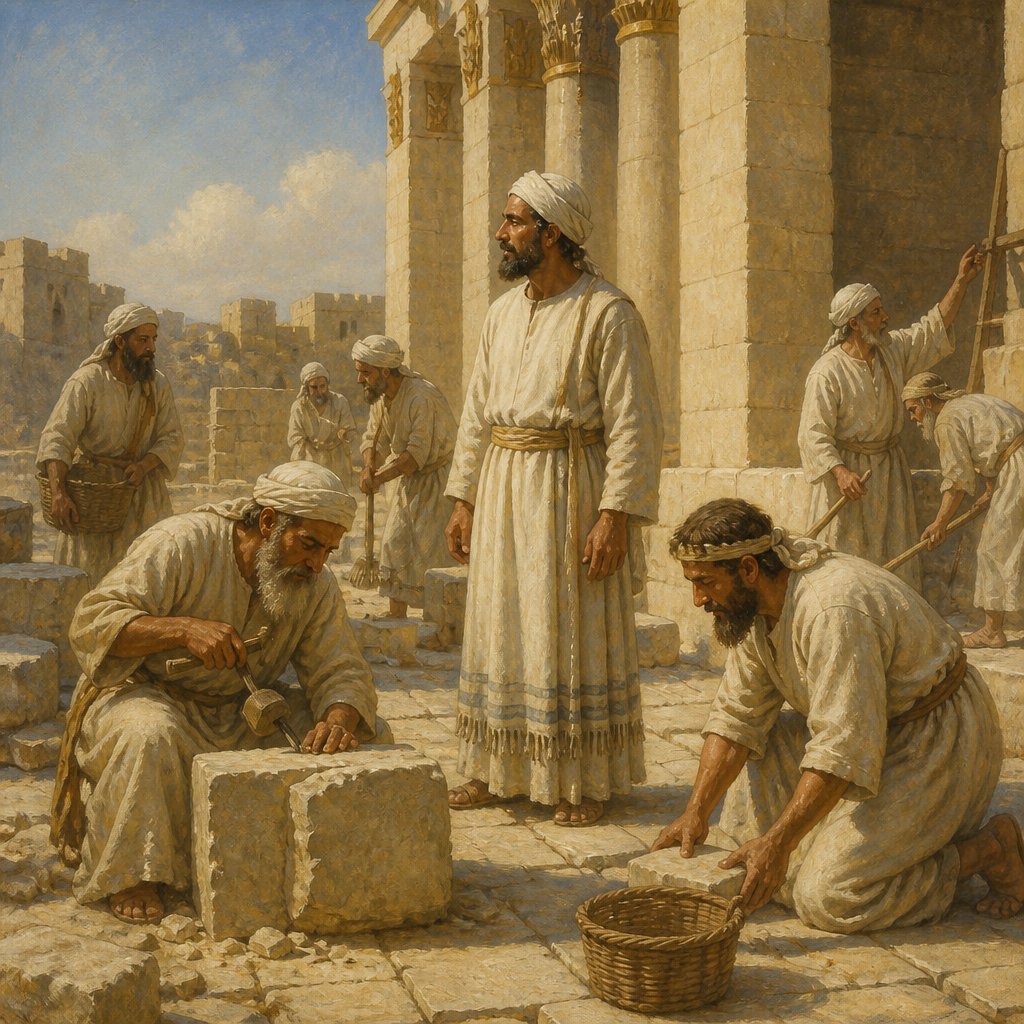
Nehemiah 11:12 (KJV) states: "And their brethren that did the work of the house were eight hundred twenty and two: and Adaiah the son of Jeroham, the son of Pelaliah, the son of Amzi, the son of Zechariah, the son of Pashur, the son of Malchiah,"
This verse is a part of the book of Nehemiah, which is a historical account of the efforts to rebuild the walls of Jerusalem and restore the city after the Babylonian exile. This particular verse lists the names of the people who worked on the house of God, providing a glimpse into the specific individuals who contributed to the restoration and reconstruction of Jerusalem.
One of the main themes of the book of Nehemiah is the importance of faith and perseverance in the face of adversity. The people of Jerusalem faced numerous challenges as they sought to rebuild their city, and their commitment to their faith sustained them through these difficult times. This verse serves as a reminder of the dedication and hard work of the people who labored to restore the house of God, despite the daunting task that lay before them. It reflects the theme of faith and devotion to God's work, even in the face of seemingly insurmountable obstacles.
The context of this verse is also significant, as it comes at a crucial point in the narrative of Nehemiah. The detailed account of the individuals involved in the reconstruction of the house of God serves to emphasize the communal effort and the shared responsibility of the people in rebuilding their city. It highlights the unity and cooperation among the Jewish community as they worked together towards a common goal, reflecting the importance of community and collaboration in accomplishing significant tasks.
Furthermore, this verse holds symbolic significance, particularly in the emphasis on the specific names and lineage of the individuals mentioned. The detailed genealogy serves to establish the legitimacy and authenticity of the work being done, as well as the individuals involved in it. It suggests that the efforts to rebuild the house of God were not only a physical undertaking but also a spiritual and ancestral responsibility, rooted in the history and heritage of the Jewish people.
Additionally, the mention of the precise number of individuals involved (eight hundred twenty and two) underscores the magnitude of the task and the significant contributions of the laborers. It reflects the importance of each individual's role in the larger collective effort, emphasizing the value of every person's work and dedication in the pursuit of a shared goal.
In summary, Nehemiah 11:12 (KJV) represents a pivotal moment in the narrative of the book of Nehemiah, conveying the themes of faith, perseverance, community, and shared responsibility. It serves as a testament to the devotion and hard work of the individuals involved in the reconstruction of Jerusalem, while also holding symbolic significance in the detailed genealogy and the emphasis on the collective effort. This verse underscores the importance of faith, unity, and collaboration in facing challenges and working towards the restoration of God's house.
Get our apps


Artwork for Nehemiah 11:12

Nehemiah 11:12 - "And their brethren that did the work of the house were eight hundred twenty and two: and Adaiah the son of Jeroham, the son of Pelaliah, the son of Amzi, the son of Zechariah, the son of Pashur, the son of Malchiah,"
"And their brethren that did the work of the house were eight hundred twenty and two: and Adaiah the son of Jeroham, the son of Pelaliah, the son of Amzi, the son of Zechariah, the son of Pashur, the son of Malchiah," - Nehemiah 11:12

Nehemiah 12:11 - "And Joiada begat Jonathan, and Jonathan begat Jaddua."
"And Joiada begat Jonathan, and Jonathan begat Jaddua." - Nehemiah 12:11

Nehemiah 11:11-14

Nehemiah 11:13

Nehemiah 11:1-19

Nehemiah 12:26 - "These were in the days of Joiakim the son of Jeshua, the son of Jozadak, and in the days of Nehemiah the governor, and of Ezra the priest, the scribe."

Nehemiah 11:34 - "Hadid, Zeboim, Neballat,"

Nehemiah 10:11 - "Micha, Rehob, Hashabiah,"

Nehemiah 12:33 - "And Azariah, Ezra, and Meshullam,"

Nehemiah 12:5 - "Miamin, Maadiah, Bilgah,"

Nehemiah 12:2 - "Amariah, Malluch, Hattush,"

Nehemiah 12:4 - "Iddo, Ginnetho, Abijah,"

Nehemiah 12:3 - "Shechaniah, Rehum, Meremoth,"

Nehemiah 10:12 - "Zaccur, Sherebiah, Shebaniah,"

Nehemiah 12:6 - "Shemaiah, and Joiarib, Jedaiah,"

Nehemiah 11:33 - "Hazor, Ramah, Gittaim,"

Nehemiah 11:32 - "And at Anathoth, Nob, Ananiah,"

Nehemiah 12:12 - "And in the days of Joiakim were priests, the chief of the fathers: of Seraiah, Meraiah; of Jeremiah, Hananiah;"

Nehemiah 11:26 - "And at Jeshua, and at Moladah, and at Beth-phelet,"

Nehemiah 11:29 - "And at En-rimmon, and at Zareah, and at Jarmuth,"

Nehemiah 12:16 - "Of Iddo, Zechariah; of Ginnethon, Meshullam;"

Nehemiah 12:13 - "Of Ezra, Meshullam; of Amariah, Jehohanan;"

Nehemiah 12:20 - "Of Sallai, Kallai; of Amok, Eber;"

Nehemiah 12:19 - "And of Joiarib, Mattenai; of Jedaiah, Uzzi;"

Nehemiah 12:34 - "Judah, and Benjamin, and Shemaiah, and Jeremiah,"

Nehemiah 12:15 - "Of Harim, Adna; of Meraioth, Helkai;"

Nehemiah 12:18 - "Of Bilgah, Shammua; of Shemaiah, Jehonathan;"

Nehemiah 12:14 - "Of Melicu, Jonathan; of Shebaniah, Joseph;"