What does Nehemiah 11:22 mean?
“The overseer also of the Levites at Jerusalem was Uzzi the son of Bani, the son of Hashabiah, the son of Mattaniah, the son of Micha. Of the sons of Asaph, the singers were over the business of the house of God.” — Nehemiah 11:22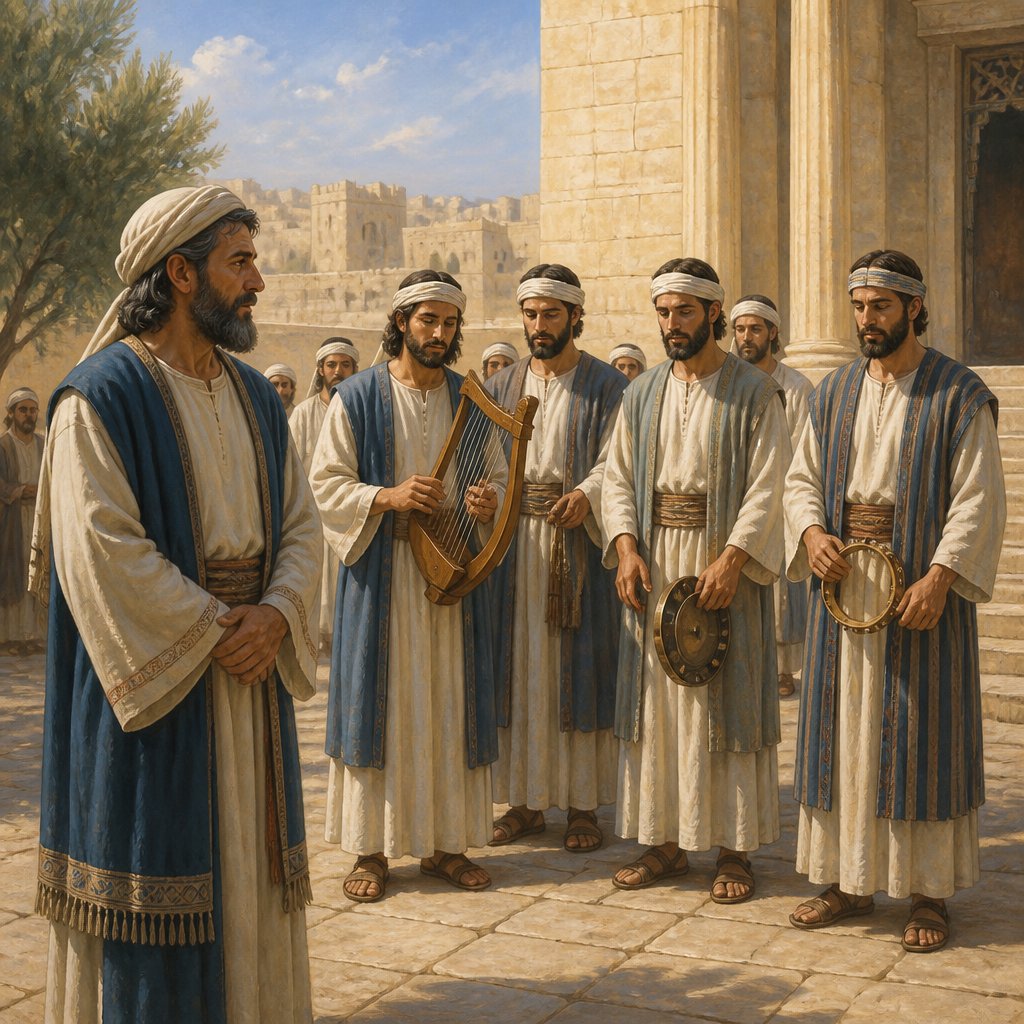
Nehemiah 11:22 (KJV) reads, "The overseer also of the Levites at Jerusalem was Uzzi the son of Bani, the son of Hashabiah, the son of Mattaniah, the son of Micha. Of the sons of Asaph, the singers were over the business of the house of God."
This verse comes from the book of Nehemiah in the Old Testament, which tells the story of how Nehemiah led the people of Israel in rebuilding the walls of Jerusalem after they had been destroyed. In this verse, we are presented with a list of individuals who were responsible for overseeing the Levites and the singers in Jerusalem.
In order to understand the significance of this verse, it is important to consider the historical and cultural context in which it was written. The book of Nehemiah takes place during a time when the people of Israel had returned from exile in Babylon and were seeking to rebuild their city and their society. The city of Jerusalem was not only a physical place, but it also held great religious and spiritual significance for the people of Israel. The temple in Jerusalem was the center of their religious life, and the Levites and singers played a crucial role in the worship and ceremonies that took place there.
In this verse, we see that Uzzi, the son of Bani, was the overseer of the Levites in Jerusalem. The Levites were a tribe of Israel who were tasked with various religious duties, including caring for the temple, teaching the law, and leading the people in worship. Uzzi's role as overseer would have been a position of great responsibility and authority, as he would have been responsible for ensuring that the religious life of the city ran smoothly.
Additionally, we are given the names of several individuals who were descended from prominent Levitical families. The use of genealogies in the Bible serves to establish the legitimacy and authority of the individuals listed, as well as to connect them to the wider history and traditions of the people of Israel.
The verse also mentions the singers who were in charge of the business of the house of God. The singers were an integral part of the religious rituals and ceremonies that took place in the temple, and their role was to lead the people in worship through music and song. The fact that the singers were in charge of the business of the house of God highlights the importance of music and the arts in the religious life of the people of Israel.
Symbolically, this verse represents the importance of order and organization in the religious life of the people of Israel. The appointment of Uzzi and the singers to their respective roles demonstrates the careful planning and attention to detail that was required in order to maintain the religious rituals and ceremonies in the temple. It also highlights the importance of honoring and preserving the traditions and heritage of the people of Israel, as evidenced by the inclusion of the genealogy of the individuals mentioned.
One of the key themes of this verse is the importance of worship and religious practice in the life of the people of Israel. The overseer of the Levites and the singers were tasked with ensuring that the religious life of the city ran smoothly and that the people were able to participate in the worship and ceremonies that took place in the temple. This verse serves as a reminder of the centrality of worship and religious devotion in the lives of the people of Israel, and the crucial role that the Levites and singers played in facilitating this worship.
In conclusion, Nehemiah 11:22 is a verse that highlights the importance of order and organization in the religious life of the people of Israel. It provides a glimpse into the roles and responsibilities of the overseer of the Levites and the singers in Jerusalem, and symbolizes the careful planning and attention to detail that was required to maintain the religious rituals and ceremonies in the temple. It also serves as a reminder of the centrality of worship and religious practice in the lives of the people of Israel, and the crucial role that the Levites and singers played in facilitating this worship.
Get our apps


Artwork for Nehemiah 11:22

Nehemiah 11:22 - "The overseer also of the Levites at Jerusalem was Uzzi the son of Bani, the son of Hashabiah, the son of Mattaniah, the son of Micha. Of the sons of Asaph, the singers were over the business of the house of God."
"The overseer also of the Levites at Jerusalem was Uzzi the son of Bani, the son of Hashabiah, the son of Mattaniah, the son of Micha. Of the sons of Asaph, the singers were over the business of the house of God." - Nehemiah 11:22

Nehemiah 11:11-14

Nehemiah 11:13

Nehemiah 10:22 - "Pelatiah, Hanan, Anaiah,"

Nehemiah 11:1-19

Nehemiah 7:22 - "The children of Hashum, three hundred twenty and eight."

Nehemiah 3:22 - "And after him repaired the priests, the men of the plain."

Nehemiah 11:34 - "Hadid, Zeboim, Neballat,"

Nehemiah 10:11 - "Micha, Rehob, Hashabiah,"

Nehemiah 11:33 - "Hazor, Ramah, Gittaim,"

Nehemiah 11:32 - "And at Anathoth, Nob, Ananiah,"

Nehemiah 11:26 - "And at Jeshua, and at Moladah, and at Beth-phelet,"

Nehemiah 11:29 - "And at En-rimmon, and at Zareah, and at Jarmuth,"

"Pelatiah, Hanan, Anaiah," - Nehemiah 10:22

Nehemiah 11:35 - "Lod, and Ono, the valley of craftsmen."

Nehemiah 11:28 - "And at Ziklag, and at Mekonah, and in the villages thereof,"

Nehemiah 11:36 - "And of the Levites were divisions in Judah, and in Benjamin."

Nehemiah 11:10 - "Of the priests: Jedaiah the son of Joiarib, Jachin."

Nehemiah 12:11 - "And Joiada begat Jonathan, and Jonathan begat Jaddua."

Nehemiah 11:27 - "And at Hazar-shual, and at Beer-sheba, and in the villages thereof,"

Nehemiah 2:11 - "So I came to Jerusalem, and was there three days."

Nehemiah 11:11 - "Seraiah the son of Hilkiah, the son of Meshullam, the son of Zadok, the son of Meraioth, the son of Ahitub, was the ruler of the house of God."

"And at Anathoth, Nob, Ananiah," - Nehemiah 11:32

"Hadid, Zeboim, Neballat," - Nehemiah 11:34

"Hazor, Ramah, Gittaim," - Nehemiah 11:33

"Micha, Rehob, Hashabiah," - Nehemiah 10:11

Nehemiah 11:21 - "But the Nethinims dwelt in Ophel: and Ziha and Gispa were over the Nethinims."

Nehemiah 11:8 - "And after him Gabbai, Sallai, nine hundred twenty and eight."

Nehemiah 11:2 - "And the people blessed all the men, that willingly offered themselves to dwell at Jerusalem."