What does Nehemiah 12:6 mean?
"Shemaiah, and Joiarib, Jedaiah," - Nehemiah 12:6
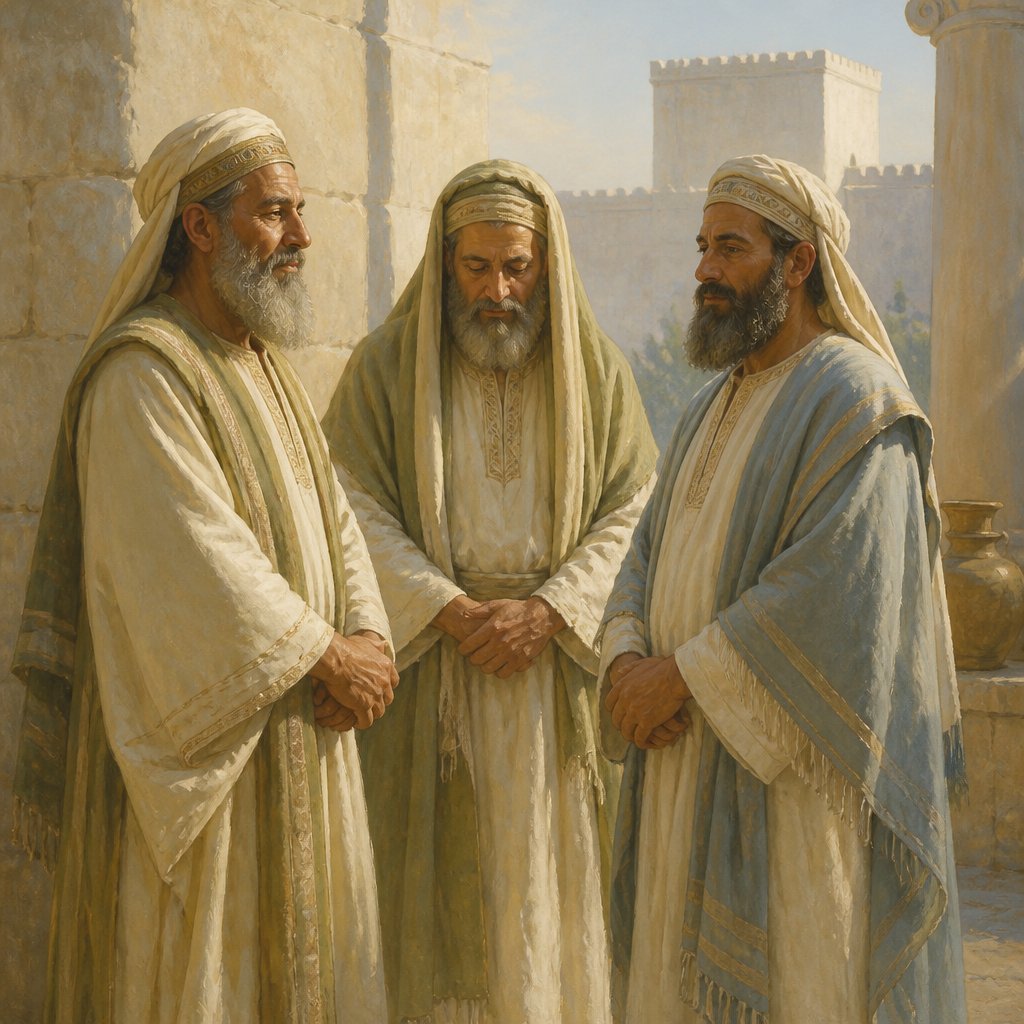
Nehemiah 12:6 in the King James Version (KJV) reads: "These were in the days of Joiakim the son of Jeshua, the son of Jozadak, and in the days of Nehemiah the governor, and of Ezra the priest, the scribe."
To fully understand the meaning and significance of this verse, it is important to provide some context. The book of Nehemiah in the Old Testament is a historical account of the Israelites' return to Jerusalem from exile in Babylon. It also details the efforts to rebuild the city's walls and restore the people's faith and obedience to God's law.
In Nehemiah 12, the author lists the priests and Levites who returned to Jerusalem with Zerubbabel (a prince of the house of David) and Jeshua (the high priest) after the exile. They are organized into two divisions, one led by a priest named Joiakim, and the other by Nehemiah, the governor, and Ezra, the priest and scribe. This verse serves as a record of the leaders and key figures during this time of restoration.
One of the primary themes in Nehemiah is the importance of leadership and faithfulness. The mention of Joiakim, Jeshua, Nehemiah, and Ezra in this verse highlights the significance of these individuals in the process of rebuilding Jerusalem. Each of them played a crucial role in leading, guiding, and encouraging the people in the work of restoring the city.
Joiakim, as the son of Jeshua, continued the priestly line that had been established after the return from exile. As a descendant of Jozadak, the high priest who was among the exiles taken to Babylon, Joiakim's leadership was a continuation of the priestly tradition that was central to the spiritual life of the community.
Nehemiah, as the governor, demonstrated strong administrative and leadership abilities. He was instrumental in organizing the people to rebuild the city's walls, and he also focused on restoring the religious and moral integrity of the community.
Ezra, the priest and scribe, was known for his commitment to the study and teaching of the Law. He played a key role in bringing about spiritual renewal among the people by reading the Law to them and helping them understand and apply it to their lives.
The verse also serves as a reminder of God's faithfulness to His people. Despite the exile and the devastation of Jerusalem, God continued to raise up leaders who would guide the people in the work of rebuilding and reviving their spiritual commitment.
Symbolically, the inclusion of these leaders in the verse also represents the cooperation and collaboration between the civil and religious authorities in the restoration process. This partnership between the governor and the priest was essential in achieving the overall goal of rebuilding Jerusalem and renewing the people's faith.
In conclusion, Nehemiah 12:6 in the King James Version captures a significant moment in the history of the Israelites as they work to rebuild their city and renew their commitment to God. The verse underscores the importance of leadership, faithfulness, and collaboration in the process of restoration and the continual faithfulness of God to His people. It serves as a reminder of the enduring legacy of those who stepped up to guide and shepherd the community during a time of great need.
Have questions about Nehemiah 12:6?
Dive deeper into this scripture with Bible Chat — an AI-powered tool for exploring God's Word through conversation. Ask questions, get context, and grow in your understanding of the Bible.
Get Our Apps


Nehemiah 12:6 Artwork

Nehemiah 12:6 - "Shemaiah, and Joiarib, Jedaiah,"

"Shemaiah, and Joiarib, Jedaiah," - Nehemiah 12:6

Nehemiah 6:12 - "And, lo, I perceived that God had not sent him; but that he pronounced this prophecy against me: for Tobiah and Sanballat had hired him."

Nehemiah 12:26 - "These were in the days of Joiakim the son of Jeshua, the son of Jozadak, and in the days of Nehemiah the governor, and of Ezra the priest, the scribe."

Nehemiah 4:6

Nehemiah 4:6

Nehemiah 4:6

Nehemiah 6:9

Nehemiah 12:5 - "Miamin, Maadiah, Bilgah,"

Nehemiah 12:33 - "And Azariah, Ezra, and Meshullam,"

Nehemiah 12:4 - "Iddo, Ginnetho, Abijah,"

Nehemiah 12:2 - "Amariah, Malluch, Hattush,"

Nehemiah 12:3 - "Shechaniah, Rehum, Meremoth,"

Nehemiah 10:12 - "Zaccur, Sherebiah, Shebaniah,"

Nehemiah 12:12 - "And in the days of Joiakim were priests, the chief of the fathers: of Seraiah, Meraiah; of Jeremiah, Hananiah;"

Nehemiah 12:13 - "Of Ezra, Meshullam; of Amariah, Jehohanan;"

Nehemiah 12:16 - "Of Iddo, Zechariah; of Ginnethon, Meshullam;"

Nehemiah 12:20 - "Of Sallai, Kallai; of Amok, Eber;"

Nehemiah 10:6 - "Daniel, Ginnethon, Baruch,"

Nehemiah 12:19 - "And of Joiarib, Mattenai; of Jedaiah, Uzzi;"

Nehemiah 12:34 - "Judah, and Benjamin, and Shemaiah, and Jeremiah,"

Nehemiah 12:15 - "Of Harim, Adna; of Meraioth, Helkai;"

Nehemiah 12:18 - "Of Bilgah, Shammua; of Shemaiah, Jehonathan;"

Nehemiah 12:21 - "Of Hilkiah, Hashabiah; of Jedaiah, Nethaneel."

Nehemiah 12:14 - "Of Melicu, Jonathan; of Shebaniah, Joseph;"

Nehemiah 12:17 - "Of Abijah, Zichri; of Miniamin, of Moadiah, Piltai;"

Nehemiah 12:11 - "And Joiada begat Jonathan, and Jonathan begat Jaddua."

Nehemiah 7:12 - "The children of Elam, a thousand two hundred fifty and four."

Nehemiah 12:32 - "And after them went Hoshaiah, and half of the princes of Judah,"

"Miamin, Maadiah, Bilgah," - Nehemiah 12:5