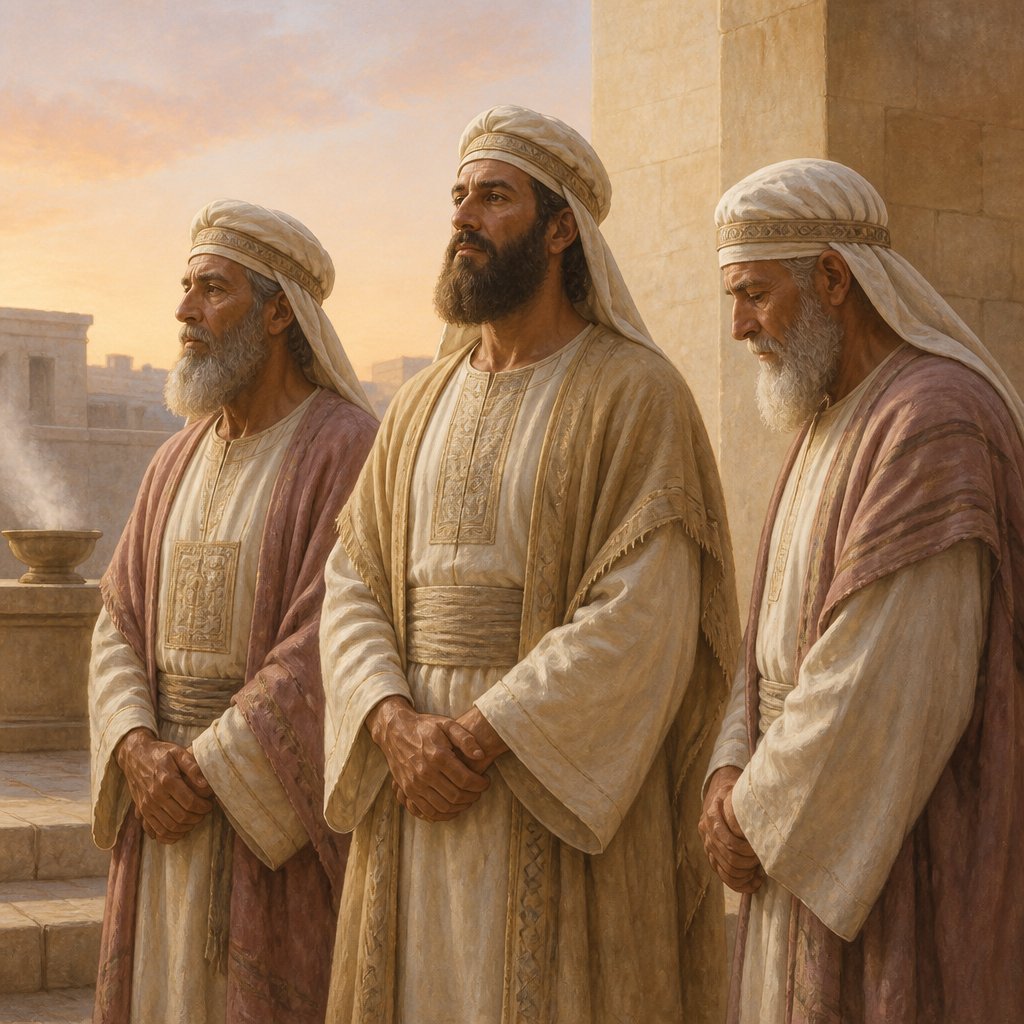
Nehemiah 12:2 from the King James Version reads, "And they sought their genealogy, but it was not found: therefore were they, as polluted, put from the priesthood."
This verse comes from the Book of Nehemiah in the Old Testament. The context of this verse is the dedication of the walls of Jerusalem that had just been completed. Nehemiah, a Jewish leader and governor, had led the people in rebuilding the walls of Jerusalem which had been destroyed by the Babylonians. The dedication of the walls was a time of great celebration and thanksgiving for the people of Jerusalem.
The specific verse, Nehemiah 12:2, refers to the priests and Levites who were seeking to establish their genealogy in order to prove their descent from the priestly line of Aaron. The priesthood was a hereditary position, and it was essential for the priests to demonstrate their eligibility for the office by proving their lineage. However, in this case, some individuals were unable to provide the necessary documentation to prove their ancestry, and as a result, they were deemed "polluted" or "unclean" and were removed from the priesthood.
The themes present in this verse include the importance of genealogy and lineage in the context of the priesthood, the significance of purity and holiness in the service of God, and the necessity of adhering to the laws and regulations set forth in the Old Testament. It also touches on the idea of accountability and the consequences of not meeting the requirements set forth by God for certain positions of leadership and service in the religious community.
The broader context of this verse speaks to the importance of upholding the standards of the priesthood and ensuring that those who serve in this sacred office do so with integrity and purity. The priests and Levites were responsible for leading the people in worship, offering sacrifices, and upholding the religious practices and traditions of the Israelites. It was crucial that those who held these positions were not only of the correct lineage but also lived lives that reflected their dedication to God and the spiritual well-being of the community.
In a broader theological sense, this verse can also be interpreted as a reminder of the importance of spiritual purity and the need to maintain a close relationship with God. Just as the priests were held to a high standard of holiness, believers today are called to live lives that reflect the values and principles set forth in the Bible. This includes seeking righteousness, pursuing a deep and authentic relationship with God, and upholding moral and ethical standards that honor God.
Symbolically, the removal of those who could not prove their ancestry serves as a reminder of the importance of authenticity and integrity in the practice of faith. It emphasizes the need for genuine faith and devotion to God, rather than simply claiming a position or status without the proper foundation.
In conclusion, Nehemiah 12:2 holds significant theological and moral implications for believers. It underscores the importance of maintaining spiritual purity and upholding the standards set forth by God. It also serves as a reminder of the need for authenticity and integrity in the practice of faith, and the consequences of not meeting the requirements set forth by God. Overall, this verse encourages believers to seek a deep and genuine relationship with God and to live lives that reflect their dedication to Him.
Get our apps


Artwork for Nehemiah 12:2

Nehemiah 12:2 - "Amariah, Malluch, Hattush,"
"Amariah, Malluch, Hattush," - Nehemiah 12:2

Nehemiah 12:26 - "These were in the days of Joiakim the son of Jeshua, the son of Jozadak, and in the days of Nehemiah the governor, and of Ezra the priest, the scribe."

Nehemiah 12:33 - "And Azariah, Ezra, and Meshullam,"

Nehemiah 12:5 - "Miamin, Maadiah, Bilgah,"

Nehemiah 12:4 - "Iddo, Ginnetho, Abijah,"

Nehemiah 12:3 - "Shechaniah, Rehum, Meremoth,"

Nehemiah 10:12 - "Zaccur, Sherebiah, Shebaniah,"

Nehemiah 12:6 - "Shemaiah, and Joiarib, Jedaiah,"

Nehemiah 12:12 - "And in the days of Joiakim were priests, the chief of the fathers: of Seraiah, Meraiah; of Jeremiah, Hananiah;"

Nehemiah 12:16 - "Of Iddo, Zechariah; of Ginnethon, Meshullam;"

Nehemiah 12:13 - "Of Ezra, Meshullam; of Amariah, Jehohanan;"

Nehemiah 12:20 - "Of Sallai, Kallai; of Amok, Eber;"

Nehemiah 12:19 - "And of Joiarib, Mattenai; of Jedaiah, Uzzi;"

Nehemiah 12:34 - "Judah, and Benjamin, and Shemaiah, and Jeremiah,"

Nehemiah 12:15 - "Of Harim, Adna; of Meraioth, Helkai;"

Nehemiah 12:18 - "Of Bilgah, Shammua; of Shemaiah, Jehonathan;"

Nehemiah 12:14 - "Of Melicu, Jonathan; of Shebaniah, Joseph;"

Nehemiah 12:21 - "Of Hilkiah, Hashabiah; of Jedaiah, Nethaneel."

Nehemiah 12:17 - "Of Abijah, Zichri; of Miniamin, of Moadiah, Piltai;"

Nehemiah 12:11 - "And Joiada begat Jonathan, and Jonathan begat Jaddua."

Nehemiah 7:12 - "The children of Elam, a thousand two hundred fifty and four."

Nehemiah 12:32 - "And after them went Hoshaiah, and half of the princes of Judah,"

"Miamin, Maadiah, Bilgah," - Nehemiah 12:5

"Shemaiah, and Joiarib, Jedaiah," - Nehemiah 12:6

"Zaccur, Sherebiah, Shebaniah," - Nehemiah 10:12

"Iddo, Ginnetho, Abijah," - Nehemiah 12:4

"Shechaniah, Rehum, Meremoth," - Nehemiah 12:3

"And Azariah, Ezra, and Meshullam," - Nehemiah 12:33

Nehemiah 12:30 - "And the priests and the Levites purified themselves, and purified the people, and the gates, and the wall."