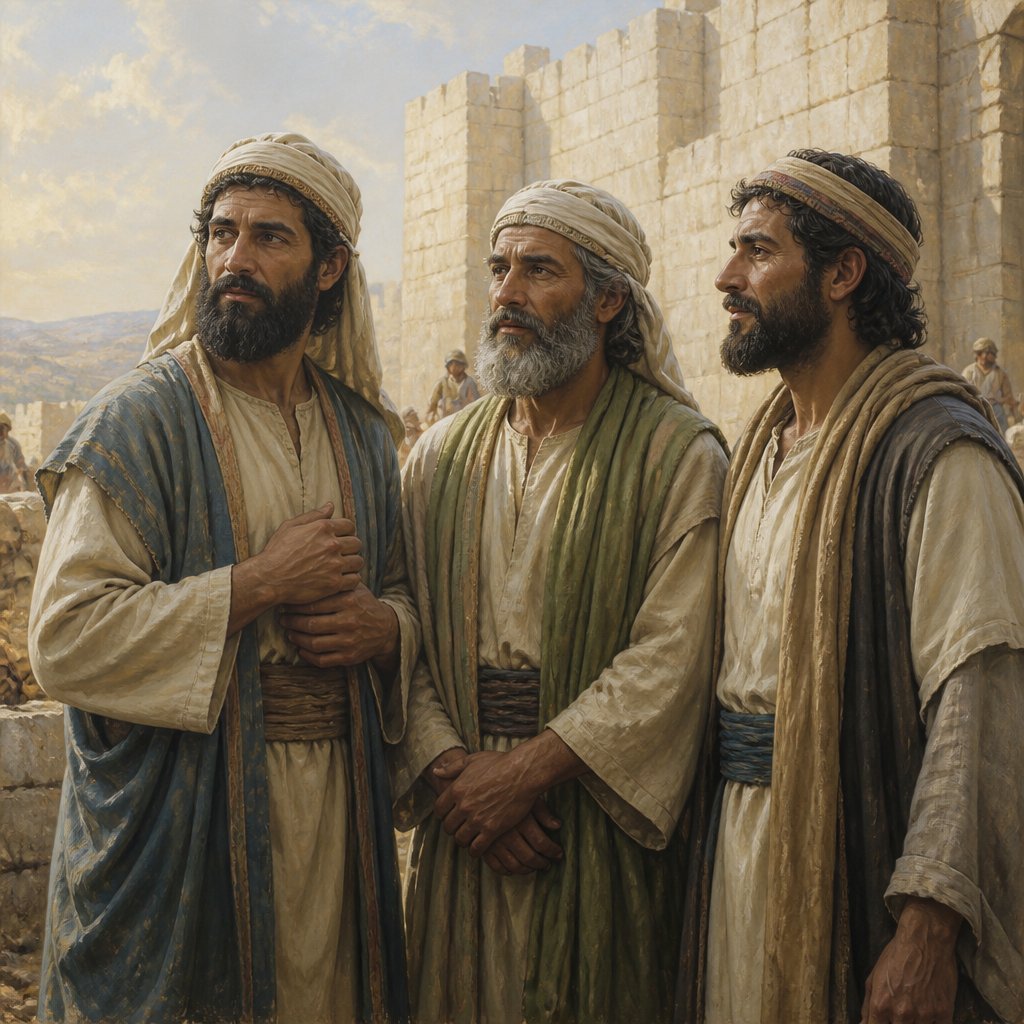
Nehemiah 12:3 (KJV) reads, "Shechaniah, Rehum, Meremoth,"
In order to understand the significance of this verse, it is important to first look at the context in which it is found. The book of Nehemiah is a historical account of the efforts to rebuild the walls of Jerusalem following the return of the Israelites from exile in Babylon. Nehemiah, a cupbearer to the Persian king, is tasked with overseeing this monumental project and leading the people in the restoration of their city.
In chapter 12, the focus shifts to the dedication of the newly reconstructed wall. The people come together to celebrate and give thanks for the completion of this important task. As part of this momentous occasion, a list of the priests and Levites who return from exile with Zerubbabel and Jeshua is recorded. Here, the verse in question lists three individuals - Shechaniah, Rehum, and Meremoth.
It is worth noting that the names of these individuals may seem insignificant at first glance, but in the broader context of the Bible, names often carry great symbolic weight. In the Hebrew tradition, names were carefully chosen to reflect the nature or destiny of an individual.
Taking a closer look at the symbolism of these names, we find that each one has a deeper meaning. Shechaniah means "dweller with Jehovah," Rehum means "compassionate," and Meremoth means "dedicated to death." These meanings can be seen as representative of the spiritual qualities and commitment of the individuals listed in the verse.
From a thematic perspective, the verse reflects the importance of community and the collective effort in the work of God. The individual priests and Levites mentioned here were all part of the larger group working towards the common goal of rebuilding the wall and restoring the city of Jerusalem. Their dedication and commitment to their faith and their people were essential in achieving this monumental task. This theme of unity and cooperation is a recurring motif throughout the book of Nehemiah and serves as a powerful example for believers today.
Moreover, the verse serves as a reminder of the importance of recognizing and honoring the contributions of every individual within the community. Each person has a role to play, and their efforts, no matter how small they may seem, are vital to the overall success of the mission. This idea of unity and the value of every member of the community is an enduring and timeless message that resonates with readers across generations.
Finally, the verse can also be seen as a reflection of the divine plan and the providential guidance of God. The names of Shechaniah, Rehum, and Meremoth, with their symbolic meanings, can be interpreted as a testament to God's presence and mercy throughout the process of rebuilding the wall. Their names serve as a reminder that it is through the dwelling with Jehovah, compassion, and dedication to death that the people were able to accomplish this incredible feat.
In conclusion, Nehemiah 12:3 (KJV) may seem like a simple list of names at first glance, but when examined within its broader context and understood through the lens of symbolism and thematic significance, it becomes clear that this verse holds deep spiritual and practical insights. It serves as a reminder of the importance of unity, the value of individual contributions, and the divine providence that sustains and guides the work of God.
Get our apps


Artwork for Nehemiah 12:3

Nehemiah 12:3 - "Shechaniah, Rehum, Meremoth,"

"Shechaniah, Rehum, Meremoth," - Nehemiah 12:3

Nehemiah 3:12 - "And next unto him repaired Shallum the son of Halohesh, the ruler of the half part of Jerusalem, he and his daughters."

Nehemiah 12:26 - "These were in the days of Joiakim the son of Jeshua, the son of Jozadak, and in the days of Nehemiah the governor, and of Ezra the priest, the scribe."

Nehemiah 12:5 - "Miamin, Maadiah, Bilgah,"

Nehemiah 12:33 - "And Azariah, Ezra, and Meshullam,"

Nehemiah 12:4 - "Iddo, Ginnetho, Abijah,"

Nehemiah 12:2 - "Amariah, Malluch, Hattush,"

Nehemiah 10:12 - "Zaccur, Sherebiah, Shebaniah,"

Nehemiah 12:6 - "Shemaiah, and Joiarib, Jedaiah,"

Nehemiah 12:12 - "And in the days of Joiakim were priests, the chief of the fathers: of Seraiah, Meraiah; of Jeremiah, Hananiah;"

Nehemiah 12:13 - "Of Ezra, Meshullam; of Amariah, Jehohanan;"

Nehemiah 12:16 - "Of Iddo, Zechariah; of Ginnethon, Meshullam;"

Nehemiah 12:20 - "Of Sallai, Kallai; of Amok, Eber;"

Nehemiah 12:19 - "And of Joiarib, Mattenai; of Jedaiah, Uzzi;"

Nehemiah 12:34 - "Judah, and Benjamin, and Shemaiah, and Jeremiah,"

Nehemiah 12:15 - "Of Harim, Adna; of Meraioth, Helkai;"

Nehemiah 12:18 - "Of Bilgah, Shammua; of Shemaiah, Jehonathan;"

Nehemiah 12:21 - "Of Hilkiah, Hashabiah; of Jedaiah, Nethaneel."

Nehemiah 12:14 - "Of Melicu, Jonathan; of Shebaniah, Joseph;"

Nehemiah 12:17 - "Of Abijah, Zichri; of Miniamin, of Moadiah, Piltai;"

Nehemiah 12:11 - "And Joiada begat Jonathan, and Jonathan begat Jaddua."

Nehemiah 10:3 - "Pashur, Amariah, Malchijah,"
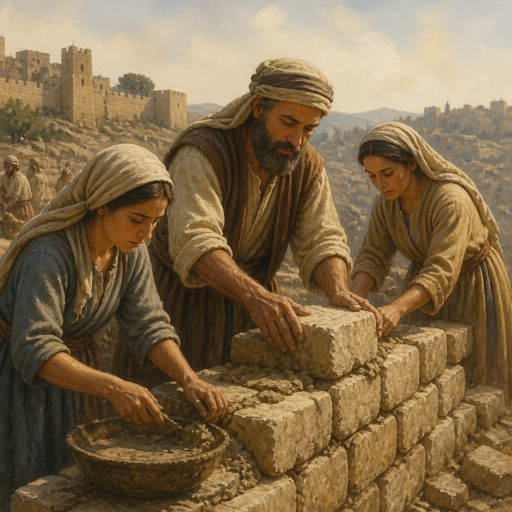
"And next unto him repaired Shallum the son of Halohesh, the ruler of the half part of Jerusalem, he and his daughters." - Nehemiah 3:12

Nehemiah 7:12 - "The children of Elam, a thousand two hundred fifty and four."

Nehemiah 12:32 - "And after them went Hoshaiah, and half of the princes of Judah,"

"Miamin, Maadiah, Bilgah," - Nehemiah 12:5

"Shemaiah, and Joiarib, Jedaiah," - Nehemiah 12:6

"Iddo, Ginnetho, Abijah," - Nehemiah 12:4

"Zaccur, Sherebiah, Shebaniah," - Nehemiah 10:12