What does Nehemiah 12:43 mean?
“Also that day they offered great sacrifices, and rejoiced: for God had made them rejoice with great joy: the wives also and the children rejoiced: so that the joy of Jerusalem was heard even afar off.” — Nehemiah 12:43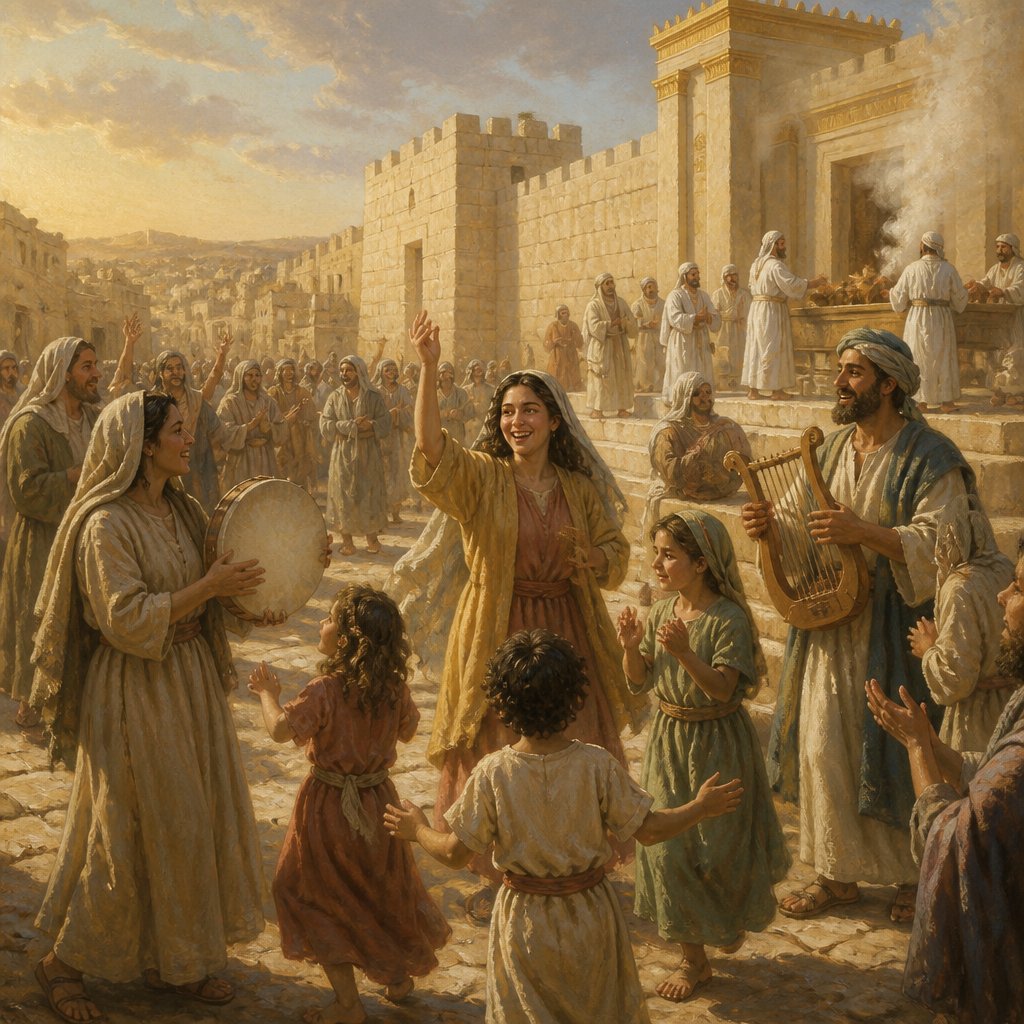
The verse Nehemiah 12:43 in the King James Version (KJV) reads, "Also that day they offered great sacrifices, and rejoiced: for God had made them rejoice with great joy: the wives also and the children rejoiced: so that the joy of Jerusalem was heard even afar off." This verse, within the context of the book of Nehemiah, offers a powerful depiction of the restoration and celebration of the people of Jerusalem.
To understand the significance of this verse, it is important to have some background on the book of Nehemiah. The book of Nehemiah is a historical account of the rebuilding of the walls of Jerusalem and the restoration of the city following the Babylonian exile. Nehemiah, a cupbearer to the Persian king, receives news of the devastation in Jerusalem and is moved to seek permission from the king to return and lead the effort to rebuild the city. With the help of the people of Jerusalem, the walls are rebuilt, and the people are restored both physically and spiritually.
The verse in question takes place during a time of great celebration and rejoicing in Jerusalem. The people offered great sacrifices and rejoiced because God had made them rejoice with great joy. This is a reflection of the gratitude and joy that the people felt towards God for restoring their city and their lives. The fact that the wives and children also rejoiced emphasizes the communal nature of the celebration and the inclusivity of the restoration. Furthermore, the text notes that the joy of Jerusalem was heard even afar off, indicating the magnitude and impact of the celebration.
One of the key themes in this verse is the restoration and redemption of Jerusalem. The city had been ravaged and left in ruins, but through the work of Nehemiah and the people, it is not only physically rebuilt but also spiritually restored. The celebration and rejoicing signify the return of hope, faith, and joy to the people of Jerusalem. It is a testament to the transformative power of God's grace and the resilience of the human spirit.
Another important theme in this verse is the communal nature of the celebration. The fact that the entire community, including wives and children, partakes in the rejoicing reflects the unity and solidarity of the people. It highlights the importance of community and shared experiences in times of joy and gratitude.
Symbolism also plays a significant role in this verse. The offering of great sacrifices represents the people's devotion and gratitude towards God. Sacrifices were a common way of expressing worship and thanksgiving in the Old Testament, and in this context, they symbolize the people's desire to honor and praise God for His faithfulness and provision.
The joy that is heard afar off symbolizes the impact and significance of the restoration of Jerusalem. It signifies the spreading of hope and faith to those beyond the city, and the recognition of God's work in the midst of His people. It also serves as a reminder of the transformative power of restoration and redemption, and its ability to inspire and uplift others.
In conclusion, Nehemiah 12:43 is a powerful testament to the restoration and celebration of the people of Jerusalem. It exemplifies themes of redemption, community, and gratitude, and uses symbolism to convey the impact and significance of the restoration. The verse serves as a reminder of the enduring faithfulness of God and the resilience of the human spirit in the face of adversity.
Get our apps


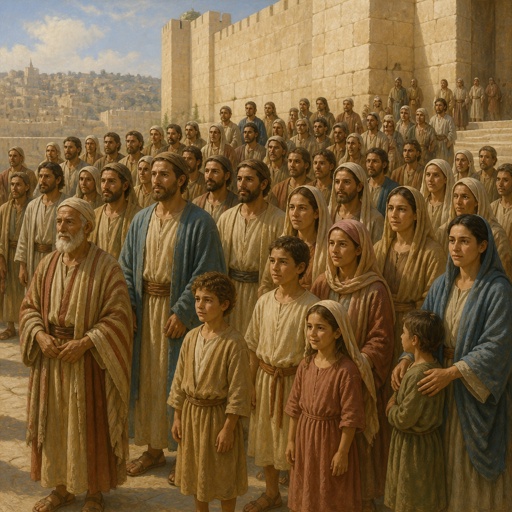
Artwork for Nehemiah 12:43
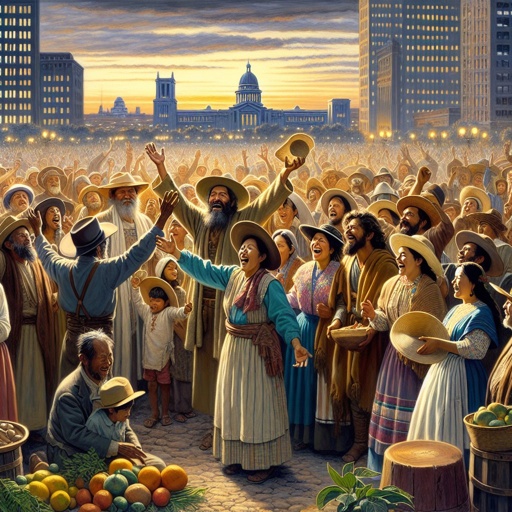
Nehemiah 12:43 - "Also that day they offered great sacrifices, and rejoiced: for God had made them rejoice with great joy: the wives also and the children rejoiced: so that the joy of Jerusalem was heard even afar off."
"Also that day they offered great sacrifices, and rejoiced: for God had made them rejoice with great joy: the wives also and the children rejoiced: so that the joy of Jerusalem was heard even afar off." - Nehemiah 12:43

Nehemiah 7:43 - "¶ The Levites: the children of Jeshua, of Kadmiel, and of the children of Hodevah, seventy and four."
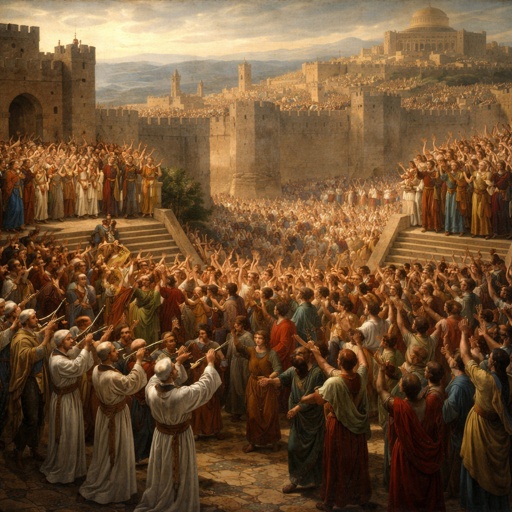
Generate a digital art style depiction of a biblical scene inspired by Nehemiah 12:27-43. The image should feature the ancient people of Israel rejoicing at the dedication of the gates, with two choirs giving thanks to God using biblical instruments with great joy. The scene should show a large crowd of people inside the walls of Israel as they were in the time of Nehemiah.
"¶ The Levites: the children of Jeshua, of Kadmiel, and of the children of Hodevah, seventy and four." - Nehemiah 7:43

Nehemiah 12:26 - "These were in the days of Joiakim the son of Jeshua, the son of Jozadak, and in the days of Nehemiah the governor, and of Ezra the priest, the scribe."

Nehemiah 12:33 - "And Azariah, Ezra, and Meshullam,"

Nehemiah 12:5 - "Miamin, Maadiah, Bilgah,"

Nehemiah 12:2 - "Amariah, Malluch, Hattush,"

Nehemiah 12:4 - "Iddo, Ginnetho, Abijah,"

Nehemiah 12:3 - "Shechaniah, Rehum, Meremoth,"

Nehemiah 10:12 - "Zaccur, Sherebiah, Shebaniah,"

Nehemiah 12:6 - "Shemaiah, and Joiarib, Jedaiah,"

Nehemiah 12:12 - "And in the days of Joiakim were priests, the chief of the fathers: of Seraiah, Meraiah; of Jeremiah, Hananiah;"

Nehemiah 12:16 - "Of Iddo, Zechariah; of Ginnethon, Meshullam;"

Nehemiah 12:13 - "Of Ezra, Meshullam; of Amariah, Jehohanan;"

Nehemiah 12:20 - "Of Sallai, Kallai; of Amok, Eber;"

John 12:43 - "For they loved the praise of men more than the praise of God."

Nehemiah 12:19 - "And of Joiarib, Mattenai; of Jedaiah, Uzzi;"

Nehemiah 12:34 - "Judah, and Benjamin, and Shemaiah, and Jeremiah,"

Nehemiah 12:15 - "Of Harim, Adna; of Meraioth, Helkai;"

Nehemiah 12:18 - "Of Bilgah, Shammua; of Shemaiah, Jehonathan;"

Nehemiah 12:14 - "Of Melicu, Jonathan; of Shebaniah, Joseph;"

Nehemiah 12:21 - "Of Hilkiah, Hashabiah; of Jedaiah, Nethaneel."

Nehemiah 12:17 - "Of Abijah, Zichri; of Miniamin, of Moadiah, Piltai;"

Nehemiah 12:11 - "And Joiada begat Jonathan, and Jonathan begat Jaddua."

Nehemiah 7:12 - "The children of Elam, a thousand two hundred fifty and four."

Nehemiah 12:32 - "And after them went Hoshaiah, and half of the princes of Judah,"

"Miamin, Maadiah, Bilgah," - Nehemiah 12:5

"Shemaiah, and Joiarib, Jedaiah," - Nehemiah 12:6