What does Nehemiah 12:46 mean?
“For in the days of David and Asaph of old there were chief of the singers, and songs of praise and thanksgiving unto God.” — Nehemiah 12:46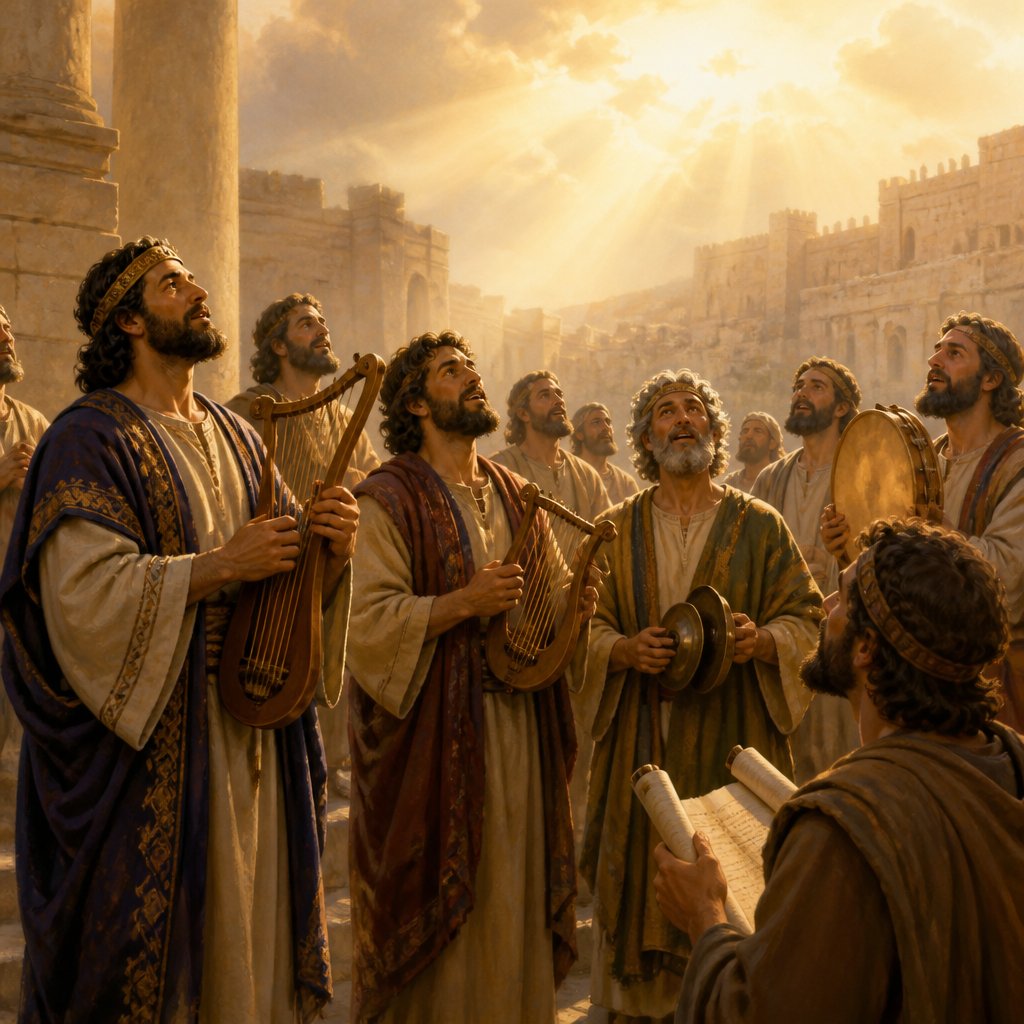
Nehemiah 12:46 in the King James Version (KJV) reads:
"For in the days of David and Asaph of old there were chief of the singers, and songs of praise and thanksgiving unto God."
This verse is part of a larger passage that describes the dedication of the wall of Jerusalem. The book of Nehemiah tells the story of Nehemiah, a Jewish leader who, with the help of local residents, rebuilt the walls of Jerusalem after they were destroyed by the Babylonians.
In this particular verse, the focus is on the importance of music and praise in the worship of God during the time of David and Asaph. David, who was known for his musical abilities and his deep connection with God through music and psalms, appointed Asaph to be the chief musician in charge of leading the songs of praise and thanksgiving to God.
The verse underscores the significance of music as a form of worship and expression of gratitude to God. The mention of "songs of praise and thanksgiving unto God" highlights the role that music played in the spiritual life of the people during the time of David and Asaph. It also serves as a reminder of the importance of music and praise in the worship traditions of the Jewish people.
The broader context of this verse emphasizes the theme of dedication and thanksgiving. The dedication of the wall of Jerusalem was a significant event for the Jewish people, as it symbolized the restoration of their city and the reaffirmation of their faith in God. The verse highlights the expression of gratitude and praise as an integral part of this dedication ceremony.
The verse also carries a sense of continuity and tradition. By referencing "the days of David and Asaph of old," the verse connects the present dedication ceremony to the worship practices of the past. This link to the past serves to reinforce the importance of maintaining traditions and honoring the heritage of faith and worship.
Symbolically, the verse portrays music and praise as powerful tools for connecting with God and expressing devotion. The act of singing songs of praise and thanksgiving is a form of spiritual offering, a way to honor and glorify God. This aligns with the broader biblical theme of the importance of worship and praise in the lives of believers.
Overall, Nehemiah 12:46 conveys a message of the enduring significance of music and praise in the worship of God. It serves as a reminder of the role that music played in the spiritual life of the people during the time of David and Asaph, and it underscores the importance of gratitude and dedication in the practice of faith. The verse also highlights the connection between past traditions and present-day worship, emphasizing the continuity of spiritual practices across generations. It ultimately calls on believers to engage in heartfelt praise and thanksgiving as a means of honoring and connecting with God.
Get our apps


Artwork for Nehemiah 12:46

Nehemiah 12:46 - "For in the days of David and Asaph of old there were chief of the singers, and songs of praise and thanksgiving unto God."
"For in the days of David and Asaph of old there were chief of the singers, and songs of praise and thanksgiving unto God." - Nehemiah 12:46

Nehemiah 7:46 - "¶ The Nethinims: the children of Ziha, the children of Hashupha, the children of Tabbaoth,"
"¶ The Nethinims: the children of Ziha, the children of Hashupha, the children of Tabbaoth," - Nehemiah 7:46

Nehemiah 12:26 - "These were in the days of Joiakim the son of Jeshua, the son of Jozadak, and in the days of Nehemiah the governor, and of Ezra the priest, the scribe."

Nehemiah 12:5 - "Miamin, Maadiah, Bilgah,"

Nehemiah 12:33 - "And Azariah, Ezra, and Meshullam,"

Nehemiah 12:4 - "Iddo, Ginnetho, Abijah,"

Nehemiah 12:2 - "Amariah, Malluch, Hattush,"

Nehemiah 12:3 - "Shechaniah, Rehum, Meremoth,"

Nehemiah 10:12 - "Zaccur, Sherebiah, Shebaniah,"

Nehemiah 12:6 - "Shemaiah, and Joiarib, Jedaiah,"

Nehemiah 12:12 - "And in the days of Joiakim were priests, the chief of the fathers: of Seraiah, Meraiah; of Jeremiah, Hananiah;"

Nehemiah 12:13 - "Of Ezra, Meshullam; of Amariah, Jehohanan;"

Nehemiah 12:16 - "Of Iddo, Zechariah; of Ginnethon, Meshullam;"

Nehemiah 12:20 - "Of Sallai, Kallai; of Amok, Eber;"

Nehemiah 12:19 - "And of Joiarib, Mattenai; of Jedaiah, Uzzi;"

Nehemiah 12:34 - "Judah, and Benjamin, and Shemaiah, and Jeremiah,"

Nehemiah 12:15 - "Of Harim, Adna; of Meraioth, Helkai;"

Nehemiah 12:18 - "Of Bilgah, Shammua; of Shemaiah, Jehonathan;"

Nehemiah 12:21 - "Of Hilkiah, Hashabiah; of Jedaiah, Nethaneel."

Nehemiah 12:14 - "Of Melicu, Jonathan; of Shebaniah, Joseph;"

Isaiah 46:12 - "¶ Hearken unto me, ye stouthearted, that are far from righteousness:"

Nehemiah 12:17 - "Of Abijah, Zichri; of Miniamin, of Moadiah, Piltai;"

Nehemiah 12:11 - "And Joiada begat Jonathan, and Jonathan begat Jaddua."

John 12:46 - "I am come a light into the world, that whosoever believeth on me should not abide in darkness."

Nehemiah 7:12 - "The children of Elam, a thousand two hundred fifty and four."

Nehemiah 12:32 - "And after them went Hoshaiah, and half of the princes of Judah,"

"Miamin, Maadiah, Bilgah," - Nehemiah 12:5

"Shemaiah, and Joiarib, Jedaiah," - Nehemiah 12:6