What does Nehemiah 12:8 mean?
“Moreover the Levites: Jeshua, Binnui, Kadmiel, Sherebiah, Judah, and Mattaniah, which was over the thanksgiving, he and his brethren.” — Nehemiah 12:8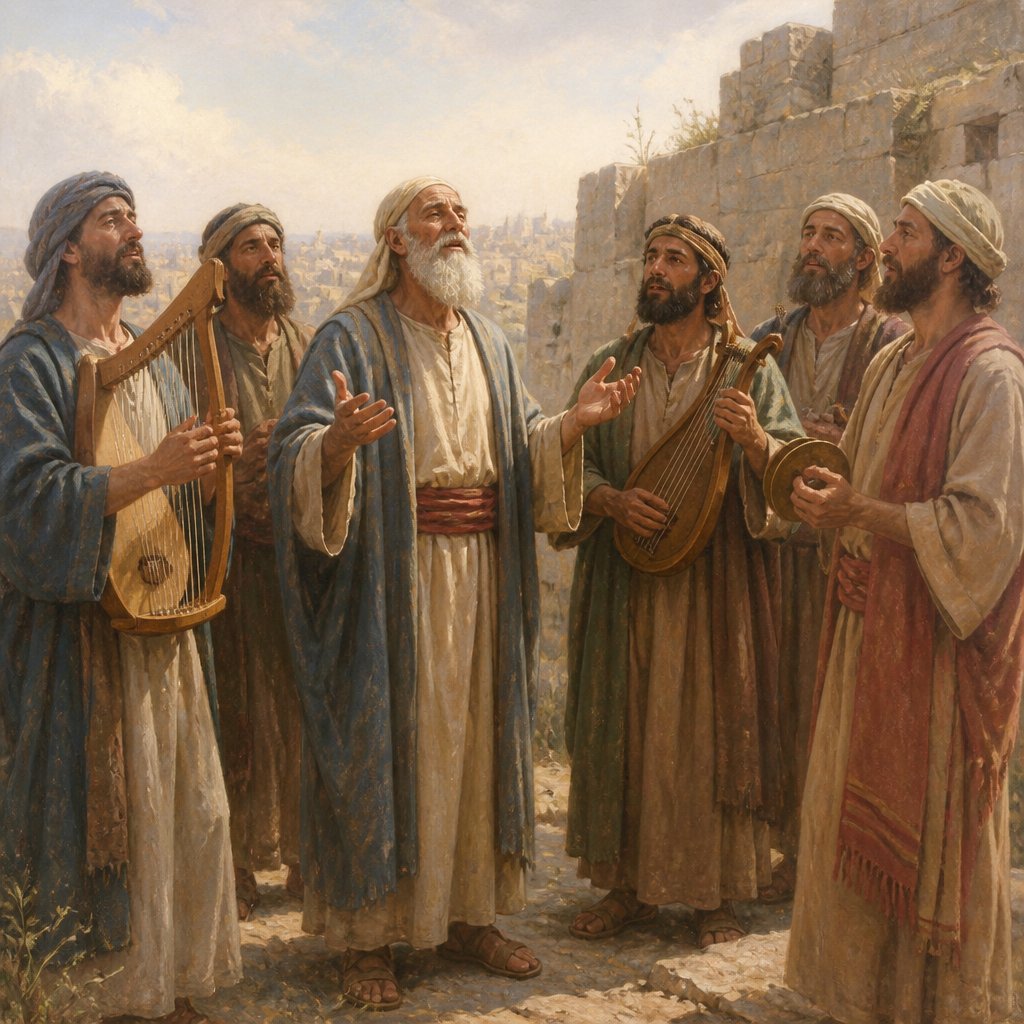
Nehemiah 12:8 (KJV) reads, "Moreover the Levites: Jeshua, Binnui, Kadmiel, Sherebiah, Judah, and Mattaniah, which was over the thanksgiving, he and his brethren."
In order to provide a detailed and in-depth analysis of this verse, it is important to provide some context from the book of Nehemiah. The book of Nehemiah is part of the Hebrew Bible and the Christian Old Testament. It tells the story of Nehemiah, a Jewish leader who oversaw the rebuilding of the walls of Jerusalem in the 5th century BCE, following the Babylonian exile. The verse in question is a part of a description of the priests and Levites who participated in the dedication of the rebuilt wall of Jerusalem.
The verse specifically mentions the names of several Levites who played a role in the dedication ceremony. These individuals were Jeshua, Binnui, Kadmiel, Sherebiah, Judah, and Mattaniah, who was in charge of the thanksgiving. It is important to note that the Levites were a tribe of Israel who were responsible for assisting the priests in the worship and ritual practices of the Tabernacle and later the Temple in Jerusalem.
One of the key themes to consider in this verse is the importance of gratitude and thanksgiving in the context of religious worship. The mention of Mattaniah being in charge of the thanksgiving indicates the significance of expressing gratitude to God for His faithfulness and provision. In the Hebrew tradition, thanksgiving was a central aspect of worship, and it was often accompanied by song and praise. The role of Mattaniah and his brethren in leading the thanksgiving suggests that this was a crucial element of the dedication ceremony for the rebuilt wall.
Furthermore, the verse serves as a reminder of the significance of the Levites in the religious life of the Israelites. The Levites played a vital role in the priestly duties and the administration of the Tabernacle and the Temple. Their responsibilities included singing, playing instruments, and assisting the priests in the sacrificial rituals. By naming these Levites, the verse highlights the importance of their contributions to the religious and communal life of the people.
Symbolically, the dedication of the rebuilt wall and the involvement of the Levites can be seen as a representation of the restoration and renewal of the faith and identity of the Jewish people. The rebuilding of the wall was a tangible and symbolic act of revitalization for the community of Jerusalem. The participation of the Levites in the dedication ceremony underscores the spiritual dimension of this renewal, emphasizing the role of gratitude and worship in the restoration of the people.
In conclusion, Nehemiah 12:8 is a verse that provides insight into the religious and communal life of the Jewish people during the period of the rebuilding of Jerusalem. It highlights the significance of gratitude and thanksgiving in the context of worship, and it emphasizes the important role of the Levites in the religious and communal life of the people. The verse also serves as a symbol of the renewal and restoration of the faith and identity of the Jewish community. Overall, it offers a glimpse into the spiritual and cultural significance of this historical period in the life of the Israelites.
Get our apps


Artwork for Nehemiah 12:8

Nehemiah 12:8 - "Moreover the Levites: Jeshua, Binnui, Kadmiel, Sherebiah, Judah, and Mattaniah, which was over the thanksgiving, he and his brethren."
"Moreover the Levites: Jeshua, Binnui, Kadmiel, Sherebiah, Judah, and Mattaniah, which was over the thanksgiving, he and his brethren." - Nehemiah 12:8

Nehemiah 8:12 - "And all the people went their way to eat, and to drink, and to send portions, and to make great mirth, because they had understood the words that were declared unto them."

Nehemiah 8:10

Nehemiah 12:26 - "These were in the days of Joiakim the son of Jeshua, the son of Jozadak, and in the days of Nehemiah the governor, and of Ezra the priest, the scribe."

Nehemiah 8:10

Nehemiah 8:10

Nehemiah 12:5 - "Miamin, Maadiah, Bilgah,"

Nehemiah 12:33 - "And Azariah, Ezra, and Meshullam,"

Nehemiah 12:4 - "Iddo, Ginnetho, Abijah,"

Nehemiah 12:2 - "Amariah, Malluch, Hattush,"

Nehemiah 12:3 - "Shechaniah, Rehum, Meremoth,"

Nehemiah 10:12 - "Zaccur, Sherebiah, Shebaniah,"

Nehemiah 12:6 - "Shemaiah, and Joiarib, Jedaiah,"

Nehemiah 12:12 - "And in the days of Joiakim were priests, the chief of the fathers: of Seraiah, Meraiah; of Jeremiah, Hananiah;"

Nehemiah 12:13 - "Of Ezra, Meshullam; of Amariah, Jehohanan;"

Nehemiah 12:16 - "Of Iddo, Zechariah; of Ginnethon, Meshullam;"

Nehemiah 12:20 - "Of Sallai, Kallai; of Amok, Eber;"

Nehemiah 12:19 - "And of Joiarib, Mattenai; of Jedaiah, Uzzi;"

Nehemiah 12:34 - "Judah, and Benjamin, and Shemaiah, and Jeremiah,"

Nehemiah 12:15 - "Of Harim, Adna; of Meraioth, Helkai;"

Nehemiah 12:18 - "Of Bilgah, Shammua; of Shemaiah, Jehonathan;"

Nehemiah 12:21 - "Of Hilkiah, Hashabiah; of Jedaiah, Nethaneel."

Nehemiah 12:14 - "Of Melicu, Jonathan; of Shebaniah, Joseph;"

Nehemiah 12:17 - "Of Abijah, Zichri; of Miniamin, of Moadiah, Piltai;"

Nehemiah 8:8 - "So they read in the book in the law of God distinctly, and gave the sense, and caused them to understand the reading."

Nehemiah 12:11 - "And Joiada begat Jonathan, and Jonathan begat Jaddua."

Nehemiah 10:8 - "Maaziah, Bilgai, Shemaiah: these were the priests."

Nehemiah 7:12 - "The children of Elam, a thousand two hundred fifty and four."

Nehemiah 12:32 - "And after them went Hoshaiah, and half of the princes of Judah,"