What does Nehemiah 13:12 mean?
“Then brought all Judah the tithe of the corn and the new wine and the oil unto the treasuries.” — Nehemiah 13:12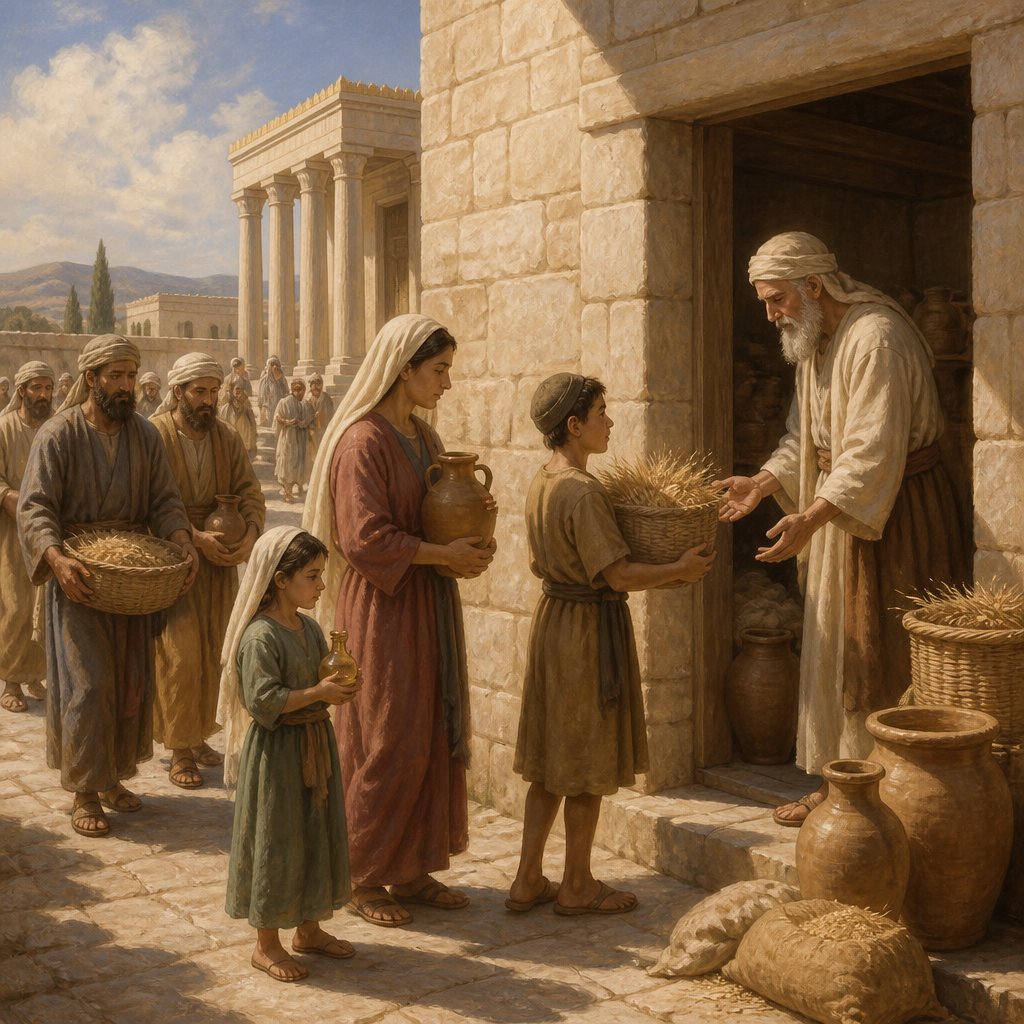
The verse Nehemiah 13:12 in the King James Version (KJV) of the Bible reads, "Then brought all Judah the tithe of the corn and the new wine and the oil unto the treasuries."
This verse is found in the book of Nehemiah, which is a historical account of the efforts to rebuild the walls of Jerusalem and restore the city after the Babylonian exile. Nehemiah, a high-ranking official in the court of King Artaxerxes I of Persia, was given permission by the king to return to Jerusalem and oversee the reconstruction efforts. This verse comes towards the end of the book, and it describes the reinstatement of the tithes in the temple after Nehemiah discovers that the Levites, who rely on the tithes for their livelihood, have not been receiving their portion.
The tithe, which refers to the giving of a tenth of one's income or produce, is a recurring theme in the Old Testament. In this context, the tithe of the corn, new wine, and oil signifies the agricultural produce and resources that the people of Judah were required to give to the Levites, who were the tribe responsible for the religious duties and teaching of the Israelites. The failure to bring the tithe had resulted in the neglect of the Levites, as they had no means of sustenance.
The reinstatement of the tithe is significant in several ways. Firstly, it demonstrates the obedience and commitment of the people of Judah to the Mosaic Law, which outlined the regulations and requirements for tithing. The fact that they brought the tithe to the treasuries shows their willingness to uphold their religious duties and support the Levites who were tasked with the spiritual wellbeing of the community.
Secondly, the reinstatement of the tithe reflects a sense of repentance and renewal among the people of Judah. The neglect of the Levites had caused a disruption in the religious practices and services, and by bringing the tithe, the people were demonstrating their desire to rectify their wrongs and restore the proper order of things.
Furthermore, this verse also highlights the importance of stewardship and generosity. The act of giving the tithe was not just a religious obligation, but it was also a way for the people to show their gratitude and trust in God. By giving the first fruits of their produce, they were acknowledging God as the ultimate provider and sustainer of their lives.
In a broader context, this verse also speaks to the themes of social justice and caring for the marginalized. The tithe was intended to support those who were involved in the religious ministry and had no land to cultivate for their livelihood. It was a way of ensuring that the Levites, who had dedicated their lives to the service of God, were taken care of by the rest of the community.
Symbolically, the tithe of the corn, new wine, and oil represents the entirety of the people's labor and resources. It signifies their acknowledgment of God's sovereignty and their commitment to honoring Him with their possessions. The treasuries mentioned in the verse symbolize the place where these offerings were stored, and by bringing the tithe to the treasuries, the people were actively participating in the preservation and maintenance of their religious traditions and institutions.
In conclusion, Nehemiah 13:12 in the KJV of the Bible portrays the reinstatement of the tithe as a pivotal moment in the spiritual and communal life of the people of Judah. It signifies their obedience to God's commandments, their desire for renewal and repentance, and their commitment to supporting the religious institutions and those who served in them. The verse serves as a reminder of the importance of stewardship, generosity, and social justice within the faith community.
Get our apps


Artwork for Nehemiah 13:12

Nehemiah 13:12 - "Then brought all Judah the tithe of the corn and the new wine and the oil unto the treasuries."
"Then brought all Judah the tithe of the corn and the new wine and the oil unto the treasuries." - Nehemiah 13:12

Nehemiah 12:13 - "Of Ezra, Meshullam; of Amariah, Jehohanan;"

"Of Ezra, Meshullam; of Amariah, Jehohanan;" - Nehemiah 12:13

Nehemiah 11:13

Nehemiah 12:26 - "These were in the days of Joiakim the son of Jeshua, the son of Jozadak, and in the days of Nehemiah the governor, and of Ezra the priest, the scribe."

Nehemiah 10:13 - "Hodijah, Bani, Beninu."

Nehemiah 12:33 - "And Azariah, Ezra, and Meshullam,"

Nehemiah 12:5 - "Miamin, Maadiah, Bilgah,"

Nehemiah 12:2 - "Amariah, Malluch, Hattush,"

Nehemiah 12:4 - "Iddo, Ginnetho, Abijah,"

Nehemiah 12:3 - "Shechaniah, Rehum, Meremoth,"

Nehemiah 10:12 - "Zaccur, Sherebiah, Shebaniah,"

Nehemiah 12:6 - "Shemaiah, and Joiarib, Jedaiah,"

Nehemiah 12:12 - "And in the days of Joiakim were priests, the chief of the fathers: of Seraiah, Meraiah; of Jeremiah, Hananiah;"

Nehemiah 12:16 - "Of Iddo, Zechariah; of Ginnethon, Meshullam;"

Nehemiah 12:20 - "Of Sallai, Kallai; of Amok, Eber;"

Nehemiah 12:19 - "And of Joiarib, Mattenai; of Jedaiah, Uzzi;"

Nehemiah 12:34 - "Judah, and Benjamin, and Shemaiah, and Jeremiah,"

Nehemiah 12:15 - "Of Harim, Adna; of Meraioth, Helkai;"

Nehemiah 12:18 - "Of Bilgah, Shammua; of Shemaiah, Jehonathan;"

Nehemiah 12:14 - "Of Melicu, Jonathan; of Shebaniah, Joseph;"

Nehemiah 12:21 - "Of Hilkiah, Hashabiah; of Jedaiah, Nethaneel."

Nehemiah 12:17 - "Of Abijah, Zichri; of Miniamin, of Moadiah, Piltai;"

Nehemiah 7:13 - "The children of Zattu, eight hundred forty and five."

Nehemiah 12:11 - "And Joiada begat Jonathan, and Jonathan begat Jaddua."

"Hodijah, Bani, Beninu." - Nehemiah 10:13

Nehemiah 7:12 - "The children of Elam, a thousand two hundred fifty and four."

Nehemiah 12:32 - "And after them went Hoshaiah, and half of the princes of Judah,"

"Miamin, Maadiah, Bilgah," - Nehemiah 12:5