What does Nehemiah 13:22 mean?
“And I commanded the Levites that they should cleanse themselves, and that they should come and keep the gates, to sanctify the sabbath day. Remember me, O my God, concerning this also, and spare me according to the greatness of thy mercy.” — Nehemiah 13:22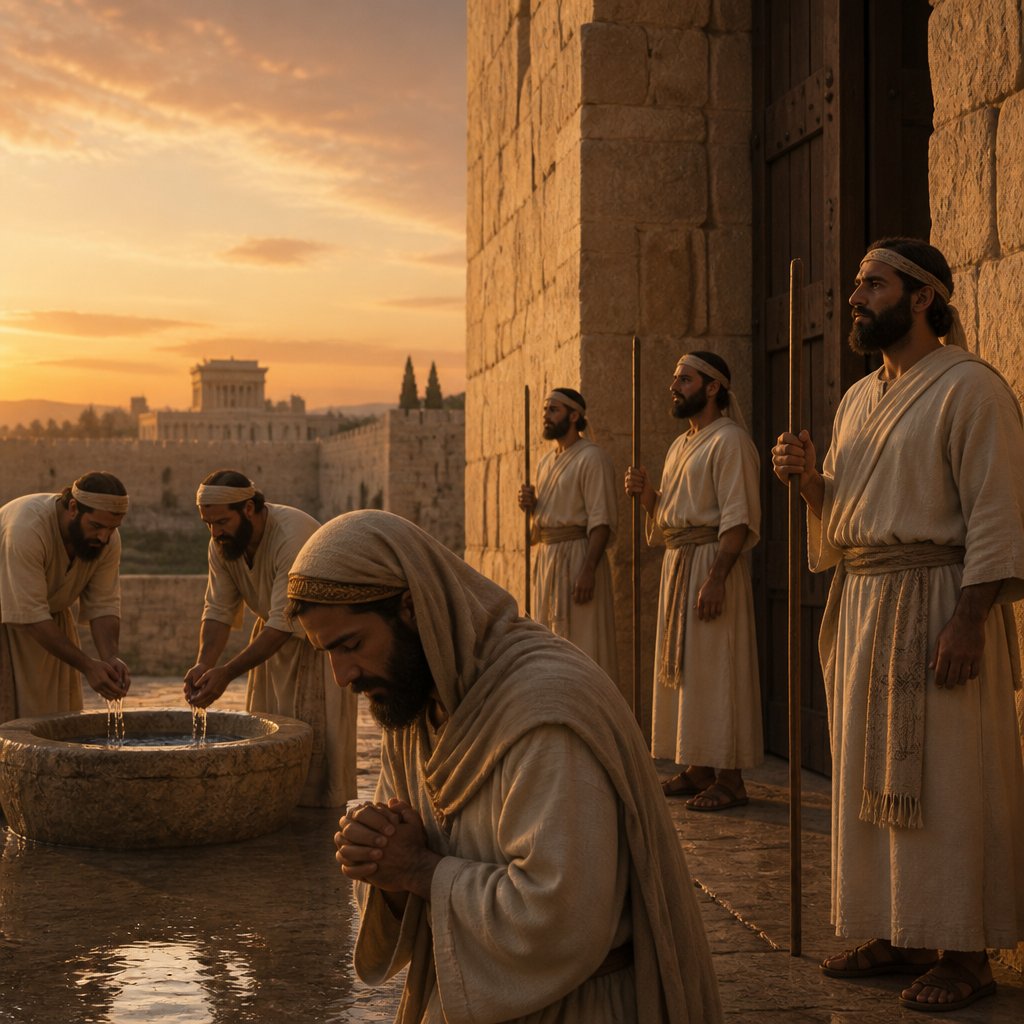
The verse Nehemiah 13:22 in the King James Version of the Bible states, "And I commanded the Levites that they should cleanse themselves, and that they should come and keep the gates, to sanctify the sabbath day. Remember me, O my God, concerning this also, and spare me according to the greatness of thy mercy."
This verse is found in the book of Nehemiah, which is part of the Old Testament. Nehemiah is a historical and spiritual figure who served as a cupbearer to the Persian king Artaxerxes before being appointed as the governor of Judah. He is known for leading the Jews in the rebuilding of the walls of Jerusalem and for his zealous efforts to reform and restore the spiritual and social life of the people.
Nehemiah 13:22 comes at the end of the book, where Nehemiah is recounting his efforts to maintain the sanctity of the Sabbath day. In this verse, he commands the Levites, who were responsible for religious duties, to cleanse themselves and guard the gates of the city to ensure that the Sabbath day is kept holy and sanctified. This reflects the importance Nehemiah placed on upholding the commandments and traditions of the Jewish faith.
The verse also ends with a plea to God to remember Nehemiah and spare him according to the greatness of His mercy. This reflects Nehemiah's humility and reliance on God's mercy and grace as he seeks to fulfill his duties as a leader and servant of the people.
One of the overarching themes of this verse is the importance of upholding religious observances and traditions. Nehemiah's dedication to securing the sanctity of the Sabbath day serves as a powerful example of the value he placed on preserving the spiritual identity of the Jewish people. It also emphasizes the significance of maintaining a strong connection to their faith and God's commandments.
Furthermore, the verse highlights the role of spiritual leadership and the responsibilities that come with it. Nehemiah's command to the Levites to cleanse themselves and guard the gates demonstrates his commitment to ensuring that the leaders of the community set a positive example and uphold the standards of religious purity and devotion.
Additionally, the verse showcases the idea of divine mercy and the need for God's intervention in the life of a believer. Nehemiah's plea for God to remember him and spare him according to His mercy reflects his reliance on God's benevolence and compassion. It serves as a reminder of the importance of seeking and trusting in God's grace and forgiveness, especially in times of need or difficulty.
Symbolically, the cleansing of the Levites represents the purification of the spiritual leadership and the need for moral and ethical purity in serving God and the community. The act of guarding the gates symbolizes the protection of the sanctity of the Sabbath day and the preservation of religious traditions.
In conclusion, Nehemiah 13:22 holds significant meaning within the context of the book of Nehemiah and within the broader themes of faith, leadership, and divine mercy found in the Bible. It serves as a reminder of the importance of upholding religious observances and traditions, the responsibilities of spiritual leadership, and the reliance on God's mercy and grace. The verse carries a message of dedication, humility, and trust in God's providence, making it a meaningful and powerful passage for believers.
Get our apps


Artwork for Nehemiah 13:22

Nehemiah 13:22 - "And I commanded the Levites that they should cleanse themselves, and that they should come and keep the gates, to sanctify the sabbath day. Remember me, O my God, concerning this also, and spare me according to the greatness of thy mercy."
"And I commanded the Levites that they should cleanse themselves, and that they should come and keep the gates, to sanctify the sabbath day. Remember me, O my God, concerning this also, and spare me according to the greatness of thy mercy." - Nehemiah 13:22

Nehemiah 10:22 - "Pelatiah, Hanan, Anaiah,"

Nehemiah 11:13

Nehemiah 7:22 - "The children of Hashum, three hundred twenty and eight."

Nehemiah 3:22 - "And after him repaired the priests, the men of the plain."

Nehemiah 10:13 - "Hodijah, Bani, Beninu."

Nehemiah 12:13 - "Of Ezra, Meshullam; of Amariah, Jehohanan;"

"Pelatiah, Hanan, Anaiah," - Nehemiah 10:22

Nehemiah 7:13 - "The children of Zattu, eight hundred forty and five."

"Hodijah, Bani, Beninu." - Nehemiah 10:13

"Of Ezra, Meshullam; of Amariah, Jehohanan;" - Nehemiah 12:13

Nehemiah 13:12 - "Then brought all Judah the tithe of the corn and the new wine and the oil unto the treasuries."

"And after him repaired the priests, the men of the plain." - Nehemiah 3:22

"The children of Hashum, three hundred twenty and eight." - Nehemiah 7:22

Nehemiah 13:31 - "And for the wood offering, at times appointed, and for the firstfruits. Remember me, O my God, for good."

Nehemiah 13:20 - "So the merchants and sellers of all kind of ware lodged without Jerusalem once or twice."

Nehemiah 12:22 - "¶ The Levites in the days of Eliashib, Joiada, and Johanan, and Jaddua, were recorded chief of the fathers: also the priests, to the reign of Darius the Persian."

Nehemiah 13:4 - "¶ And before this, Eliashib the priest, having the oversight of the chamber of the house of our God, was allied unto Tobiah:"

Nehemiah 13:23 - "¶ In those days also saw I Jews that had married wives of Ashdod, of Ammon, and of Moab:"

Nehemiah 13:29 - "Remember them, O my God, because they have defiled the priesthood, and the covenant of the priesthood, and of the Levites."

Nehemiah 13:24 - "And their children spake half in the speech of Ashdod, and could not speak in the Jews' language, but according to the language of each people."

Nehemiah 13:8 - "And it grieved me sore: therefore I cast forth all the household stuff of Tobiah out of the chamber."

Nehemiah 13:3 - "Now it came to pass, when they had heard the law, that they separated from Israel all the mixed multitude."

"The children of Zattu, eight hundred forty and five." - Nehemiah 7:13

Nehemiah 13:9 - "Then I commanded, and they cleansed the chambers: and thither brought I again the vessels of the house of God, with the meat offering and the frankincense."

Nehemiah 13:7 - "And I came to Jerusalem, and understood of the evil that Eliashib did for Tobiah, in preparing him a chamber in the courts of the house of God."

Nehemiah 13:13 - "And I made treasurers over the treasuries, Shelemiah the priest, and Zadok the scribe, and of the Levites, Pedaiah: and next to them was Hanan the son of Zaccur, the son of Mattaniah: for they were counted faithful, and their office was to distribute unto their brethren."

Nehemiah 13:30 - "Thus cleansed I them from all strangers, and appointed the wards of the priests and the Levites, every one in his business;"

Nehemiah 13:17 - "Then I contended with the nobles of Judah, and said unto them, What evil thing is this that ye do, and profane the sabbath day?"