What does Nehemiah 4:14 mean?
“And I looked, and rose up, and said unto the nobles, and to the rulers, and to the rest of the people, Be not ye afraid of them: remember the Lord, which is great and terrible, and fight for your brethren, your sons, and your daughters, your wives, and your houses.” — Nehemiah 4:14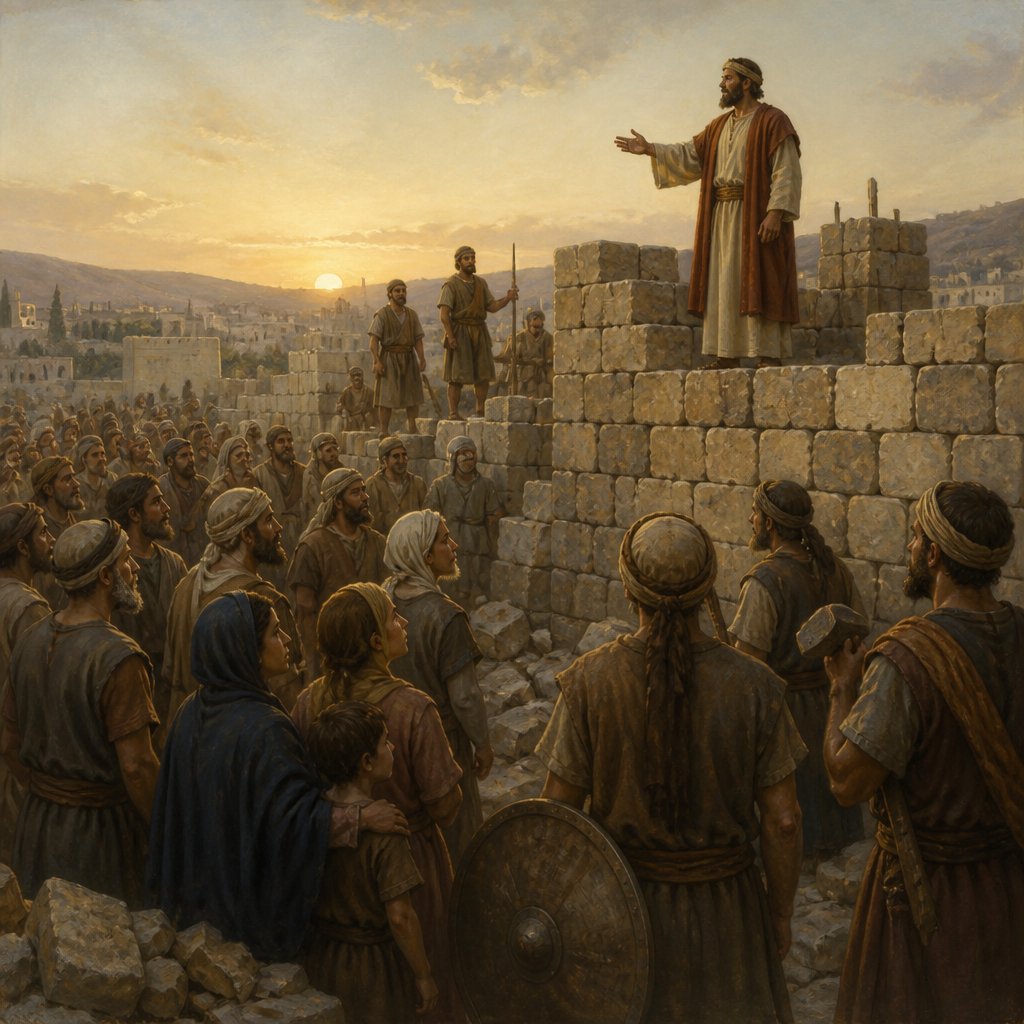
The verse Nehemiah 4:14 from the King James Version (KJV) reads, "And I looked, and rose up, and said unto the nobles, and to the rulers, and to the rest of the people, Be not ye afraid of them: remember the Lord, which is great and terrible, and fight for your brethren, your sons, and your daughters, your wives, and your houses."
This verse is part of the book of Nehemiah, which is an account of the reconstruction of the walls of Jerusalem. Nehemiah was a Jewish leader who had been appointed governor of Judah by the Persian king Artaxerxes. He led a group of exiled Jews back to Jerusalem to rebuild the city and its defenses.
In Nehemiah 4:14, Nehemiah is addressing the people of Jerusalem, including the nobles, rulers, and other citizens, in the face of opposition and threats from their enemies. The verse presents several key themes and messages that are relevant to both the historical context of the book and the broader theological implications.
One of the main themes of this verse is courage and faith in the face of adversity. Nehemiah exhorts the people not to be afraid of their enemies but to remember the Lord, who is great and terrible. This call to courage and faith in God's power is a recurring theme throughout the Bible, especially in the Old Testament. It emphasizes the importance of trusting in God's strength and protection in times of trouble.
The verse also speaks to the idea of fighting for one's family and community. Nehemiah implores the people to fight for their brethren, sons, daughters, wives, and houses. This underscores the importance of standing up for and defending one's loved ones and the wider community. It reflects the biblical emphasis on the interconnectedness of individuals within a community and the responsibility to protect and support one another.
Additionally, the verse carries a message of leadership and responsibility. Nehemiah, as a leader and governor, is effectively rallying the people to take action and defend their city. His words demonstrate the qualities of a strong, charismatic leader who is able to inspire and motivate his followers in the face of danger. This theme of leadership and responsibility is relevant not only to the specific historical context of Nehemiah's time but also to broader discussions of effective leadership and stewardship in both religious and secular contexts.
The verse also contains rich symbolism that is significant within the broader biblical narrative. The idea of rebuilding the walls of Jerusalem is a powerful symbol of restoration, protection, and security. It speaks to the broader themes of redemption and resilience in the face of destruction and adversity. The image of rebuilding the walls can be seen as a metaphor for the restoration of the people of Israel and their relationship with God.
Furthermore, the exhortation to fight for one's brethren and family carries symbolism that extends to the spiritual realm. It speaks to the larger biblical message of spiritual warfare and the need to stand firm in the face of spiritual opposition. The call to remember the Lord emphasizes the importance of maintaining a strong faith and trust in God's power, even in times of difficulty.
In conclusion, Nehemiah 4:14 contains a wealth of theological and practical significance. It reflects important themes of courage, faith, leadership, and community responsibility. The verse's emphasis on trusting in God's strength and the importance of standing up for one's family and community holds timeless relevance for believers. Its symbolism of rebuilding and defending Jerusalem also speaks to broader themes of spiritual restoration and resilience.
Get our apps


Artwork for Nehemiah 4:14
Nehemiah 4:14 - "And I looked, and rose up, and said unto the nobles, and to the rulers, and to the rest of the people, Be not ye afraid of them: remember the Lord, which is great and terrible, and fight for your brethren, your sons, and your daughters, your wives, and your houses."
"And I looked, and rose up, and said unto the nobles, and to the rulers, and to the rest of the people, Be not ye afraid of them: remember the Lord, which is great and terrible, and fight for your brethren, your sons, and your daughters, your wives, and your houses." - Nehemiah 4:14

Nehemiah 11:11-14

Nehemiah 12:14 - "Of Melicu, Jonathan; of Shebaniah, Joseph;"

Nehemiah 4:6

Nehemiah 4:6

Nehemiah 4:6

Nehemiah 7:14 - "The children of Zaccai, seven hundred and threescore."

Nehemiah 12:4 - "Iddo, Ginnetho, Abijah,"

Nehemiah 10:4 - "Hattush, Shebaniah, Malluch,"

Nehemiah 10:14 - "The chief of the people; Parosh, Pahath-moab, Elam, Zatthu, Bani,"
"Of Melicu, Jonathan; of Shebaniah, Joseph;" - Nehemiah 12:14

Nehemiah 2:14 - "Then I went on to the gate of the fountain, and to the king's pool: but there was no place for the beast that was under me to pass."

"Iddo, Ginnetho, Abijah," - Nehemiah 12:4

"Hattush, Shebaniah, Malluch," - Nehemiah 10:4
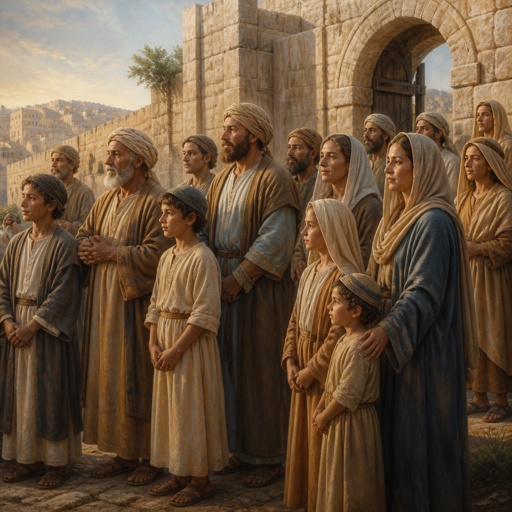
"The children of Zaccai, seven hundred and threescore." - Nehemiah 7:14

Nehemiah 4:4 - "Hear, O our God; for we are despised: and turn their reproach upon their own head, and give them for a prey in the land of captivity:"
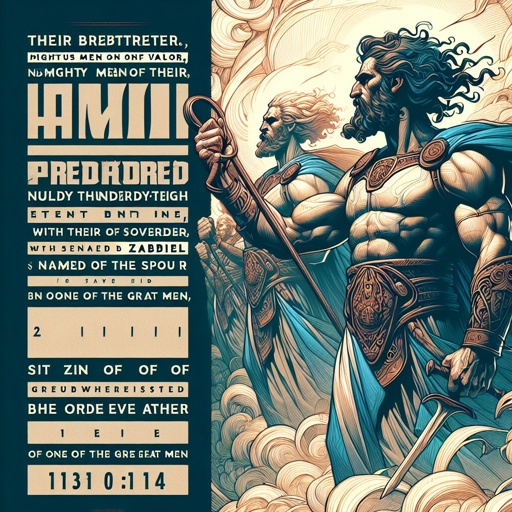
Nehemiah 11:14 - "And their brethren, mighty men of valour, an hundred twenty and eight: and their overseer was Zabdiel, the son of one of the great men."

Nehemiah 4:8 - "And conspired all of them together to come and to fight against Jerusalem, and to hinder it."

Nehemiah 4:17 – "Those who carried materials did their work with one hand and held a weapon in the other."

Nehemiah 7:4 - "Now the city was large and great: but the people were few therein, and the houses were not builded."

Nehemiah 4:17 – "Those who carried materials did their work with one hand and held a weapon in the other."

Nehemiah 8:14 - "And they found written in the law which the LORD had commanded by Moses, that the children of Israel should dwell in booths in the feast of the seventh month:"

Nehemiah 13:4 - "¶ And before this, Eliashib the priest, having the oversight of the chamber of the house of our God, was allied unto Tobiah:"

Nehemiah 9:14 - "And madest known unto them thy holy sabbath, and commandedst them precepts, statutes, and laws, by the hand of Moses thy servant:"

Nehemiah 2:4 (KJVA) 4 Then the king said unto me, For what dost thou make request? So I prayed to the God of heaven.

Nehemiah 5:4 - "There were also that said, We have borrowed money for the king's tribute, and that upon our lands and vineyards."

Nehemiah 4:10 - "And Judah said, The strength of the bearers of burdens is decayed, and there is much rubbish; so that we are not able to build the wall."

Nehemiah 6:14 - "My God, think thou upon Tobiah and Sanballat according to these their works, and on the prophetess Noadiah, and the rest of the prophets, that would have put me in fear."

Nehemiah 6:4 - "Yet they sent unto me four times after this sort; and I answered them after the same manner."