What does Nehemiah 4:7 mean?
“But it came to pass, that when Sanballat, and Tobiah, and the Arabians, and the Ammonites, and the Ashdodites, heard that the walls of Jerusalem were made up, and that the breaches began to be stopped, then they were very wroth,” — Nehemiah 4:7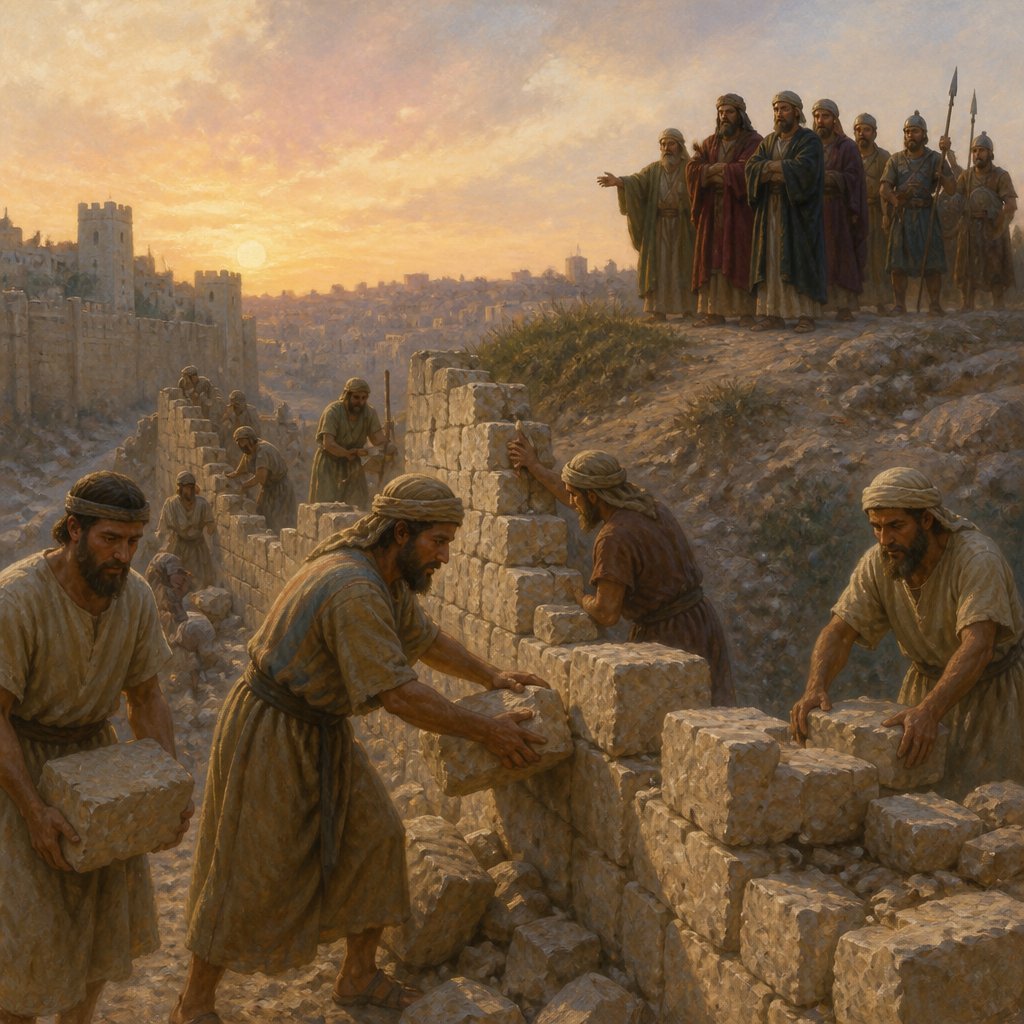
Nehemiah 4:7 - "But it came to pass, that when Sanballat, and Tobiah, and the Arabians, and the Ammonites, and the Ashdodites, heard that the walls of Jerusalem were made up, and that the breaches began to be stopped, then they were very wroth," (KJV).
The book of Nehemiah is the historical account of the Israelites’ return to Jerusalem from Babylonian exile and their efforts to rebuild the city and the temple. Nehemiah himself was a cupbearer to the Persian king, Artaxerxes, and he approached the king for permission to return to Jerusalem and oversee the city’s restoration. Nehemiah witnesses the Israelite community's reconciliation with God, as they were spiritually reborn and committed to following God’s law.
In Nehemiah 4:7, we see a turning point in the narrative as the enemies of the Israelites become angered at the progress being made in Jerusalem. Sanballat and Tobiah, along with the Arabians, Ammonites, and Ashdodites, are dismayed to hear that the walls of Jerusalem were being repaired and the breaches were being stopped. They were now facing the realization that the Israelites’ strength and unity were growing, and their power was declining. Out of fear and anger, they begin to plot against the Israelites in an attempt to thwart their efforts at rebuilding the city.
This verse reflects the theme of opposition and resistance that often arises when God’s people endeavor to do his work. In the Christian life, there are often obstacles and opposition that we must face and overcome. These opposing forces can take many forms, including spiritual, physical, and emotional challenges. However, just as Nehemiah and the Israelites faced opposition from their enemies, they remained steadfast in their faith and trust in God.
The context of this verse is crucial to understanding its significance. The rebuilding of the walls of Jerusalem was a monumental task for the Israelites, as it represented their ability to establish a secure and defensible city. The completion of the walls would also pave the way for the eventual rebuilding of the temple and the restoration of Jerusalem as the spiritual and political center of Israel.
Furthermore, this verse also demonstrates the power of faith and perseverance. Despite the threats and opposition from their enemies, Nehemiah and the Israelites continued to work diligently and trust in God. As a result, the walls were ultimately completed, and the Israelites were able to successfully defend their city from foreign invasions.
Symbolically, the opposition faced by the Israelites can be seen as a representation of the spiritual warfare that Christians must engage in. As believers, we are constantly faced with temptations, doubts, and attacks from the enemy. However, just as Nehemiah and the Israelites remained resolute in their efforts to rebuild Jerusalem, we too must remain steadfast in our faith and trust in God.
In conclusion, Nehemiah 4:7 serves as a reminder of the resilience and determination of God’s people in the face of opposition. It encourages us to persevere in our faith, even when faced with difficult circumstances and challenges. It also highlights the significance of unity and collaboration among believers, as the Israelites worked together to overcome their enemies and accomplish their goals. Ultimately, this verse teaches us the importance of trusting in God and relying on his strength to overcome the obstacles in our lives.
Get our apps


Artwork for Nehemiah 4:7

Nehemiah 4:7 - "¶ But it came to pass, that when Sanballat, and Tobiah, and the Arabians, and the Ammonites, and the Ashdodites, heard that the walls of Jerusalem were made up, and that the breaches began to be stopped, then they were very wroth,"
"¶ But it came to pass, that when Sanballat, and Tobiah, and the Arabians, and the Ammonites, and the Ashdodites, heard that the walls of Jerusalem were made up, and that the breaches began to be stopped, then they were very wroth," - Nehemiah 4:7

Nehemiah 7:4 - "Now the city was large and great: but the people were few therein, and the houses were not builded."

Nehemiah 7:7 - "Who came with Zerubbabel, Jeshua, Nehemiah, Azariah, Raamiah, Nahamani, Mordecai, Bilshan, Mispereth, Bigvai, Nehum, Baanah. The number, I say, of the men of the people of Israel was this;"
"Now the city was large and great: but the people were few therein, and the houses were not builded." - Nehemiah 7:4

Nehemiah 4:6

Nehemiah 4:6

Nehemiah 4:6

Nehemiah 10:7 - "Meshullam, Abijah, Mijamin,"

Nehemiah 7:42 - "The children of Harim, a thousand and seventeen."

Nehemiah 7:24 - "The children of Hariph, an hundred and twelve."

Nehemiah 7:56 - "The children of Neziah, the children of Hatipha."

Nehemiah 7:25 - "The children of Gibeon, ninety and five."

Nehemiah 12:4 - "Iddo, Ginnetho, Abijah,"

Nehemiah 10:4 - "Hattush, Shebaniah, Malluch,"

Nehemiah 7:40 - "The children of Immer, a thousand fifty and two."

Nehemiah 7:31 - "The men of Michmas, an hundred and twenty and two."

Nehemiah 7:33 - "The men of the other Nebo, fifty and two."

Nehemiah 7:28 - "The men of Beth-azmaveth, forty and two."

Nehemiah 7:21 - "The children of Ater of Hezekiah, ninety and eight."

Nehemiah 7:14 - "The children of Zaccai, seven hundred and threescore."

Nehemiah 7:27 - "The men of Anathoth, an hundred twenty and eight."

Nehemiah 7:35 - "The children of Harim, three hundred and twenty."

Nehemiah 7:16 - "The children of Bebai, six hundred twenty and eight."

Nehemiah 7:58 - "The children of Jaala, the children of Darkon, the children of Giddel,"

Nehemiah 7:9 - "The children of Shephatiah, three hundred seventy and two."

Nehemiah 7:48 - "The children of Lebana, the children of Hagaba, the children of Shalmai,"

Nehemiah 7:15 - "The children of Binnui, six hundred forty and eight."

Nehemiah 7:19 - "The children of Bigvai, two thousand threescore and seven."

Nehemiah 7:44 - "¶ The singers: the children of Asaph, an hundred forty and eight."