What does Nehemiah 5:19 mean?
“Think upon me, my God, for good, according to all that I have done for this people.” — Nehemiah 5:19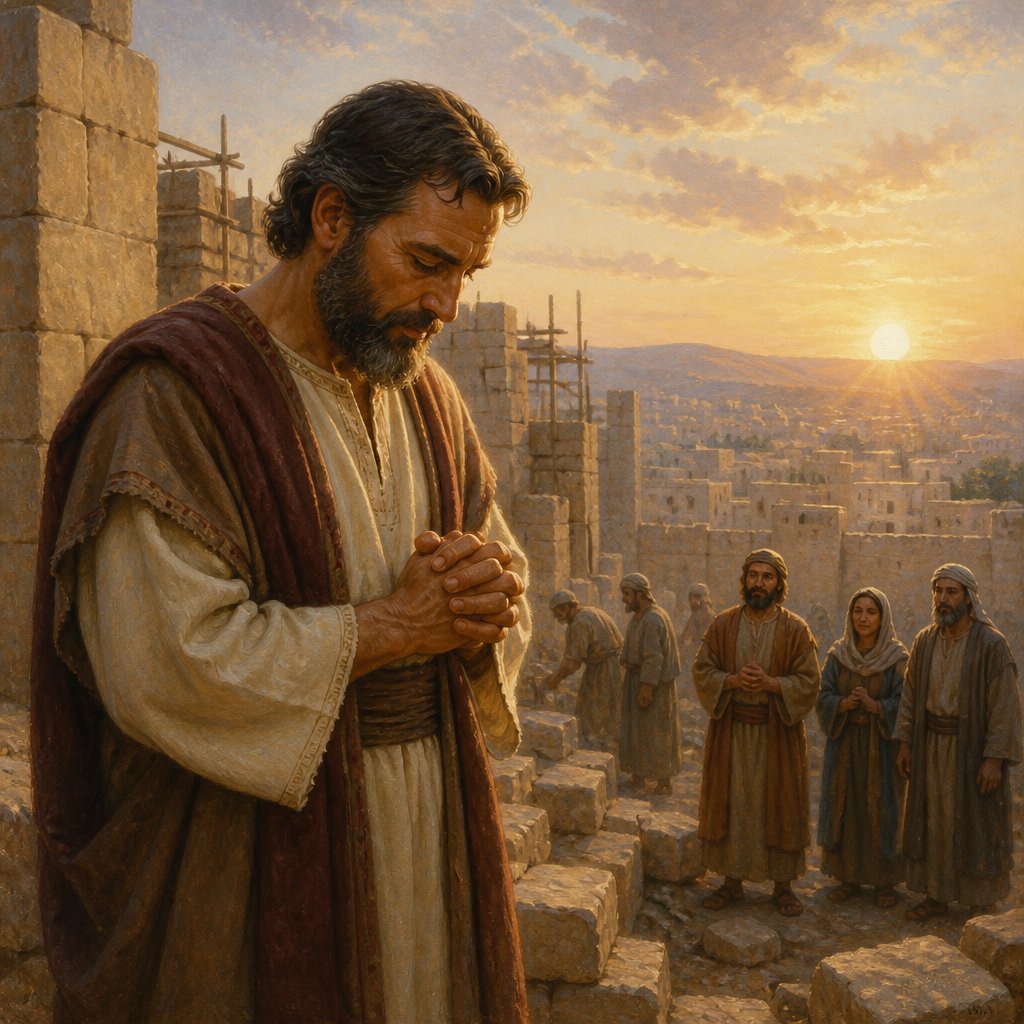
Nehemiah 5:19 (KJV) states, "Think upon me, my God, for good, according to all that I have done for this people." This verse is a powerful declaration of Nehemiah's faith and commitment to God, as well as a plea for God's continued favor and blessings. In order to fully understand the significance of this verse, it is important to examine the historical and cultural context in which it was written, as well as the themes and symbolism it conveys.
The book of Nehemiah is set in the 5th century BC, during the time of the Jewish people's exile in Babylon. Nehemiah, a Jewish cupbearer to the Persian king Artaxerxes, is deeply troubled by the news that Jerusalem is in ruins and its inhabitants are suffering. With the king's permission, Nehemiah sets out to rebuild the walls of Jerusalem and restore the city to its former glory. The task is challenging, as he faces opposition and internal strife among the Jewish people. Despite these obstacles, Nehemiah remains steadfast in his faith and determination to see the restoration through to completion.
In Nehemiah 5:19, Nehemiah expresses his confidence in God's faithfulness and his reliance on God's favor. The verse begins with the phrase "Think upon me, my God," indicating Nehemiah's direct appeal to God for attention and consideration. This appeal reflects Nehemiah's deep personal relationship with God, as well as his belief in the power of prayer. By addressing God as "my God," Nehemiah acknowledges the closeness and intimacy of his bond with God, emphasizing the depth of his faith.
Nehemiah goes on to request that God remember him "for good, according to all that I have done for this people." This statement underscores Nehemiah's humility and selflessness, as he does not seek recognition or reward for himself, but rather desires blessings for the people he serves. Throughout the book of Nehemiah, Nehemiah's actions consistently demonstrate his dedication to the welfare of his fellow Jews and his commitment to fulfilling God's purposes.
The themes of faith, leadership, and social responsibility are central to Nehemiah 5:19. Nehemiah's prayer reflects his unwavering trust in God's providence and his willingness to submit to God's will. His leadership is characterized by his devotion to the well-being of others and his determination to serve as a righteous example. Additionally, Nehemiah's concern for social justice is evident in his efforts to address the economic oppression and exploitation of the Jewish community, as described in the preceding verses.
The symbolism in Nehemiah 5:19 lies in Nehemiah's role as a foreshadowing of Christ. As a leader who selflessly serves his people and intercedes on their behalf before God, Nehemiah prefigures Jesus Christ, who offers himself as the ultimate sacrifice for the salvation of humanity. Nehemiah's prayer for God's favor and blessing also mirrors Jesus' own prayers for the well-being of his disciples and followers.
In conclusion, Nehemiah 5:19 encapsulates the essence of Nehemiah's character and mission, as well as the overarching themes of faith, leadership, and social responsibility. Nehemiah's steadfast devotion to God and his deep concern for the welfare of his people serve as a timeless example of selfless service and unwavering faith. This verse continues to inspire and challenge believers to emulate Nehemiah's commitment to God and his dedication to the needs of others.
Get our apps


Artwork for Nehemiah 5:19

Nehemiah 5:19 - "Think upon me, my God, for good, according to all that I have done for this people."
"Think upon me, my God, for good, according to all that I have done for this people." - Nehemiah 5:19

Nehemiah 11:1-19

Nehemiah 10:19 - "Hariph, Anathoth, Nebai,"

Nehemiah 12:19 - "And of Joiarib, Mattenai; of Jedaiah, Uzzi;"

Nehemiah 7:19 - "The children of Bigvai, two thousand threescore and seven."

Nehemiah 10:5 - "Harim, Meremoth, Obadiah,"

Nehemiah 12:5 - "Miamin, Maadiah, Bilgah,"
"Hariph, Anathoth, Nebai," - Nehemiah 10:19
"And of Joiarib, Mattenai; of Jedaiah, Uzzi;" - Nehemiah 12:19

Nehemiah 11:19 - "Moreover the porters, Akkub, Talmon, and their brethren that kept the gates, were an hundred seventy and two."

Nehemiah 5:1 - "And there was a great cry of the people and of their wives against their brethren the Jews."

"Harim, Meremoth, Obadiah," - Nehemiah 10:5

"Miamin, Maadiah, Bilgah," - Nehemiah 12:5

Nehemiah 5:6 - "¶ And I was very angry when I heard their cry and these words."
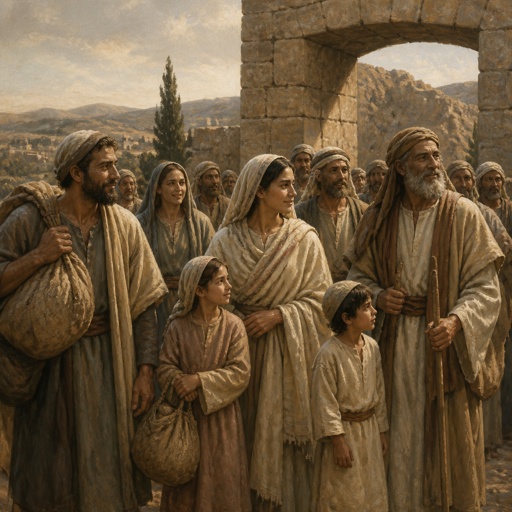
"The children of Bigvai, two thousand threescore and seven." - Nehemiah 7:19

Nehemiah 3:5 - "And next unto them the Tekoites repaired; but their nobles put not their necks to the work of their Lord."

Nehemiah 3:19 - "And next to him repaired Ezer the son of Jeshua, the ruler of Mizpah, another piece over against the going up to the armoury at the turning of the wall."

Nehemiah 6:19 - "Also they reported his good deeds before me, and uttered my words to him. And Tobiah sent letters to put me in fear."

Nehemiah 5:4 - "There were also that said, We have borrowed money for the king's tribute, and that upon our lands and vineyards."

Nehemiah 4:19 - "¶ And I said unto the nobles, and to the rulers, and to the rest of the people, The work is great and large, and we are separated upon the wall, one far from another."

Nehemiah 6:5 - "Then sent Sanballat his servant unto me in like manner the fifth time with an open letter in his hand;"

Nehemiah 4:5 - "And cover not their iniquity, and let not their sin be blotted out from before thee: for they have provoked thee to anger before the builders."

Nehemiah 11:5 - "And Maaseiah the son of Baruch, the son of Col-hozeh, the son of Hazaiah, the son of Adaiah, the son of Joiarib, the son of Zechariah, the son of Shiloni."

"And there was a great cry of the people and of their wives against their brethren the Jews." - Nehemiah 5:1

A biblical scene from Nehemiah 1:5-11 - Nehemiah, a Caucasian male in middle-eastern garb, is depicted respectfully requesting time from the king, a Middle-Eastern male seated at the dinner table while Nehemiah is serving his drink. He is asking for the opportunity to return to Judah and help his people build a wall. The setting is a grand royal court marked by golden hues, opulent textiles, and architecturally rich columns.

Nehemiah 5:3 - "Some also there were that said, We have mortgaged our lands, vineyards, and houses, that we might buy corn, because of the dearth."

Nehemiah 5:9 - "Also I said, It is not good that ye do: ought ye not to walk in the fear of our God because of the reproach of the heathen our enemies?"

Nehemiah 8:5 - "And Ezra opened the book in the sight of all the people; (for he was above all the people;) and when he opened it, all the people stood up:"

A biblical scene from Nehemiah 1:5-11 - Nehemiah, a Caucasian male in middle-eastern garb, is depicted respectfully requesting time from the king, a Middle-Eastern male seated on a throne. He is asking for the opportunity to return to Judah and help his people build a wall. The setting is a grand royal court marked by golden hues, opulent textiles, and architecturally rich columns. Nehemiah is the king's servant.