What does Nehemiah 6:6 mean?
"Wherein was written, It is reported among the heathen, and Gashmu saith it, that thou and the Jews think to rebel: for which cause thou buildest the wall, that thou mayest be their king, according to these words." - Nehemiah 6:6
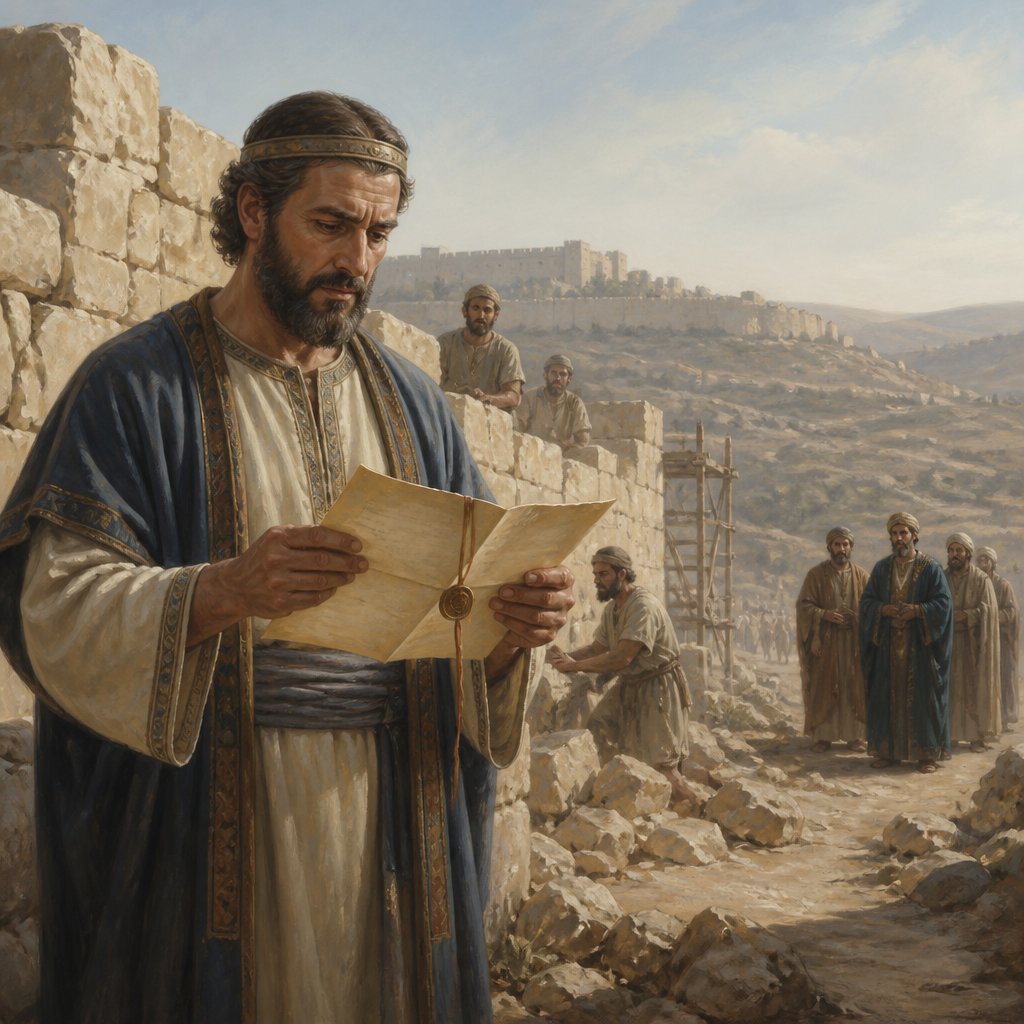
The Bible verse Nehemiah 6:6 from the King James Version reads: "Wherein was written, It is reported among the heathen, and Gashmu saith it, that thou and the Jews think to rebel: for which cause thou buildest the wall, that thou mayest be their king, according to these words."
Nehemiah was a Jewish leader who played a critical role in the rebuilding of Jerusalem after the Babylonian exile. The Book of Nehemiah is set during the time when Nehemiah was serving as the cupbearer to King Artaxerxes, and he received news about the desperate state of Jerusalem's walls and gates. This verse is part of a larger narrative in which Nehemiah is facing opposition and accusations from his enemies as he works to rebuild the city.
In this specific verse, we see Nehemiah dealing with false accusations and attempts to thwart his efforts to rebuild the walls of Jerusalem. The accusations are made by a man named Gashmu, who is likely a political adversary seeking to undermine Nehemiah's work. Gashmu accuses Nehemiah and the Jews of plotting rebellion against the king by building the walls to establish their own kingdom.
The themes present in this verse include opposition, perseverance, and integrity. Nehemiah faces relentless opposition from his adversaries who seek to discredit his work and halt the rebuilding efforts. Despite the challenges and false accusations, Nehemiah remains steadfast in his commitment to complete the task that he has been called to do. His integrity and dedication to the restoration of Jerusalem are evident as he navigates through the obstacles and continues to lead the people in their rebuilding efforts.
The context of this verse is crucial to understanding its significance. At this point in the narrative, Nehemiah is nearing completion of the wall, and his enemies are becoming increasingly desperate to stop him. They resort to spreading false rumors and making baseless accusations in an attempt to halt the progress. This verse captures the intensity of the opposition that Nehemiah faces and his unwavering determination to overcome it.
Symbolically, the wall that Nehemiah is building represents protection, security, and restoration. The completion of the wall is vital for the safety and well-being of the people of Jerusalem, as it provides a barrier against external threats and signifies the restoration of their homeland. Nehemiah's perseverance in the face of opposition serves as a powerful symbol of resilience and determination in the pursuit of God's purposes.
From a broader perspective, this verse can also be interpreted as a reminder of the spiritual battle that believers face in carrying out God's plans. It illustrates the reality of facing opposition and false accusations while pursuing God's work. It serves as a powerful encouragement for believers to remain steadfast and unwavering in their commitment to God's purposes, regardless of the challenges they may encounter.
In conclusion, Nehemiah 6:6 from the King James Version offers a poignant depiction of Nehemiah's perseverance in the face of false accusations and opposition. It conveys important themes of opposition, perseverance, and integrity, and serves as a symbolic representation of the spiritual battles that believers may face in carrying out God's plans. The verse is a powerful reminder of the importance of remaining steadfast and unwavering in the pursuit of God's purposes, even in the midst of adversity.
Have questions about Nehemiah 6:6?
Dive deeper into this scripture with Bible Chat — an AI-powered tool for exploring God's Word through conversation. Ask questions, get context, and grow in your understanding of the Bible.
Get Our Apps


Nehemiah 6:6 Artwork

Nehemiah 6:6 - "Wherein was written, It is reported among the heathen, and Gashmu saith it, that thou and the Jews think to rebel: for which cause thou buildest the wall, that thou mayest be their king, according to these words."
"Wherein was written, It is reported among the heathen, and Gashmu saith it, that thou and the Jews think to rebel: for which cause thou buildest the wall, that thou mayest be their king, according to these words." - Nehemiah 6:6

Nehemiah 4:6

Nehemiah 6:9

Nehemiah 4:6

Nehemiah 4:6

Nehemiah 10:6 - "Daniel, Ginnethon, Baruch,"

Nehemiah 12:6 - "Shemaiah, and Joiarib, Jedaiah,"

"Shemaiah, and Joiarib, Jedaiah," - Nehemiah 12:6

"Daniel, Ginnethon, Baruch," - Nehemiah 10:6

Nehemiah 5:6 - "¶ And I was very angry when I heard their cry and these words."

Nehemiah 6:15 – "So the wall was completed on the twenty-fifth of Elul, in fifty-two days."
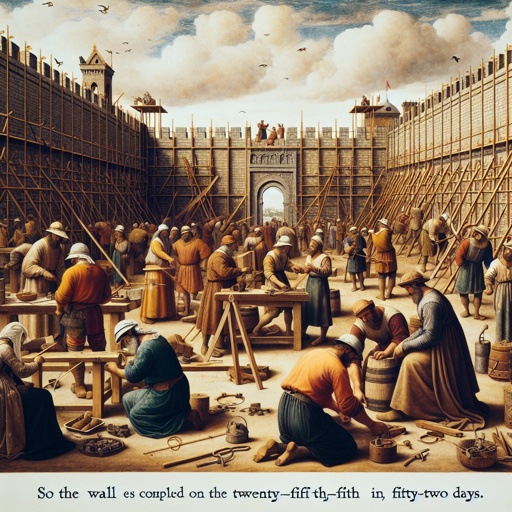
Nehemiah 6:15 – "So the wall was completed on the twenty-fifth of Elul, in fifty-two days."

Nehemiah 6:15 - "¶ So the wall was finished in the twenty and fifth day of the month Elul, in fifty and two days."

Nehemiah 11:6 - "All the sons of Perez that dwelt at Jerusalem were four hundred threescore and eight valiant men."

Nehemiah 6:4 - "Yet they sent unto me four times after this sort; and I answered them after the same manner."

Nehemiah 6:5 - "Then sent Sanballat his servant unto me in like manner the fifth time with an open letter in his hand;"

Nehemiah 6:17 - "¶ Moreover in those days the nobles of Judah sent many letters unto Tobiah, and the letters of Tobiah came unto them."

Nehemiah 4:6 - "So built we the wall; and all the wall was joined together unto the half thereof: for the people had a mind to work."

Nehemiah 6:8 - "Then I sent unto him, saying, There are no such things done as thou sayest, but thou feignest them out of thine own heart."

Nehemiah 6:12 - "And, lo, I perceived that God had not sent him; but that he pronounced this prophecy against me: for Tobiah and Sanballat had hired him."

Nehemiah 6:19 - "Also they reported his good deeds before me, and uttered my words to him. And Tobiah sent letters to put me in fear."

Nehemiah 6:13 - "Therefore was he hired, that I should be afraid, and do so, and sin, and that they might have matter for an evil report, that they might reproach me."

Nehemiah 6:14 - "My God, think thou upon Tobiah and Sanballat according to these their works, and on the prophetess Noadiah, and the rest of the prophets, that would have put me in fear."

Nehemiah 6:9 - "For they all made us afraid, saying, Their hands shall be weakened from the work, that it be not done. Now therefore, O God, strengthen my hands."
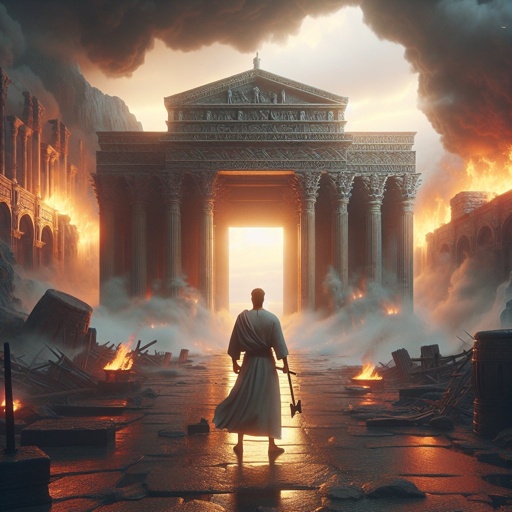
Nehemiah 6:11 - "And I said, Should such a man as I flee? and who is there, that, being as I am, would go into the temple to save his life? I will not go in."
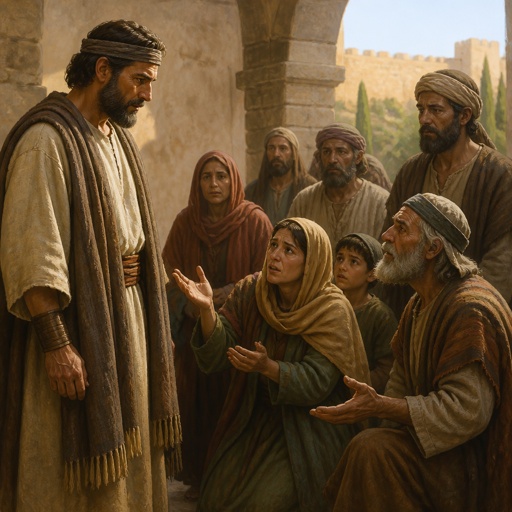
"¶ And I was very angry when I heard their cry and these words." - Nehemiah 5:6

Nehemiah 8:6 - "And Ezra blessed the LORD, the great God. And all the people answered, Amen, Amen, with lifting up their hands: and they bowed their heads, and worshipped the LORD with their faces to the ground."

Nehemiah 6:2 - "That Sanballat and Geshem sent unto me, saying, Come, let us meet together in some one of the villages in the plain of Ono. But they thought to do me mischief."

Nehemiah 3:6 - "Moreover the old gate repaired Jehoiada the son of Paseah, and Meshullam the son of Besodeiah; they laid the beams thereof, and set up the doors thereof, and the locks thereof, and the bars thereof."