What does Nehemiah 6:8 mean?
"Then I sent unto him, saying, There are no such things done as thou sayest, but thou feignest them out of thine own heart." - Nehemiah 6:8
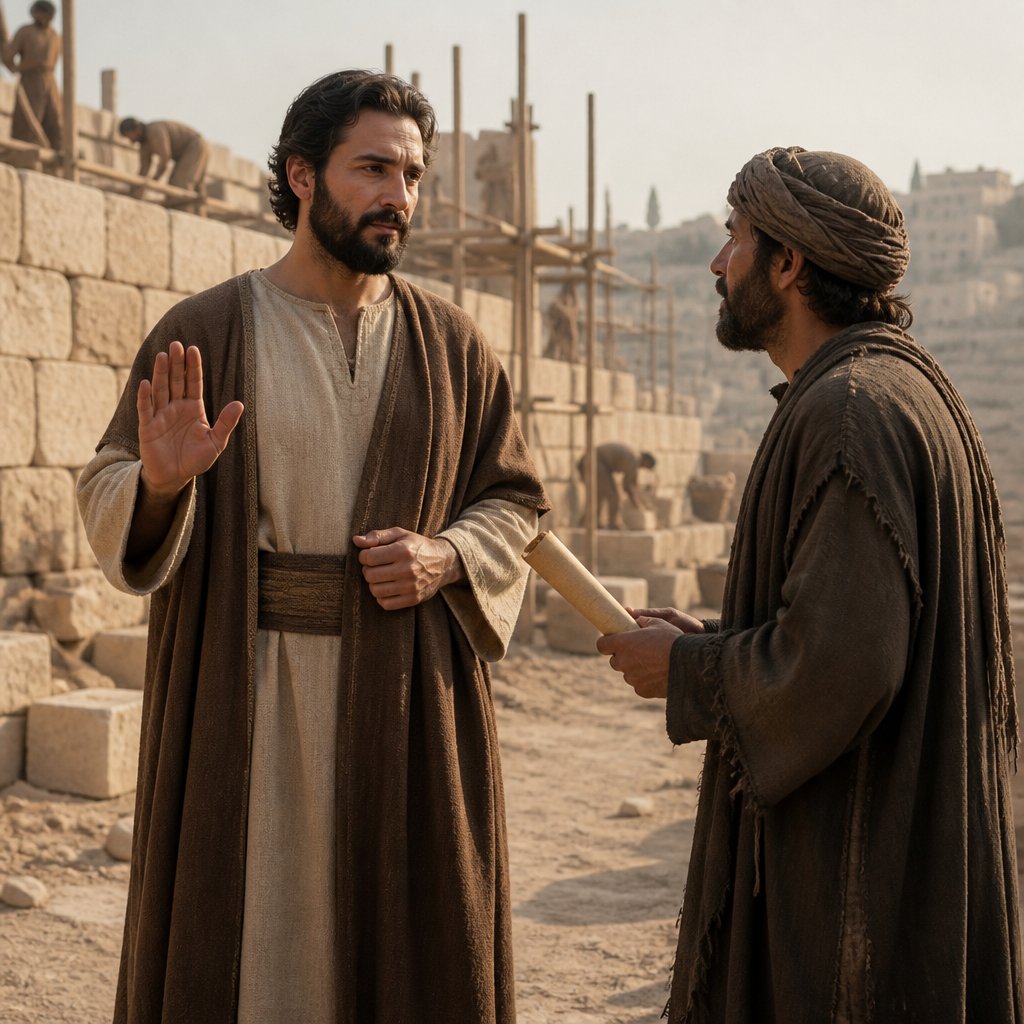
Nehemiah 6:8 (KJV) reads: "Then I sent unto him, saying, There are no such things done as thou sayest, but thou feignest them out of thine own heart."
The book of Nehemiah is a historical account of the rebuilding of Jerusalem's walls and the restoration of the Jewish people following their exile in Babylon. Nehemiah, the book's central figure, was a cupbearer to the Persian king Artaxerxes I before receiving permission to return to Jerusalem and lead the efforts to rebuild the city.
In Nehemiah 6, we find Nehemiah facing opposition from his enemies who sought to disrupt the work of rebuilding the walls of Jerusalem. They sent a message to Nehemiah, urging him to meet with them in the plains of Ono. But Nehemiah saw through their deceptive intentions and replied with the words in Nehemiah 6:8.
The context of this verse is crucial for understanding its significance. Nehemiah's enemies were attempting to manipulate and deceive him in order to thwart the progress of the wall's construction. However, Nehemiah remained steadfast in his commitment to the task at hand and refused to be swayed by their deceit.
At its core, Nehemiah 6:8 serves as a reminder of the importance of discernment and wisdom in the face of opposition and adversity. Nehemiah's response demonstrates his unwavering dedication to the work entrusted to him and his refusal to be dissuaded by false claims and accusations. This verse highlights the necessity of standing firm in the face of deceit and maintaining unwavering faith in the truth.
Symbolically, this verse also carries broader implications for the spiritual lives of believers. The deceptive tactics employed by Nehemiah's enemies can be seen as representative of the spiritual warfare that Christians face in their daily lives. Just as Nehemiah remained vigilant and resolute in the face of opposition, believers are encouraged to exercise discernment and stand firm in their faith, refusing to be swayed by deceitful schemes of the enemy.
Furthermore, the verse also serves as a cautionary reminder against the dangers of succumbing to falsehoods and deceptions. Nehemiah's steadfast refusal to entertain the deceitful claims of his enemies serves as a model for believers to resist the allure of falsehoods and to hold fast to the truth of God's word.
In a broader context, Nehemiah 6:8 also contributes to the overarching themes of perseverance, faithfulness, and trust in God's providence that are prevalent throughout the book of Nehemiah. The rebuilding of the walls of Jerusalem was a monumental undertaking that required unwavering determination and trust in God's guidance and protection. Nehemiah's steadfast refusal to be swayed by deceitful tactics reflects his deep-rooted faith in God's sovereignty and his commitment to fulfilling the task entrusted to him.
In conclusion, Nehemiah 6:8 serves as a powerful testament to the importance of discernment, steadfastness, and faith in the face of opposition and deceit. It encourages believers to remain resolute in their commitment to the truth and to stand firm in their faith, trusting in God's guidance and protection. The verse also symbolizes the broader spiritual warfare that believers face and underscores the necessity of remaining vigilant and unwavering in the face of deceitful schemes. As such, Nehemiah 6:8 continues to offer timeless wisdom and guidance for navigating the challenges and adversities of the Christian walk.
Have questions about Nehemiah 6:8?
Dive deeper into this scripture with Bible Chat — an AI-powered tool for exploring God's Word through conversation. Ask questions, get context, and grow in your understanding of the Bible.
Get Our Apps


Nehemiah 6:8 Artwork

Nehemiah 6:8 - "Then I sent unto him, saying, There are no such things done as thou sayest, but thou feignest them out of thine own heart."
"Then I sent unto him, saying, There are no such things done as thou sayest, but thou feignest them out of thine own heart." - Nehemiah 6:8

Nehemiah 8:6 - "And Ezra blessed the LORD, the great God. And all the people answered, Amen, Amen, with lifting up their hands: and they bowed their heads, and worshipped the LORD with their faces to the ground."

Nehemiah 8:10

Nehemiah 8:10

Nehemiah 8:10

Nehemiah 4:6

Nehemiah 4:6

Nehemiah 4:6

Nehemiah 6:9

Nehemiah 10:6 - "Daniel, Ginnethon, Baruch,"

Nehemiah 12:6 - "Shemaiah, and Joiarib, Jedaiah,"

Nehemiah 8:8 - "So they read in the book in the law of God distinctly, and gave the sense, and caused them to understand the reading."

Nehemiah 10:8 - "Maaziah, Bilgai, Shemaiah: these were the priests."

Nehemiah 7:8 - "The children of Parosh, two thousand an hundred seventy and two."

"Shemaiah, and Joiarib, Jedaiah," - Nehemiah 12:6

Nehemiah 11:8 - "And after him Gabbai, Sallai, nine hundred twenty and eight."

"Daniel, Ginnethon, Baruch," - Nehemiah 10:6

Nehemiah 4:8 - "And conspired all of them together to come and to fight against Jerusalem, and to hinder it."

Nehemiah 5:6 - "¶ And I was very angry when I heard their cry and these words."

Nehemiah 6:15 – "So the wall was completed on the twenty-fifth of Elul, in fifty-two days."
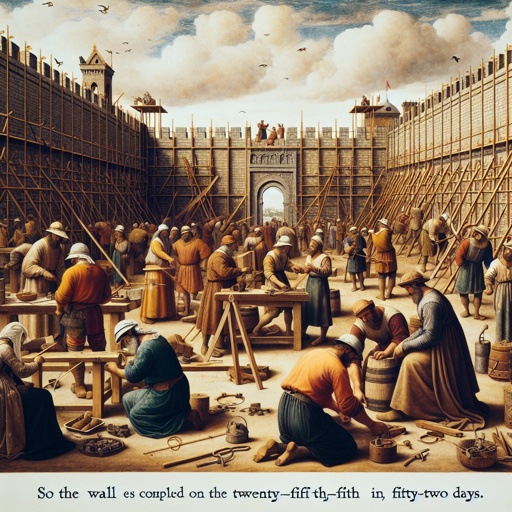
Nehemiah 6:15 – "So the wall was completed on the twenty-fifth of Elul, in fifty-two days."

Nehemiah 6:15 - "¶ So the wall was finished in the twenty and fifth day of the month Elul, in fifty and two days."
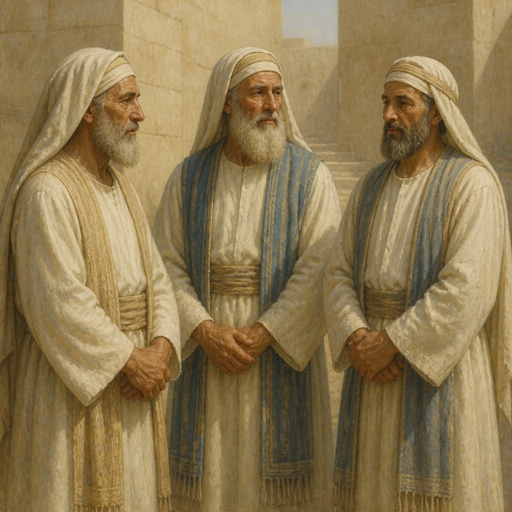
"Maaziah, Bilgai, Shemaiah: these were the priests." - Nehemiah 10:8

Nehemiah 8:9 - "¶ And Nehemiah, which is the Tirshatha, and Ezra the priest the scribe, and the Levites that taught the people, said unto all the people, This day is holy unto the LORD your God; mourn not, nor weep. For all the people wept, when they heard the words of the law."
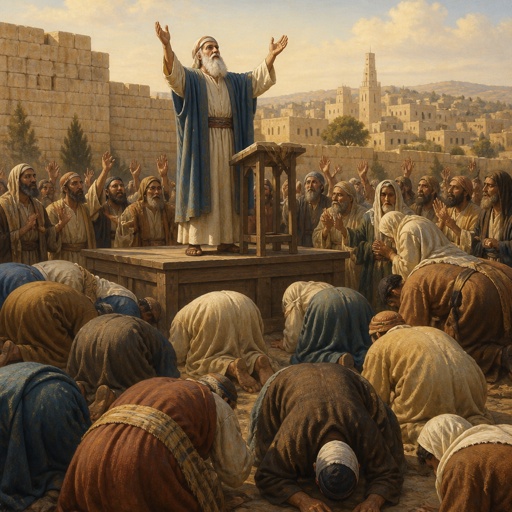
"And Ezra blessed the LORD, the great God. And all the people answered, Amen, Amen, with lifting up their hands: and they bowed their heads, and worshipped the LORD with their faces to the ground." - Nehemiah 8:6

Nehemiah 11:6 - "All the sons of Perez that dwelt at Jerusalem were four hundred threescore and eight valiant men."

Nehemiah 13:8 - "And it grieved me sore: therefore I cast forth all the household stuff of Tobiah out of the chamber."

Nehemiah 6:6 - "Wherein was written, It is reported among the heathen, and Gashmu saith it, that thou and the Jews think to rebel: for which cause thou buildest the wall, that thou mayest be their king, according to these words."

Nehemiah 12:8 - "Moreover the Levites: Jeshua, Binnui, Kadmiel, Sherebiah, Judah, and Mattaniah, which was over the thanksgiving, he and his brethren."