What does Nehemiah 7:14 mean?
“The children of Zaccai, seven hundred and threescore.” — Nehemiah 7:14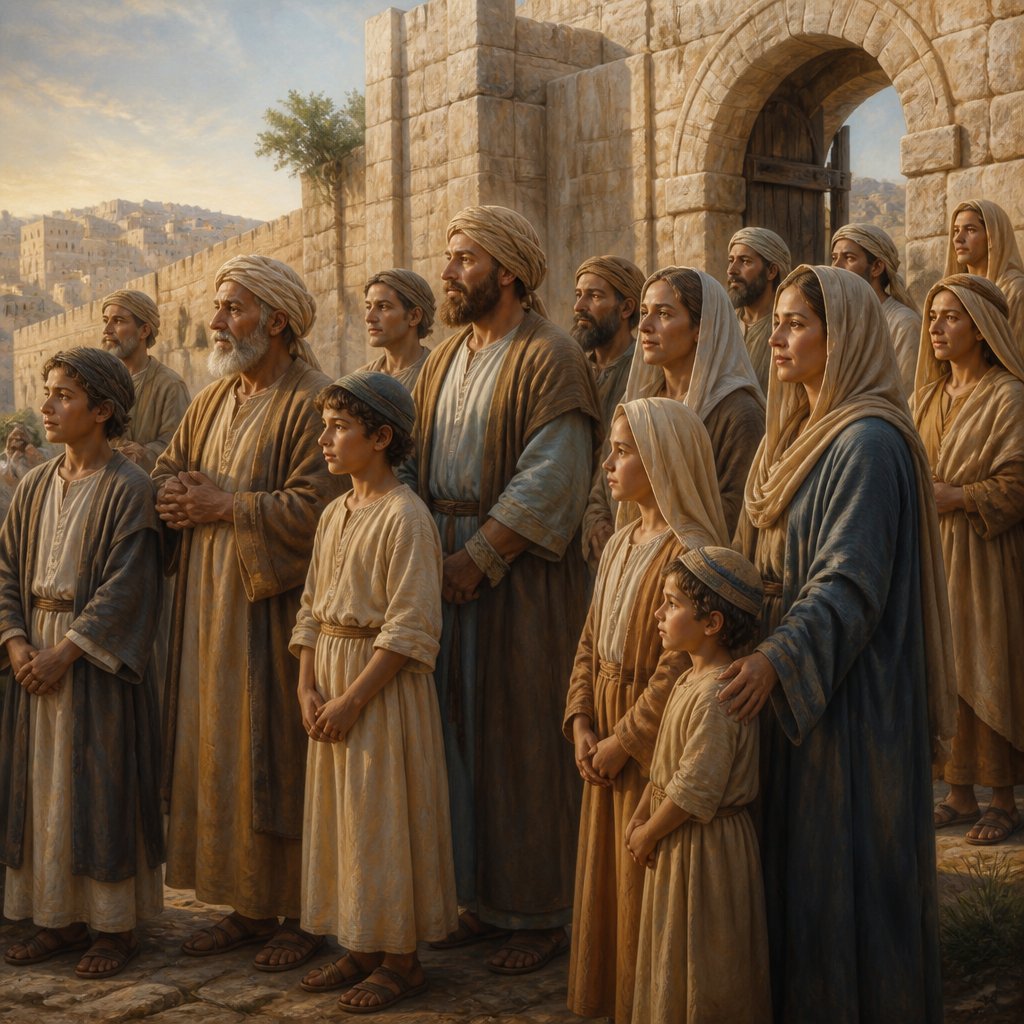
Nehemiah 7:14 in the King James Version of the Bible reads: "The children of Zaccai, seven hundred and threescore." This verse is part of a list of the families, or heads of households, who returned from exile in Babylon to Jerusalem under the leadership of Zerubbabel and Nehemiah. The verse may seem simple at first glance, but it is a crucial part of the historical and religious narrative of the Jewish people. To truly understand the meaning and significance of this verse, it is important to explore the historical and cultural context in which it was written, as well as its broader themes and symbolism.
Context:
The Book of Nehemiah is part of the Hebrew Bible and the Christian Old Testament. It is widely believed to have been written in the 5th century BCE, chronicling the efforts of Nehemiah, a Jewish leader, to rebuild the walls of Jerusalem and revitalize the spiritual life of the Jewish community after their return from exile in Babylon. The verse in question is part of a larger passage that lists the various families and their descendants who made the journey back to Jerusalem. This list serves as a record of the returning exiles and their contribution to the restoration of their homeland.
Themes:
One of the central themes of the Book of Nehemiah is the restoration and renewal of the Jewish community after a period of suffering and exile. The list of families in chapter 7 highlights the importance of lineage and community in the Jewish tradition. Each family's return to Jerusalem represents a step towards the revitalization of the city and the reunification of the Jewish people. This theme of restoration is also reflected in the rebuilding of the city walls and the spiritual recommitment of the people to their faith and traditions.
Another important theme found in this verse is the idea of God's faithfulness and provision. The fact that each family is enumerated and recorded shows God's attention to detail and his care for his chosen people. Despite the challenges they faced in exile, God was faithful to bring them back to their homeland and restore their community. This theme of divine providence and faithfulness is a common thread throughout the Bible, and it serves as a source of hope and encouragement for believers.
Symbolism:
The mention of "seven hundred and threescore" represents a specific numerical value within the passage. In biblical numerology, the number seven often symbolizes completion and perfection, while the number three can represent divinity or the Trinity in Christian tradition. This could be interpreted as a symbolic representation of the completeness and divine favor of the families who returned to Jerusalem. It underscores the significance of their return and the restoration of their community as part of God's perfect plan.
Furthermore, the list of families and their numbers serves as a symbol of the unity and diversity within the Jewish community. By recording each family's name and count, the passage acknowledges the individual contributions of each household to the greater whole. It emphasizes the importance of communal effort and solidarity in achieving the restoration of Jerusalem. This symbolism reinforces the idea that every member of the community has a part to play in the larger story of God's redemption and restoration.
In conclusion, Nehemiah 7:14 may appear as a simple list of names and numbers, but it is a verse rich in historical, thematic, and symbolic significance. It reflects the themes of restoration, community, and divine providence that are central to the narrative of the Book of Nehemiah. Understanding the context and symbolism of this verse can deepen our appreciation for the broader biblical narrative and its enduring spiritual insights.
Get our apps


Artwork for Nehemiah 7:14

Nehemiah 7:14 - "The children of Zaccai, seven hundred and threescore."
"The children of Zaccai, seven hundred and threescore." - Nehemiah 7:14

Nehemiah 7:7 - "Who came with Zerubbabel, Jeshua, Nehemiah, Azariah, Raamiah, Nahamani, Mordecai, Bilshan, Mispereth, Bigvai, Nehum, Baanah. The number, I say, of the men of the people of Israel was this;"

Nehemiah 11:11-14

Nehemiah 12:14 - "Of Melicu, Jonathan; of Shebaniah, Joseph;"

Nehemiah 10:7 - "Meshullam, Abijah, Mijamin,"

Nehemiah 7:42 - "The children of Harim, a thousand and seventeen."

Nehemiah 7:24 - "The children of Hariph, an hundred and twelve."

Nehemiah 7:56 - "The children of Neziah, the children of Hatipha."

Nehemiah 7:25 - "The children of Gibeon, ninety and five."

Nehemiah 7:40 - "The children of Immer, a thousand fifty and two."

Nehemiah 7:31 - "The men of Michmas, an hundred and twenty and two."

Nehemiah 7:33 - "The men of the other Nebo, fifty and two."

Nehemiah 7:28 - "The men of Beth-azmaveth, forty and two."

Nehemiah 7:21 - "The children of Ater of Hezekiah, ninety and eight."

Nehemiah 7:27 - "The men of Anathoth, an hundred twenty and eight."

Nehemiah 7:35 - "The children of Harim, three hundred and twenty."

Nehemiah 7:16 - "The children of Bebai, six hundred twenty and eight."

Nehemiah 7:58 - "The children of Jaala, the children of Darkon, the children of Giddel,"

Nehemiah 7:9 - "The children of Shephatiah, three hundred seventy and two."

Nehemiah 7:48 - "The children of Lebana, the children of Hagaba, the children of Shalmai,"

Nehemiah 7:15 - "The children of Binnui, six hundred forty and eight."

Nehemiah 7:19 - "The children of Bigvai, two thousand threescore and seven."

Nehemiah 7:44 - "¶ The singers: the children of Asaph, an hundred forty and eight."

Nehemiah 7:13 - "The children of Zattu, eight hundred forty and five."

Nehemiah 7:18 - "The children of Adonikam, six hundred threescore and seven."

Nehemiah 7:49 - "The children of Hanan, the children of Giddel, the children of Gahar,"

Nehemiah 7:55 - "The children of Barkos, the children of Sisera, the children of Tamah,"

Nehemiah 7:20 - "The children of Adin, six hundred fifty and five."

Nehemiah 10:14 - "The chief of the people; Parosh, Pahath-moab, Elam, Zatthu, Bani,"