What does Nehemiah 7:19 mean?
“The children of Bigvai, two thousand threescore and seven.” — Nehemiah 7:19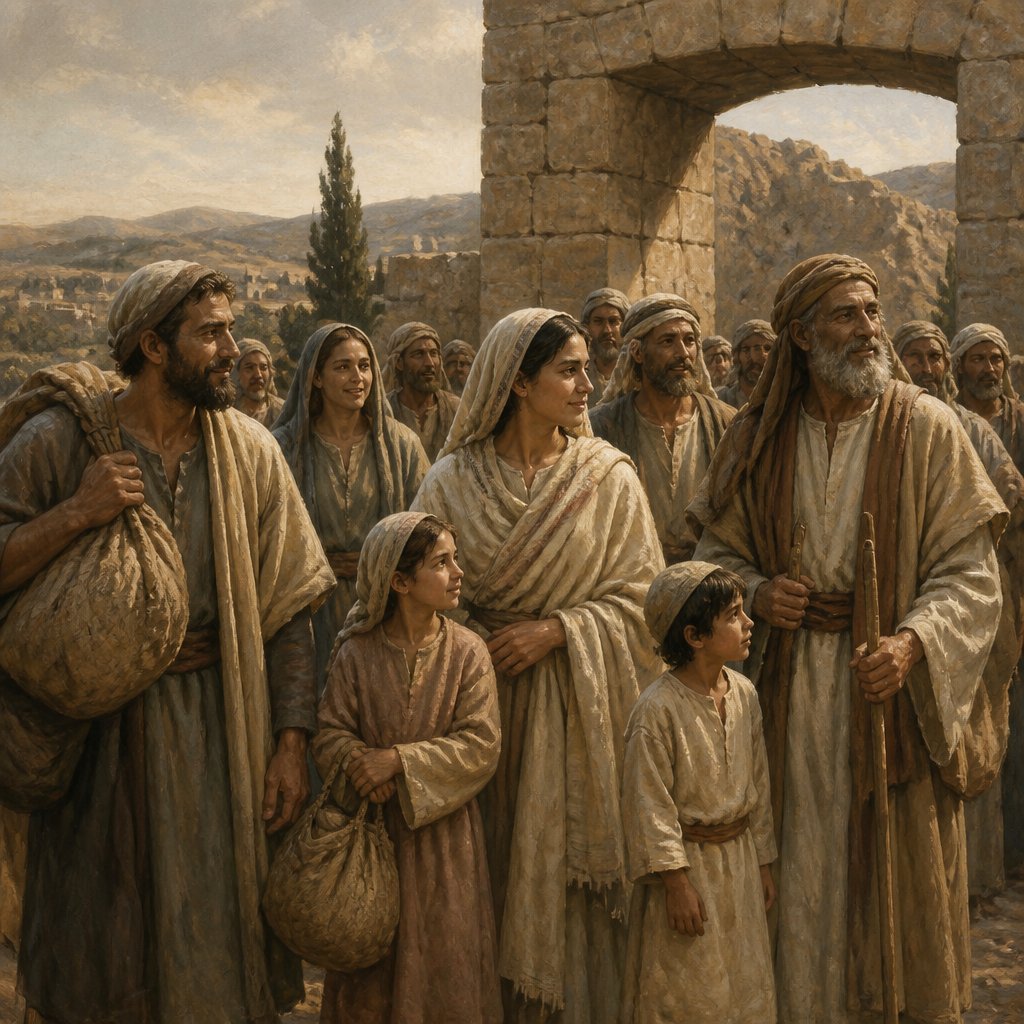
The verse Nehemiah 7:19 in the King James Version (KJV) of the Bible reads: "The children of Chor-aba, a thousand seven hundred seventy and two."
Nehemiah 7 serves as a record of the individuals who returned from exile in Babylon to Jerusalem. The list of names and numbers in this chapter is a demonstration of the faithfulness and sovereignty of God in restoring his people. This particular verse lists the number of the children of Chor-aba who returned to Jerusalem.
In order to truly understand the meaning and significance of this verse, it is important to delve into the historical and cultural context of the narrative in Nehemiah. The book of Nehemiah takes place during the period of the Israelites' return from exile in Babylon to rebuild Jerusalem. This return was a result of the decree by King Cyrus of Persia, allowing the Israelites to return to their homeland and rebuild the temple and the city of Jerusalem.
The names and numbers listed in Nehemiah 7 signify the reconstitution of the Israelites as a people. They had been scattered and exiled, but now they were returning to their homeland as a united community. Each name and number represents an individual and their family who took part in the restoration of Jerusalem. It is a testament to the faithfulness of God in preserving his people and fulfilling his promises to them.
The specific mention of the children of Chor-aba in verse 19 may seem insignificant, but it is a part of the larger narrative of restoration and return. It shows that every individual, every family, and every tribe played a crucial role in the rebuilding and re-establishment of Jerusalem. This message is echoed throughout the Bible - that God values and uses every single person for his divine purposes.
Furthermore, the number 1,772 holds symbolic significance. In biblical numerology, numbers often carry spiritual and symbolic meanings. The number 7 is a number of completion and perfection, while 1 symbolizes unity and oneness. The repetition of these numbers emphasizes the completeness and unity of the people returning to Jerusalem. It signifies a new beginning and a fresh start for the Israelites.
In a broader sense, this verse reflects the themes of restoration, community, and faithfulness. It demonstrates the power of God to bring his people back from exile and to rebuild what was once destroyed. It also emphasizes the importance of unity and community in carrying out God's work. Just as the Israelites worked together to rebuild Jerusalem, Christians are called to work together in unity for the advancement of God's kingdom.
Finally, this verse can also serve as an encouragement and a reminder to believers today. It reminds us that God is faithful in fulfilling his promises, and that he uses ordinary individuals to accomplish his extraordinary plans. It encourages us to be united in purpose and to work together for the common goal of building and advancing God's kingdom.
In conclusion, Nehemiah 7:19 may seem like a simple list of names and numbers, but it carries deep theological and spiritual significance. It is a part of the larger narrative of restoration, community, and God's faithfulness. It serves as a reminder of the importance of every individual in God's plan, and it encourages unity and collaboration in the work of God.
Get our apps


Artwork for Nehemiah 7:19

Nehemiah 7:19 - "The children of Bigvai, two thousand threescore and seven."
"The children of Bigvai, two thousand threescore and seven." - Nehemiah 7:19

Nehemiah 11:1-19

Nehemiah 10:19 - "Hariph, Anathoth, Nebai,"

Nehemiah 12:19 - "And of Joiarib, Mattenai; of Jedaiah, Uzzi;"

Nehemiah 7:7 - "Who came with Zerubbabel, Jeshua, Nehemiah, Azariah, Raamiah, Nahamani, Mordecai, Bilshan, Mispereth, Bigvai, Nehum, Baanah. The number, I say, of the men of the people of Israel was this;"

Nehemiah 10:7 - "Meshullam, Abijah, Mijamin,"
"Hariph, Anathoth, Nebai," - Nehemiah 10:19

Nehemiah 7:42 - "The children of Harim, a thousand and seventeen."

Nehemiah 7:24 - "The children of Hariph, an hundred and twelve."

Nehemiah 7:56 - "The children of Neziah, the children of Hatipha."

Nehemiah 7:25 - "The children of Gibeon, ninety and five."

Nehemiah 7:40 - "The children of Immer, a thousand fifty and two."

Nehemiah 7:31 - "The men of Michmas, an hundred and twenty and two."
"And of Joiarib, Mattenai; of Jedaiah, Uzzi;" - Nehemiah 12:19

Nehemiah 7:33 - "The men of the other Nebo, fifty and two."

Nehemiah 7:21 - "The children of Ater of Hezekiah, ninety and eight."

Nehemiah 7:28 - "The men of Beth-azmaveth, forty and two."

Nehemiah 7:14 - "The children of Zaccai, seven hundred and threescore."

Nehemiah 7:27 - "The men of Anathoth, an hundred twenty and eight."

Nehemiah 7:35 - "The children of Harim, three hundred and twenty."

Nehemiah 7:16 - "The children of Bebai, six hundred twenty and eight."

Nehemiah 7:58 - "The children of Jaala, the children of Darkon, the children of Giddel,"

Nehemiah 7:9 - "The children of Shephatiah, three hundred seventy and two."

Nehemiah 7:48 - "The children of Lebana, the children of Hagaba, the children of Shalmai,"

Nehemiah 7:15 - "The children of Binnui, six hundred forty and eight."

Nehemiah 7:44 - "¶ The singers: the children of Asaph, an hundred forty and eight."

Nehemiah 7:18 - "The children of Adonikam, six hundred threescore and seven."

Nehemiah 7:13 - "The children of Zattu, eight hundred forty and five."

Nehemiah 7:49 - "The children of Hanan, the children of Giddel, the children of Gahar,"