What does Nehemiah 8:11 mean?
“So the Levites stilled all the people, saying, Hold your peace, for the day is holy; neither be ye grieved.” — Nehemiah 8:11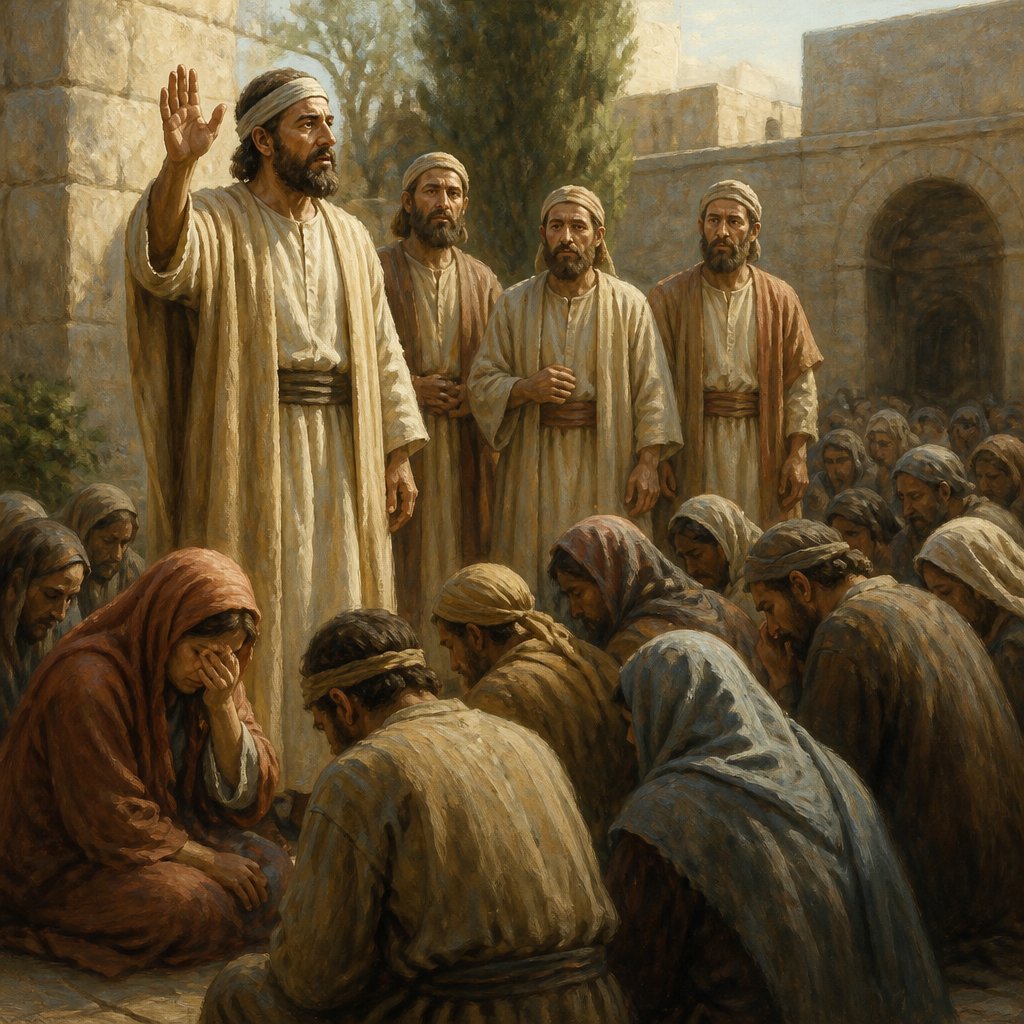
Nehemiah 8:11 (KJV) states, "So the Levites stilled all the people, saying, Hold your peace, for the day is holy; neither be ye grieved."
In this verse, we find the Israelites gathered together in Jerusalem during the time of Nehemiah, after they had returned from exile in Babylon. The people had gathered to hear the Book of the Law read aloud, and as they heard the words of the Law, they were moved to tears. The Levites, who were responsible for leading the people in worship, responded by instructing the people to hold their peace, for the day was holy, and not to be grieved.
The context of this verse is crucial in understanding its deeper meaning. The Israelites had been in exile for many years, and now they were hearing the Word of God being proclaimed after a period of spiritual drought. The people were convicted of their sins and were weeping as they realized how far they had strayed from God's commands. This response is a testament to the powerful impact of God's Word when it is proclaimed with sincerity and authenticity.
The theme of this verse is the holiness of God and the significance of his Word. The Levites' response to the people's grief acknowledges the solemnity of the occasion and emphasizes the importance of honoring the sanctity of the day. It reminds the people that they are in the presence of a holy God and should approach him with reverence and awe. This theme of holiness and reverence for God is a recurring motif throughout the Bible, emphasizing the need for God's people to honor and obey him.
The symbolism in this verse is also noteworthy. The Levites serve as intermediaries between the people and God, representing the role of spiritual leaders and teachers in guiding the community in their response to God's Word. The people's grief symbolizes their repentance and realization of their disobedience to God's commands. It is a sign of their contrite hearts and their desire to return to a right relationship with God. The holiness of the day points to the sacredness of the moment and the significance of encountering God through his Word.
The verse has implications for contemporary Christians as well. It reminds us of the power and authority of God's Word to convict and transform hearts. It calls us to approach God with reverence and worship, recognizing his holiness and our need for repentance. The verse also underscores the role of spiritual leaders in guiding and instructing God's people in their response to his Word. It serves as a reminder to all believers of the importance of honoring and obeying God in all areas of our lives.
In conclusion, Nehemiah 8:11 (KJV) captures a profound moment in the history of God's people, as they respond to the reading of God's Law with tears and contrition. The verse embodies themes of holiness, reverence, and repentance, and is rich with symbolism that speaks to the transformative power of God's Word. Its message is timeless, calling all believers to respond to God's Word with humility and obedience, and to approach him with reverence and awe.
Get our apps


Artwork for Nehemiah 8:11

Nehemiah 8:11 - "So the Levites stilled all the people, saying, Hold your peace, for the day is holy; neither be ye grieved."
"So the Levites stilled all the people, saying, Hold your peace, for the day is holy; neither be ye grieved." - Nehemiah 8:11

Nehemiah 11:8 - "And after him Gabbai, Sallai, nine hundred twenty and eight."
"And after him Gabbai, Sallai, nine hundred twenty and eight." - Nehemiah 11:8

Nehemiah 8:10

Nehemiah 11:11-14

Nehemiah 11:13

Nehemiah 8:10

Nehemiah 8:10

Nehemiah 11:34 - "Hadid, Zeboim, Neballat,"

Nehemiah 10:11 - "Micha, Rehob, Hashabiah,"

Nehemiah 11:33 - "Hazor, Ramah, Gittaim,"

Nehemiah 11:32 - "And at Anathoth, Nob, Ananiah,"

Nehemiah 11:1-19

Nehemiah 11:26 - "And at Jeshua, and at Moladah, and at Beth-phelet,"

Nehemiah 11:29 - "And at En-rimmon, and at Zareah, and at Jarmuth,"

Nehemiah 11:35 - "Lod, and Ono, the valley of craftsmen."

Nehemiah 11:28 - "And at Ziklag, and at Mekonah, and in the villages thereof,"

Romans 8:11

Nehemiah 11:36 - "And of the Levites were divisions in Judah, and in Benjamin."

Nehemiah 11:10 - "Of the priests: Jedaiah the son of Joiarib, Jachin."

Nehemiah 8:8 - "So they read in the book in the law of God distinctly, and gave the sense, and caused them to understand the reading."

Nehemiah 12:11 - "And Joiada begat Jonathan, and Jonathan begat Jaddua."

Nehemiah 10:8 - "Maaziah, Bilgai, Shemaiah: these were the priests."

Psalm 80:8-11

Nehemiah 11:27 - "And at Hazar-shual, and at Beer-sheba, and in the villages thereof,"

Nehemiah 2:11 - "So I came to Jerusalem, and was there three days."

Nehemiah 11:11 - "Seraiah the son of Hilkiah, the son of Meshullam, the son of Zadok, the son of Meraioth, the son of Ahitub, was the ruler of the house of God."

"And at Anathoth, Nob, Ananiah," - Nehemiah 11:32

"Hadid, Zeboim, Neballat," - Nehemiah 11:34