What does Nehemiah 9:12 mean?
“Moreover thou leddest them in the day by a cloudy pillar; and in the night by a pillar of fire, to give them light in the way wherein they should go.” — Nehemiah 9:12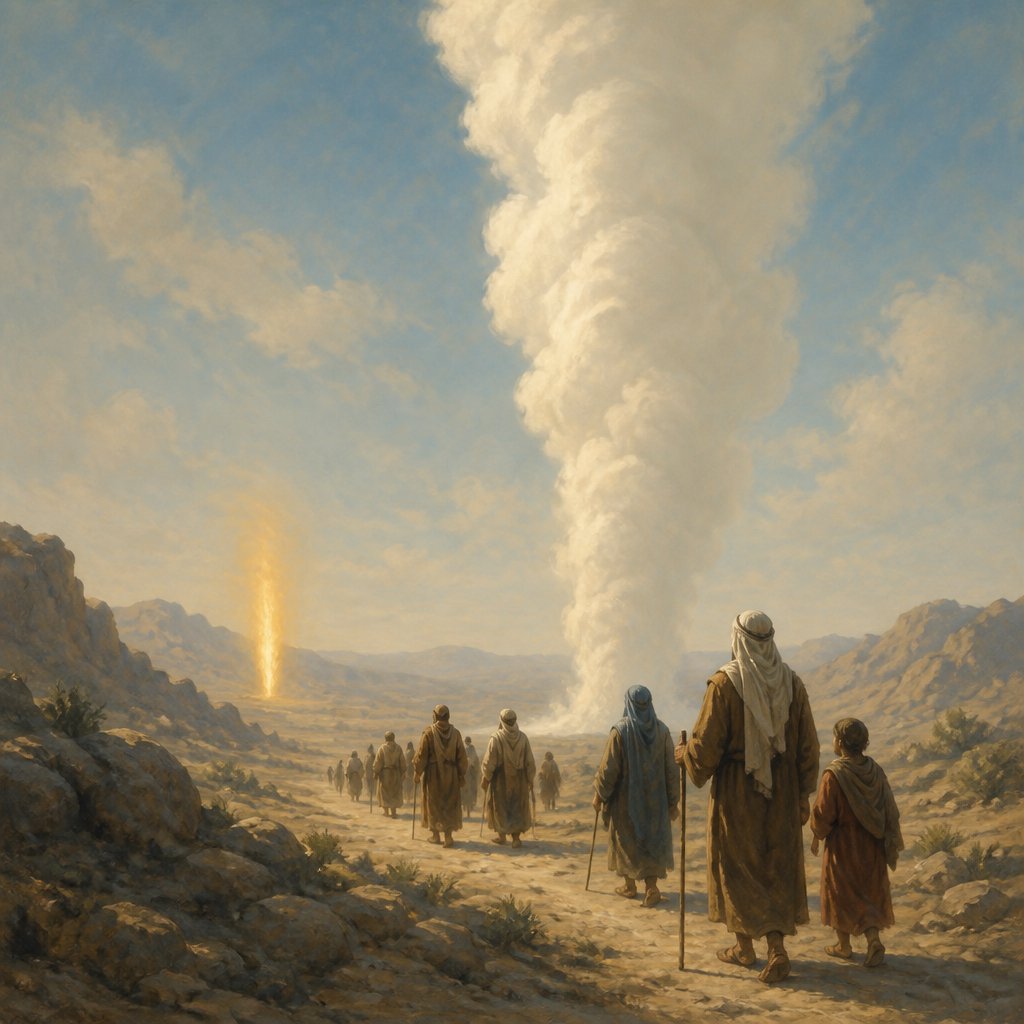
Nehemiah 9:12 (KJV) stands inside a long prayer of confession and covenant-renewal spoken by the Levites after the returned community has gathered to hear the law, confess sin, and separate themselves from corrupting alliances. In this prayer the people are not mainly asking for something new; they are rehearsing what God has already done, so that their present repentance is anchored in God’s proven character. The verse reads, “Moreover thou leddest them in the day by a cloudy pillar; and in the night by a pillar of fire, to give them light in the way wherein they should go.” In a single sentence it gathers the Exodus memory—God’s guidance from Egypt toward the promised land—and uses it as evidence that the Lord has always been a God who leads, not merely a God who commands from afar.
The immediate context is important. Nehemiah 9 is a historical confession that moves from God’s election and promises to Abraham, to deliverance from Egypt, to care in the wilderness, to the gift of the land, and then to Israel’s repeated rebellion and God’s repeated mercy. Verse 12 is part of the wilderness section, coming after the mention that God “didst divide the sea before them” (Nehemiah 9:11, KJV) and before the giving of the law at Sinai and God’s provision of “bread from heaven” and water from the rock (Nehemiah 9:13–15, KJV). The prayer’s logic is deliberate: God rescued them, then guided them, then instructed and sustained them. That order matters. Guidance is not presented as a reward for perfect obedience, but as a gift accompanying redemption. The people in Nehemiah’s day are, in effect, saying: the same God who brought our fathers out did not abandon them in the desert, and therefore our hope for mercy now rests in His consistent faithfulness.
The themes of the verse are guidance, presence, and faithful care. “Thou leddest them” emphasizes that Israel’s journey was not self-directed; the decisive subject is God. The wilderness in Scripture often represents a place where ordinary supports are stripped away—where the people cannot rely on familiar landmarks, agriculture, or stable political structures. In such a place, leadership must come from beyond the people themselves. Nehemiah 9:12 shows guidance as both practical and relational: God does not only point to a destination; He accompanies them in the process. This matters to the returned exiles hearing Nehemiah 9. They are rebuilding a city and re-forming a community after judgment and displacement; their “way wherein they should go” requires more than strategy. The prayer reminds them that their identity has always depended on God’s leading presence.
The imagery of “a cloudy pillar” by day and “a pillar of fire” by night is symbolic in several directions at once. First, it communicates constancy. Day and night cover the full cycle of life; the point is not only that God helped at dramatic moments, but that His leadership extended across ordinary time. Second, it communicates sufficiency. The “cloudy pillar” in the heat of day suggests sheltering guidance, while the “pillar of fire” in the darkness suggests illuminating guidance; together they portray God meeting distinct needs in distinct conditions. Third, it communicates holiness and transcendence. A pillar that is cloud and fire is not a common earthly object; it signals that Israel’s leader is the Lord Himself, present in a way that is real yet not domesticated or controlled. In the prayer this underlines why Israel’s later rebellions are so grievous: they were not merely ignoring advice, they were resisting the living God who had made His presence visible.
The phrase “to give them light in the way wherein they should go” adds another layer: guidance is not simply direction, but illumination. Light allows discernment; it prevents stumbling; it turns fear and confusion into navigable reality. In the KJV wording, the emphasis falls on the journey itself—“the way”—not merely the destination. This makes the verse significant for the covenant-renewal setting of Nehemiah 9. The people are about to bind themselves again to obedience; the verse implies that obedience is walked out step by step, and God’s leading is provision for that walk. The memory of the pillar is therefore not nostalgia; it is a theological argument: God has historically supplied light for His people’s path, so their present recommitment is to be lived in dependence on Him rather than in self-reliance.
Nehemiah 9:12 also functions as a quiet contrast to Israel’s sin, which the chapter later highlights. When the people confess that their fathers “dealt proudly” and “hardened their necks” (Nehemiah 9:16, KJV), the earlier mention of God’s pillar underscores the irrationality of such pride. How can a people claim autonomy when their very survival depended on being led? Yet the verse also prepares the way for mercy, because the same chapter will declare that even when they provoked God, He “forsookest them not in the wilderness” and that “the pillar of the cloud departed not… by day… neither the pillar of fire by night” (Nehemiah 9:19, KJV). Thus, Nehemiah 9:12 is not only about guidance; it foreshadows patient persistence. God’s leading is portrayed as enduring, not fragile.
In sum, Nehemiah 9:12 (KJV) is a remembered act of divine shepherding placed inside a communal confession to teach the post-exilic community who God is and who they are. It proclaims that the Lord’s redemption includes His continuing presence, that His guidance covers every season, that His light is given for the journey, and that the history of Israel is best understood not as a story of human achievement but as a story of God leading His people in the way wherein they should go.
Get our apps


Artwork for Nehemiah 9:12

Nehemiah 9:12 - "Moreover thou leddest them in the day by a cloudy pillar; and in the night by a pillar of fire, to give them light in the way wherein they should go."
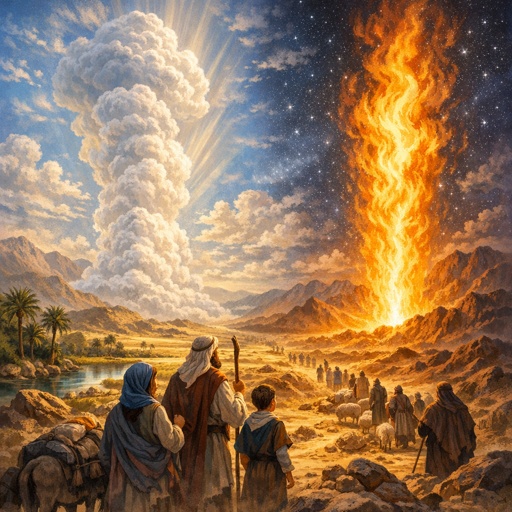
"Moreover thou leddest them in the day by a cloudy pillar; and in the night by a pillar of fire, to give them light in the way wherein they should go." - Nehemiah 9:12
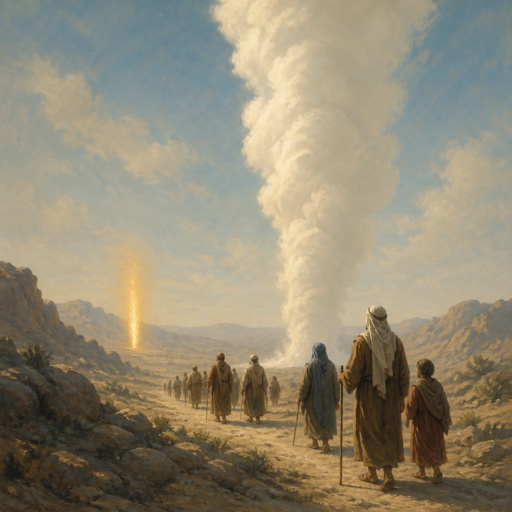
"Moreover thou leddest them in the day by a cloudy pillar; and in the night by a pillar of fire, to give them light in the way wherein they should go." - Nehemiah 9:12

Nehemiah 12:9 - "Also Bakbukiah and Unni, their brethren, were over against them in the watches."
"Also Bakbukiah and Unni, their brethren, were over against them in the watches." - Nehemiah 12:9

Nehemiah 6:9

Nehemiah 12:26 - "These were in the days of Joiakim the son of Jeshua, the son of Jozadak, and in the days of Nehemiah the governor, and of Ezra the priest, the scribe."

Nehemiah 12:33 - "And Azariah, Ezra, and Meshullam,"

Nehemiah 12:5 - "Miamin, Maadiah, Bilgah,"

Nehemiah 12:2 - "Amariah, Malluch, Hattush,"

Nehemiah 12:4 - "Iddo, Ginnetho, Abijah,"

Nehemiah 12:3 - "Shechaniah, Rehum, Meremoth,"

Nehemiah 10:12 - "Zaccur, Sherebiah, Shebaniah,"

Nehemiah 12:6 - "Shemaiah, and Joiarib, Jedaiah,"

Nehemiah 12:12 - "And in the days of Joiakim were priests, the chief of the fathers: of Seraiah, Meraiah; of Jeremiah, Hananiah;"

Nehemiah 12:16 - "Of Iddo, Zechariah; of Ginnethon, Meshullam;"

Nehemiah 12:13 - "Of Ezra, Meshullam; of Amariah, Jehohanan;"

Nehemiah 12:20 - "Of Sallai, Kallai; of Amok, Eber;"

Nehemiah 9:9 - "And didst see the affliction of our fathers in Egypt, and heardest their cry by the Red sea;"

Nehemiah 12:19 - "And of Joiarib, Mattenai; of Jedaiah, Uzzi;"

Nehemiah 12:34 - "Judah, and Benjamin, and Shemaiah, and Jeremiah,"

Nehemiah 12:15 - "Of Harim, Adna; of Meraioth, Helkai;"

Nehemiah 12:18 - "Of Bilgah, Shammua; of Shemaiah, Jehonathan;"

Nehemiah 12:14 - "Of Melicu, Jonathan; of Shebaniah, Joseph;"

Nehemiah 12:21 - "Of Hilkiah, Hashabiah; of Jedaiah, Nethaneel."

Nehemiah 12:17 - "Of Abijah, Zichri; of Miniamin, of Moadiah, Piltai;"

Nehemiah 12:11 - "And Joiada begat Jonathan, and Jonathan begat Jaddua."

Nehemiah 7:9 - "The children of Shephatiah, three hundred seventy and two."

Nehemiah 7:12 - "The children of Elam, a thousand two hundred fifty and four."

Nehemiah 12:32 - "And after them went Hoshaiah, and half of the princes of Judah,"