What does Numbers 11:26 mean?
“But there remained two of the men in the camp, the name of the one was Eldad, and the name of the other Medad: and the spirit rested upon them; and they were of them that were written, but went not out unto the tabernacle: and they prophesied in the camp.” — Numbers 11:26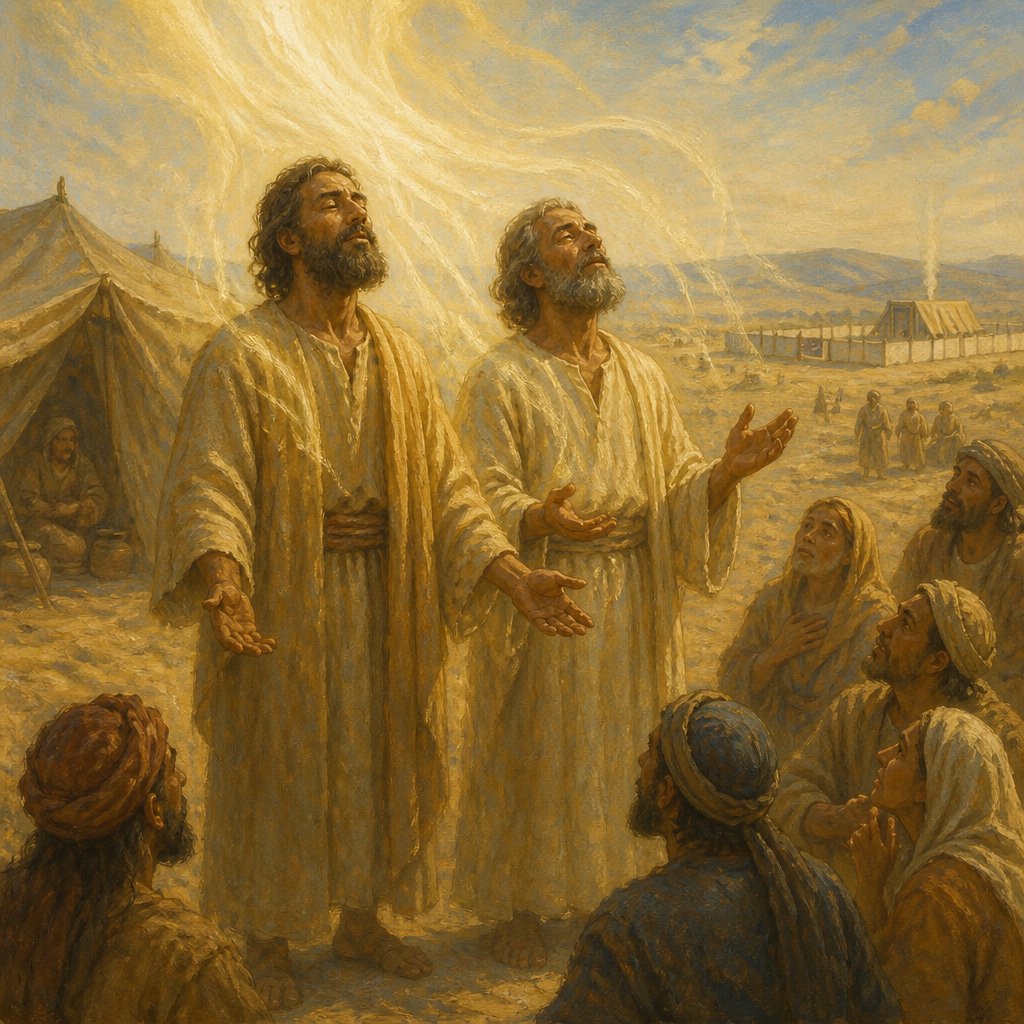
Numbers 11:26 (KJV) reads: "But there remained two of the men in the camp, the name of the one was Eldad, and the name of the other Medad: and the spirit rested upon them; and they were of them that were written, but went not out unto the tabernacle: and they prophesied in the camp."
This verse is found in the book of Numbers, which is the fourth book of the Old Testament. It is a book that primarily focuses on the Israelites' journey from Mount Sinai to the border of the Promised Land. This particular verse comes in the context of the Israelites' complaints and discontentment with their situation in the wilderness. They are in need of guidance and provision from God, and in this verse, God provides them with the gift of prophecy through Eldad and Medad.
The verse starts by stating that two men, Eldad and Medad, remained in the camp while the Spirit of the Lord rested upon them. This is significant because it sets the stage for the unexpected nature of the prophesying that takes place. The fact that these men were not part of the group that went out to the tabernacle but still received the Spirit and prophesied is key to the message of inclusivity and the universality of God's power.
The context leading up to this verse is important for understanding its significance. In the preceding verses, the Israelites are complaining about their hardships in the wilderness and expressing their longing for the food they had in Egypt. This discontentment angers the Lord, and Moses becomes overwhelmed with the responsibility of leading the people. As a result, he cries out to God, expressing his frustration and asking for help in leading the people.
In response, God gathers seventy elders of Israel and bestows upon them a portion of His Spirit to assist Moses in leading the people. However, Eldad and Medad, for reasons not explicitly stated, did not join the other elders at the tabernacle. Despite this, the Spirit rests upon them, and they begin to prophesy in the camp. This unexpected turn of events demonstrates God's sovereignty and highlights the fact that His Spirit is not limited by physical location or circumstances.
The theme of unexpected prophesying also speaks to the idea of God's sovereignty and his ability to work in unpredictable ways. It serves as a reminder that God's plans and purposes are not bound by human expectations or limitations. He is able to move and work through anyone, regardless of their position or status. This is a powerful reminder that God's Spirit is not confined to a specific place or group of people, but is available to all who are open and receptive to His leading.
Furthermore, the inclusion of Eldad and Medad in the prophesying serves as a rebuke to the exclusivity and hierarchy often present in religious settings. It challenges the notion that only certain individuals are worthy or capable of receiving the Spirit and prophesying. Their unexpected role as prophets in the camp demonstrates that God's Spirit can manifest itself in surprising and unconventional ways, challenging our preconceived notions of who can be used by God.
Symbolically, Eldad and Medad represent the idea that God's Spirit is not confined to established structures or traditional roles. Their prophesying in the camp symbolizes the accessibility of God's Spirit to all who seek it, regardless of their circumstances or location. It serves as a powerful symbol of God's inclusivity and His desire to work through ordinary individuals in unexpected ways.
In conclusion, Numbers 11:26 presents a powerful message about the unpredictable and inclusive nature of God's Spirit. Through the unexpected prophesying of Eldad and Medad, it challenges our assumptions about how God works and who He chooses to work through. It reminds us that God's Spirit is not confined by human limitations and is accessible to all who are open to receiving it. This verse serves as a powerful reminder of God's sovereignty and His ability to work through anyone, anywhere, at any time.
Get our apps


Artwork for Numbers 11:26

Numbers 11:26 - "But there remained two of the men in the camp, the name of the one was Eldad, and the name of the other Medad: and the spirit rested upon them; and they were of them that were written, but went not out unto the tabernacle: and they prophesied in the camp."
"But there remained two of the men in the camp, the name of the one was Eldad, and the name of the other Medad: and the spirit rested upon them; and they were of them that were written, but went not out unto the tabernacle: and they prophesied in the camp." - Numbers 11:26

Numbers 11:16-26

Numbers 26:11 - "Notwithstanding the children of Korah died not."

"Notwithstanding the children of Korah died not." - Numbers 26:11

Numbers 11. 4 to 6

Numbers 26:8 - "And the sons of Pallu; Eliab."

Numbers 26:26 - "¶ Of the sons of Zebulun after their families: of Sered, the family of the Sardites: of Elon, the family of the Elonites: of Jahleel, the family of the Jahleelites."

Numbers 26:46 - "And the name of the daughter of Asher was Sarah."

Numbers 33:26 - "And they removed from Makheloth, and encamped at Tahath."

Israelites taking census in Numbers 26

Numbers 26:52 - "¶ And the LORD spake unto Moses, saying,"

Numbers 26:36 - "And these are the sons of Shuthelah: of Eran, the family of the Eranites."

Numbers 26:53 - "Unto these the land shall be divided for an inheritance according to the number of names."

Numbers 26:39 - "Of Shupham, the family of the Shuphamites: of Hupham, the family of the Huphamites."

Numbers 26:31 - "And of Asriel, the family of the Asrielites: and of Shechem, the family of the Shechemites:"

Numbers 26:6 - "Of Hezron, the family of the Hezronites: of Carmi, the family of the Carmites."

Numbers 26:49 - "Of Jezer, the family of the Jezerites: of Shillem, the family of the Shillemites."

Numbers 26:24 - "Of Jashub, the family of the Jashubites: of Shimron, the family of the Shimronites."

Numbers 26:17 - "Of Arod, the family of the Arodites: of Areli, the family of the Arelites."

Numbers 26:13 - "Of Zerah, the family of the Zarhites: of Shaul, the family of the Shaulites."
Numbers 11

Numbers 26:32 - "And of Shemida, the family of the Shemidaites: and of Hepher, the family of the Hepherites."

Numbers 26:16 - "Of Ozni, the family of the Oznites: of Eri, the family of the Erites:"

Numbers 7:26 - "One golden spoon of ten shekels, full of incense:"

Numbers 26:60 - "And unto Aaron was born Nadab, and Abihu, Eleazar, and Ithamar."

Numbers 26:14 - "These are the families of the Simeonites, twenty and two thousand and two hundred."

Numbers 26:28 - "¶ The sons of Joseph after their families were Manasseh and Ephraim."

Numbers 14:26 - "¶ And the LORD spake unto Moses and unto Aaron, saying,"

Numbers 34:26 - "And the prince of the tribe of the children of Issachar, Paltiel the son of Azzan."