What does Numbers 16:1-3 mean?
"Now Korah, the son of Izhar, the son of Kohath, the son of Levi, and Dathan and Abiram, the sons of Eliab, and On, the son of Peleth, sons of Reuben, took men: And they rose up before Moses, with certain of the children of Israel, two hundred and fifty princes of the assembly, famous in the congregation, men of renown: And they gathered themselves together against Moses and against Aaron, and said unto them, Ye take too much upon you, seeing all the congregation are holy, every one of them, and the Lord is among them: wherefore then lift ye up yourselves above the congregation of the Lord?" - Numbers 16:1-3
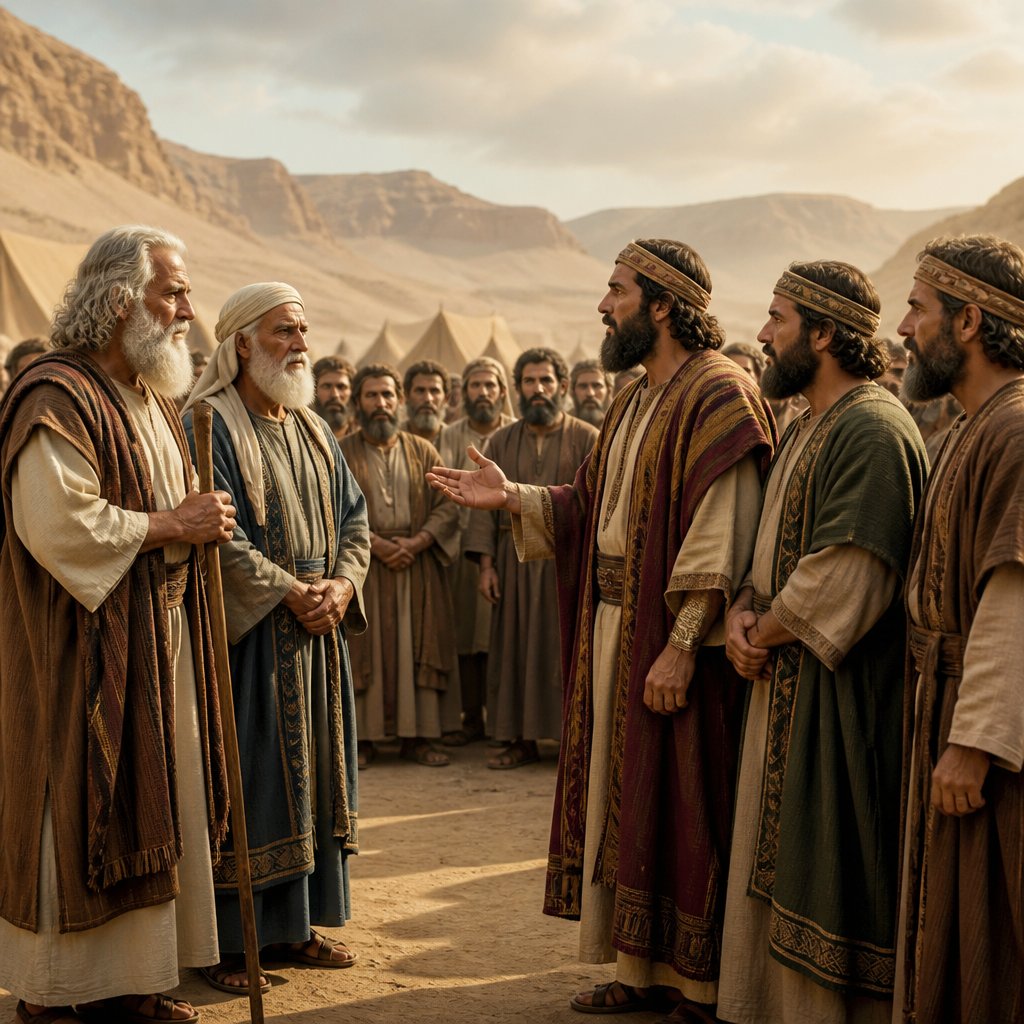
Numbers 16:1-3 from the King James Version (KJV) of the Bible reads: "Now Korah, the son of Izhar, the son of Kohath, the son of Levi, and Dathan and Abiram, the sons of Eliab, and On, the son of Peleth, sons of Reuben, took men: And they rose up before Moses, with certain of the children of Israel, two hundred and fifty princes of the assembly, famous in the congregation, men of renown: And they gathered themselves together against Moses and against Aaron, and said unto them, Ye take too much upon you, seeing all the congregation are holy, every one of them, and the Lord is among them: wherefore then lift ye up yourselves above the congregation of the Lord?"
This passage from the book of Numbers is significant in understanding the dynamics of leadership, authority, and rebellion within the context of the Israelites' journey through the wilderness. The rebellion led by Korah, Dathan, Abiram, and their followers serves as a cautionary tale about the dangers of challenging divine authority and the consequences of such actions.
The context of this passage takes place during the Israelites' time in the wilderness, following their exodus from Egypt and the receiving of the Ten Commandments at Mount Sinai. The Israelites were under the leadership of Moses, who served as the intermediary between the people and God. Moses' authority was established by God Himself, and he was tasked with leading the Israelites to the Promised Land and instructing them in the ways of the Lord.
Korah, Dathan, and Abiram, along with their followers, were challenging the leadership of Moses and Aaron. They were from prominent families within the tribes of Levi and Reuben, and they believed that they were entitled to a greater role in the leadership of the Israelites. Their rebellion stemmed from a desire for more power and influence within the community, as evidenced by their claim that "all the congregation are holy" and that "the Lord is among them."
The rebellion of Korah and his followers can be seen as a challenge to the established authority and hierarchy that God had put in place. Their actions were an affront to the divine order and an attempt to usurp the positions of leadership held by Moses and Aaron. This act of rebellion was not only a rejection of God's chosen leaders but also a rejection of God Himself and His sovereignty over His people.
The themes present in this passage include the concepts of leadership, authority, and the consequences of rebellion. The narrative serves as a warning against pride, selfish ambition, and the desire for power. It also highlights the importance of respecting God-appointed authority and submitting to His will.
The symbolism in this passage is also significant. The names of the individuals involved carry symbolic meaning – Korah means "baldness," which can represent a lack of covering or protection, while Dathan means "belonging to a fountain," and Abiram means "exalted father." These names may foreshadow the fates of these individuals as their rebellion ultimately leads to their downfall and destruction.
Furthermore, the number 250, representing the leaders who joined in the rebellion, carries symbolic significance. In biblical numerology, the number 250 is associated with a test or trial, and in this context, it serves as a test of the Israelites' loyalty and obedience to God's appointed leaders.
In conclusion, Numbers 16:1-3 from the King James Version of the Bible provides a cautionary tale about the dangers of challenging God-appointed authority and the consequences of rebellion. It serves as a reminder to respect and submit to divine leadership and to be cautious of selfish ambition and pride. The passage also carries symbolic significance, emphasizing the importance of obedience and loyalty to God's appointed leaders.
Have questions about Numbers 16:1-3?
Dive deeper into this scripture with Bible Chat — an AI-powered tool for exploring God's Word through conversation. Ask questions, get context, and grow in your understanding of the Bible.
Get Our Apps


Numbers 16:1-3 Artwork

Numbers 16:1-3 - "Now Korah, the son of Izhar, the son of Kohath, the son of Levi, and Dathan and Abiram, the sons of Eliab, and On, the son of Peleth, sons of Reuben, took men: And they rose up before Moses, with certain of the children of Israel, two hundred and fifty princes of the assembly, famous in the congregation, men of renown: And they gathered themselves together against Moses and against Aaron, and said unto them, Ye take too much upon you, seeing all the congregation are holy, every one of them, and the Lord is among them: wherefore then lift ye up yourselves above the congregation of the Lord?"
"Now Korah, the son of Izhar, the son of Kohath, the son of Levi, and Dathan and Abiram, the sons of Eliab, and On, the son of Peleth, sons of Reuben, took men: And they rose up before Moses, with certain of the children of Israel, two hundred and fifty princes of the assembly, famous in the congregation, men of renown: And they gathered themselves together against Moses and against Aaron, and said unto them, Ye take too much upon you, seeing all the congregation are holy, every one of them, and the Lord is among them: wherefore then lift ye up yourselves above the congregation of the Lord?" - Numbers 16:1-3

Numbers 3:16 - "And Moses numbered them according to the word of the LORD, as he was commanded."
Numbers 32:16-18
Numbers 32:16-18

Numbers 3:41

"And Moses numbered them according to the word of the LORD, as he was commanded." - Numbers 3:16

Numbers 1:16 - "These were the renowned of the congregation, princes of the tribes of their fathers, heads of thousands in Israel."

1 corinthians 3:16-17

1 corinthians 3:16-17

1 corinthians 3:16-17

Picture of Numbers 21:1-3

Joshua 3:16

Genesis 3:16

John 3:16

John 3:16

John 3:16

John 3:16

John 3-16

John 3:16

John 3:16

1 Corinthians 3:16

Numbers 16:1 - "Now Korah, the son of Izhar, the son of Kohath, the son of Levi, and Dathan and Abiram, the sons of Eliab, and On, the son of Peleth, sons of Reuben, took men:"

1 Corinthians 3:16

1 Corinthians 3:16

1 Timothy 3:16

Numbers 3:1 - "These also are the generations of Aaron and Moses in the day that the LORD spake with Moses in mount Sinai."

create a mosaic that depicts numbers 8:1 to 12:16 do not show words

1 Chronicles 3:16 - "And the sons of Jehoiakim: Jeconiah his son, Zedekiah his son."

Numbers 1:3 - "From twenty years old and upward, all that are able to go forth to war in Israel: thou and Aaron shall number them by their armies."