What does Numbers 19:12 mean?
"He shall purify himself with it on the third day, and on the seventh day he shall be clean: but if he purify not himself the third day, then the seventh day he shall not be clean." - Numbers 19:12
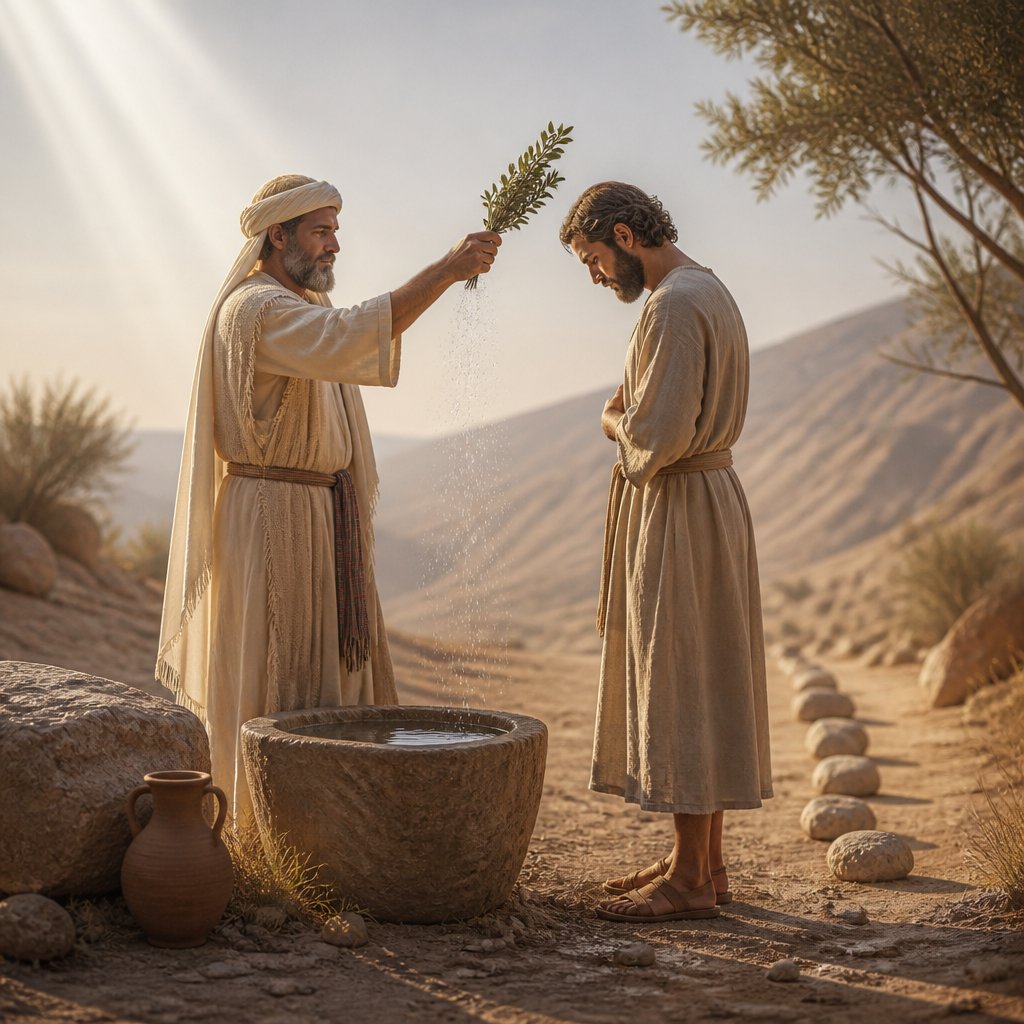
Numbers 19:12 (KJV) states: "He shall purify himself with it on the third day, and on the seventh day he shall be clean: but if he purify not himself the third day, then the seventh day he shall not be clean."
This verse is from the book of Numbers in the Old Testament, and it provides instructions regarding the purification process for someone who has become ceremonially unclean. The concept of ritual purity and cleanliness was of great importance in ancient Israel, as it was closely associated with one's ability to approach and worship God. Therefore, the regulations outlined in this verse were considered essential for maintaining a harmonious relationship with the divine.
The context of Numbers 19:12 is set within the larger framework of the Mosaic law, which contained specific guidelines for maintaining purity and holiness. In the preceding verses, the Lord commands Moses and Aaron to instruct the Israelites about the sacrifice of a red heifer for the purpose of purification. The ashes of the heifer were to be used in a water mixture, which would be sprinkled on individuals who had come into contact with a dead body, a situation that rendered them unclean. This process of purification was necessary in order to be readmitted into the community and the presence of God.
The verse itself provides a clear timeline for the purification process. The individual who had been sprinkled with the water and ashes mixture was to purify himself with it on the third day, and on the seventh day, he would be considered clean. However, failure to purify oneself on the third day would have consequences, as the individual would not be considered clean on the seventh day. This underscores the importance of adhering to the prescribed ritual in order to achieve purity and reconciliation with God.
The ritual outlined in Numbers 19:12 carries significant symbolic weight, reflecting the spiritual and moral principles of the Israelite faith. The process of purification serves as a metaphor for the purging of sin and impurity from one's life. In the biblical context, impurity was not only a physical state but also a spiritual condition, representing separation from God due to disobedience and moral contamination. Therefore, the purification ritual was a tangible demonstration of the individual's desire to be cleansed from their sins and restored to a state of holiness before God.
Furthermore, the timeline of the purification process holds symbolic significance as well. The third day and the seventh day are both significant time periods in the Bible. The third day is often associated with the concept of resurrection and renewal, as seen in the resurrection of Jesus Christ. The seventh day, on the other hand, represents completion and perfection, as God rested on the seventh day after creating the world. Therefore, the purification process is not only a matter of ritual observance but also reflects the larger spiritual themes of redemption, renewal, and restoration.
In a broader theological sense, the concept of ritual purification reflects the Israelites' understanding of the nature of God as holy and morally pure. By adhering to the purification regulations, the Israelites were reminded of the need for moral and spiritual purity in order to approach and worship a holy God.
In conclusion, Numbers 19:12 offers valuable insights into the significance of ritual purity and the process of purification in the Old Testament. It serves as a reminder of the importance of maintaining spiritual cleanliness and moral purity in order to stand before a holy God. The verse highlights the intricate relationship between physical rituals and spiritual truths, and it conveys timeless principles of redemption, renewal, and holiness that are relevant for believers today.
Have questions about Numbers 19:12?
Dive deeper into this scripture with Bible Chat — an AI-powered tool for exploring God's Word through conversation. Ask questions, get context, and grow in your understanding of the Bible.
Get Our Apps


Numbers 19:12 Artwork

Numbers 19:12 - "He shall purify himself with it on the third day, and on the seventh day he shall be clean: but if he purify not himself the third day, then the seventh day he shall not be clean."
"He shall purify himself with it on the third day, and on the seventh day he shall be clean: but if he purify not himself the third day, then the seventh day he shall not be clean." - Numbers 19:12

Numbers 19:14-19 Touching a dead is unclean

Numbers 12 15

Numbers 1:19 - "As the LORD commanded Moses, so he numbered them in the wilderness of Sinai."

Numbers 21:19 - "And from Mattanah to Nahaliel: and from Nahaliel to Bamoth:"

Numbers 33:19 - "And they departed from Rithmah, and pitched at Rimmon-parez."

In Numbers 12, Miriam and Aaron

Numbers 3:19 - "And the sons of Kohath by their families; Amram, and Izehar, Hebron, and Uzziel."

Numbers 34:19 - "And the names of the men are these: Of the tribe of Judah, Caleb the son of Jephunneh."

Numbers 19:1 - "And the LORD spake unto Moses and unto Aaron, saying,"

Numbers 1:12 - "Of Dan; Ahiezer the son of Ammishaddai."

Numbers 2:19 - "And his host, and those that were numbered of them, were forty thousand and five hundred."

Numbers 10:19 - "And over the host of the tribe of the children of Simeon was Shelumiel the son of Zurishaddai."

Genesis 19-12

Numbers 13:12 - "Of the tribe of Dan, Ammiel the son of Gemalli."

Numbers 19:15 - "And every open vessel, which hath no covering bound upon it, is unclean."

Numbers 12:12 - "Let her not be as one dead, of whom the flesh is half consumed when he cometh out of his mother's womb."

Numbers 21:12 - "¶ From thence they removed, and pitched in the valley of Zared."

Numbers 19:11 - "¶ He that toucheth the dead body of any man shall be unclean seven days."

Numbers 26:19 - "¶ The sons of Judah were Er and Onan: and Er and Onan died in the land of Canaan."

"His eyes were as a flame of fire, and on his head were many crowns; and he had a name written, that no man knew, but he himself." - Revelation 19:12

Numbers 12:9 - "And the anger of the LORD was kindled against them; and he departed."

Exodus 12:1-19

Numbers 19:6 - "And the priest shall take cedar wood, and hyssop, and scarlet, and cast it into the midst of the burning of the heifer."

Numbers 33:12 - "And they took their journey out of the wilderness of Sin, and encamped in Dophkah."

Nehemiah 12:19 - "And of Joiarib, Mattenai; of Jedaiah, Uzzi;"

Numbers 19:22 - "And whatsoever the unclean person toucheth shall be unclean; and the soul that toucheth it shall be unclean until even."

Numbers 27:19 - "And set him before Eleazar the priest, and before all the congregation; and give him a charge in their sight."

Numbers 12:16 - "And afterward the people removed from Hazeroth, and pitched in the wilderness of Paran."