What does Numbers 19:14 mean?
“This is the law, when a man dieth in a tent: all that come into the tent, and all that is in the tent, shall be unclean seven days.” — Numbers 19:14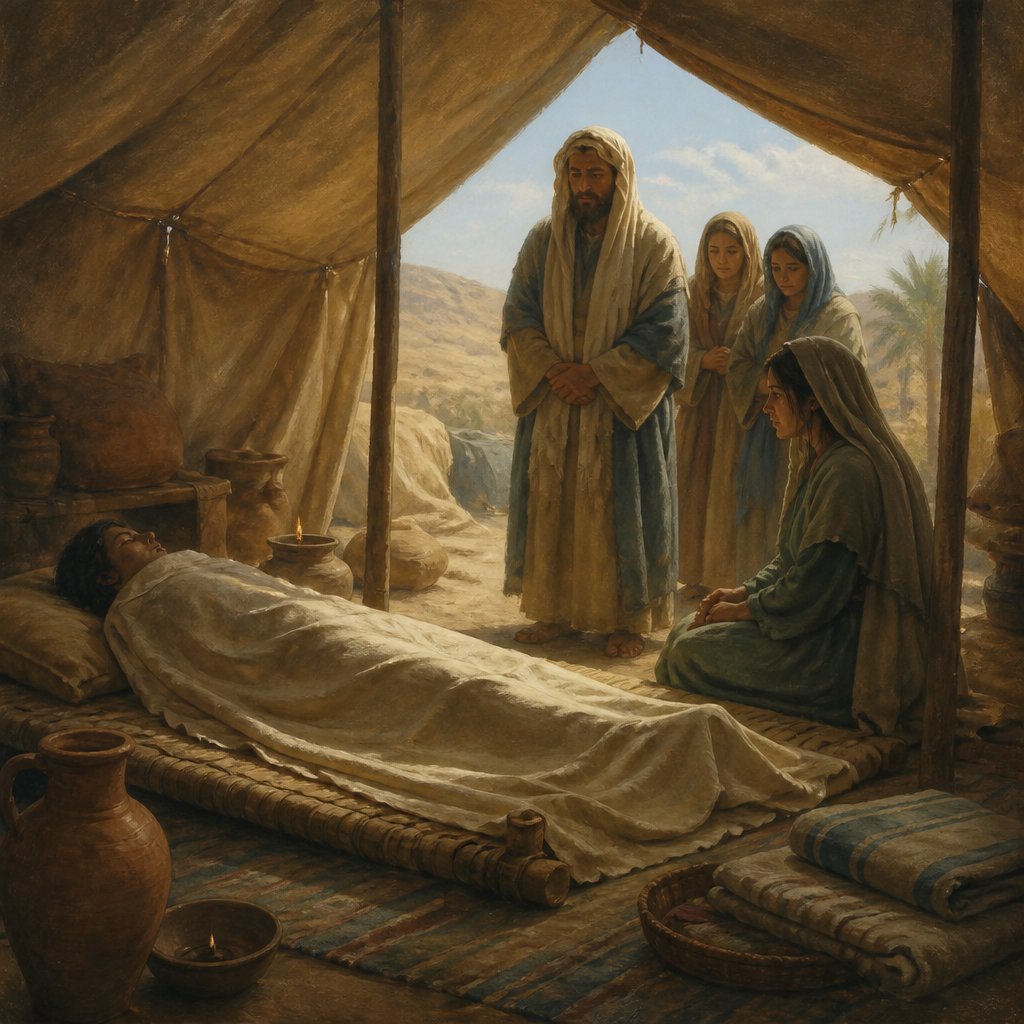
Numbers 19:14 in the King James Version of the Bible reads, "This is the law, when a man dieth in a tent: all that come into the tent, and all that is in the tent, shall be unclean seven days."
This verse is part of a larger passage that deals with purification rituals for the Israelites. The entire chapter of Numbers 19 focuses on the instructions for the ritual of the red heifer, which was used to purify those who had come into contact with the dead. In ancient Israelite society, death was considered to be a source of defilement, and anyone who came into contact with a dead body, or the tent where a dead body had been, was considered ceremonially unclean.
In this verse, the specific focus is on the defilement that comes from being in a tent where someone has died. The law states that anyone who enters the tent where a person has died, as well as everything in the tent, will be unclean for a period of seven days. This period of uncleanness was significant because it meant that the individual would be excluded from certain religious activities and communal gatherings until they had completed the purification process.
The broader themes of this verse and the surrounding passage revolve around the ideas of purity, cleanliness, and holiness. In ancient Israelite society, the concept of ritual purity was of utmost importance, and there were strict regulations and procedures for maintaining or restoring purity after coming into contact with sources of defilement. These purity laws were not only about physical cleanliness, but also about spiritual and moral purity, and they were believed to be essential for maintaining a right relationship with God and with the community.
The context of Numbers 19:14 is also important for understanding its significance. The book of Numbers is set during the Israelites' journey through the wilderness after their exodus from Egypt. During this time, God gave the Israelites a set of laws and regulations, including those related to purity and holiness, in order to establish them as a holy nation and to guide them in their worship and daily life. The laws regarding purity and uncleanness served to set the Israelites apart from the surrounding nations and to teach them about the importance of maintaining their relationship with God.
Symbolically, the uncleanness associated with death in the tent can be seen as a representation of the spiritual and moral defilement that comes from being in the presence of sin and disobedience. Just as the Israelites were instructed to undergo a ritual purification process to remove the defilement from their lives, so too are believers called to seek cleansing and forgiveness for their sins in order to restore their relationship with God.
Overall, Numbers 19:14 and the surrounding passage emphasize the importance of holiness and purity in the lives of the Israelites. While the specific laws and rituals described in this chapter may not directly apply to modern Christian practice, the broader spiritual principles of maintaining purity and seeking forgiveness for sin are still relevant. This verse serves as a reminder of the need for continual repentance and purification in order to maintain a close relationship with God and to live in a manner that is pleasing to Him.
Get our apps


Artwork for Numbers 19:14

Numbers 19:14-19 Touching a dead is unclean

Numbers 19:14 - "This is the law, when a man dieth in a tent: all that come into the tent, and all that is in the tent, shall be unclean seven days."
"This is the law, when a man dieth in a tent: all that come into the tent, and all that is in the tent, shall be unclean seven days." - Numbers 19:14

Numbers 14:19 - "Pardon, I beseech thee, the iniquity of this people according unto the greatness of thy mercy, and as thou hast forgiven this people, from Egypt even until now."

Numbers 14:8

Numbers 14:8

Numbers 14:8

Ending scene of numbers 14

Numbers 1:19 - "As the LORD commanded Moses, so he numbered them in the wilderness of Sinai."

Numbers 21:19 - "And from Mattanah to Nahaliel: and from Nahaliel to Bamoth:"

Numbers 33:19 - "And they departed from Rithmah, and pitched at Rimmon-parez."

numbers 31:14-15

Numbers 1:14 - "Of Gad; Eliasaph the son of Deuel."

Numbers 3:19 - "And the sons of Kohath by their families; Amram, and Izehar, Hebron, and Uzziel."

Numbers 34:19 - "And the names of the men are these: Of the tribe of Judah, Caleb the son of Jephunneh."

Numbers 19:1 - "And the LORD spake unto Moses and unto Aaron, saying,"

Numbers 14:18-19 - "The Lord is slow to anger, abounding in love and forgiving sin and rebellion. Yet he does not leave the guilty unpunished; he punishes the children for the sin of the parents to the third and fourth generation. In accordance with your great love, forgive the sin of these people, just as you have pardoned them from the time they left Egypt until now."

Genesis 19-14

Psalm 19:14

Numbers 13:14 - "Of the tribe of Naphtali, Nahbi the son of Vophsi."

Numbers 2:19 - "And his host, and those that were numbered of them, were forty thousand and five hundred."

Numbers 10:19 - "And over the host of the tribe of the children of Simeon was Shelumiel the son of Zurishaddai."

Numbers 14:32 - "But as for you, your carcases, they shall fall in this wilderness."

Scene from numbers 14:45

Numbers 18:14 - "Every thing devoted in Israel shall be thine."

Numbers 19:15 - "And every open vessel, which hath no covering bound upon it, is unclean."

Numbers 3:14 - "¶ And the LORD spake unto Moses in the wilderness of Sinai, saying,"

Numbers 7:14 - "One spoon of ten shekels of gold, full of incense:"

Numbers 14:26 - "¶ And the LORD spake unto Moses and unto Aaron, saying,"

Numbers 26:14 - "These are the families of the Simeonites, twenty and two thousand and two hundred."