What does Numbers 23:19 mean?
"God is not a man, that he should lie; neither the son of man, that he should repent: hath he said, and shall he not do it? or hath he spoken, and shall he not make it good?" - Numbers 23:19

“God is not a man, that he should lie; neither the son of man, that he should repent: hath he said, and shall he not do it? or hath he spoken, and shall he not make it good?” (Numbers 23:19, KJV).
Numbers 23:19 stands in the middle of Balaam’s second prophetic utterance, spoken on a hilltop while Balak king of Moab is trying to purchase a curse against Israel. Balak’s fear is political and military: Israel’s presence threatens Moab. His strategy is spiritual manipulation—he treats the word of blessing or cursing as something a hired prophet can direct at will. The chapter shows the opposite. Balaam, though tempted by reward and surrounded by pagan expectations, is constrained by the LORD: he may speak only what God puts in his mouth. In that setting, Numbers 23:19 becomes a theological hammer blow, explaining why Israel cannot be truly cursed when God has blessed them. The verse is not an abstract proverb only; it is a declaration that God’s purpose toward His people is not vulnerable to bribery, ceremony, or human pressure.
The verse contrasts God with man, and it does so in the language of moral reliability. “God is not a man, that he should lie” points to the difference between the Creator and fallen humanity. Human words often fail because humans are limited in knowledge, weak in will, and compromised in character. Men lie to gain advantage, to conceal weakness, or to avoid consequences. God does not. In this moment, that matters because Balaam is being asked, in effect, to make divine speech serve human desire. The text answers that God’s speech cannot be bent: His words are not tools in a human hand, because God is not like a man.
“Neither the son of man, that he should repent” deepens the contrast. In Scripture, “repent” can speak of turning from sin, but in this context it carries the sense of changing one’s mind, reversing course, or being forced to adjust because new information has arrived or because the original plan failed. Human beings “repent” in that sense all the time: we revise plans because we misjudged, we overpromised, we were outmaneuvered, we lacked power to carry out what we intended. God is not “the son of man” in that way. He is not a creature who learns, corrects mistakes, or discovers unforeseen complications. Balaam is saying that God’s declared intention is not a tentative forecast; it is a settled determination.
The verse then presses the point with two parallel questions, each of which expects the answer “yes, he will.” “Hath he said, and shall he not do it?” and “Hath he spoken, and shall he not make it good?” move from God’s character to God’s action. God’s word is not mere talk; it is performative, effective, and certain. If God has “said,” He will “do.” If God has “spoken,” He will “make it good.” In the immediate story, what God has said about Israel—His blessing, His covenant purpose, His decision to bring them into the land—cannot be undone by Moabite altars, by repeated sacrifices, or by the shifting vantage points from which Balak keeps trying to force a different outcome. Balak leads Balaam from place to place, as though a new angle might produce a new oracle; the verse denies that geography, ritual, or persistence can overturn the word of the LORD.
One of the major themes here is the immutability and faithfulness of God: He does not fluctuate like human rulers, prophets, or nations. That steadiness is not cold fatalism; it is covenant reliability. God’s steadfastness means that His blessing is not a mood. Israel, in the wilderness, is not presented as morally perfect, yet the text highlights that God’s commitment to His own promise stands behind them. Numbers 23:19 therefore magnifies grace as well as power: the security of God’s people rests finally on God’s truthfulness, not on their ability to secure themselves.
Another theme is the holiness of divine speech. In ancient Near Eastern thinking, words—especially spoken in ritual—were often treated as forces that could be manipulated. Balak treats prophecy like magic. Numbers 23:19 separates biblical prophecy from that idea. The word of the LORD is not an incantation; it is the expression of God’s will. The prophet is not a technician controlling spiritual power; he is a messenger compelled to speak truth. Balaam’s unwilling confession becomes part of the lesson: even a compromised mouth cannot turn God into a liar.
There is also a moral symbolism in the contrast “man” and “God.” “Man” here represents instability, deceit, and changeability—not because every individual lies in every sentence, but because humanity, as a whole, is unreliable in the way only creatures can be. Men promise beyond their strength; they speak with mixed motives; they are subject to fear and flattery. Balak embodies this: he assumes money can buy what he wants; he assumes words can be rented; he assumes religion can be used. God stands outside this entire economy. The verse is a rebuke of all attempts to treat God as though He were a larger version of ourselves.
The significance of the verse reaches beyond the immediate narrative. It teaches how to read God’s promises throughout Scripture: God’s commitments are anchored in His nature. When He speaks, His word is not endangered by His forgetfulness, His weakness, or His duplicity, because He is not a man. That does not mean God is indifferent or unresponsive; it means that God’s responses are consistent with His truth and His declared purposes. In Numbers 23, the specific comfort is that the LORD’s blessing cannot be reversed by an enemy’s hired curse. The larger comfort is that God’s word, once given, stands as something you can lean the weight of your life upon, because He will “make it good.”
Have questions about Numbers 23:19?
Dive deeper into this scripture with Bible Chat — an AI-powered tool for exploring God's Word through conversation. Ask questions, get context, and grow in your understanding of the Bible.
Get Our Apps


Numbers 23:19 Artwork
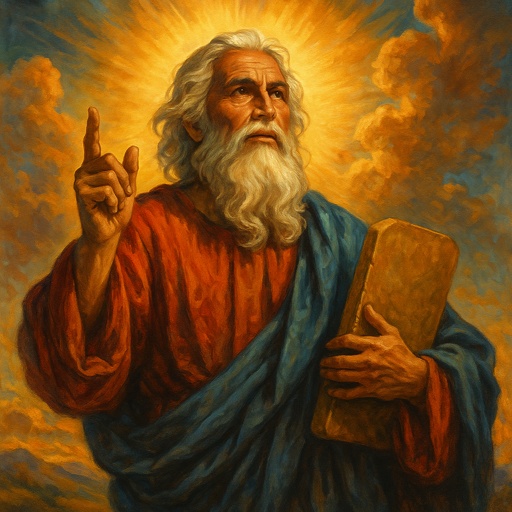
"God is not a man, that he should lie; neither the son of man, that he should repent: hath he said, and shall he not do it? or hath he spoken, and shall he not make it good?" - Numbers 23:19

Numbers 23:19 - "God is not a man, that he should lie; neither the son of man, that he should repent: hath he said, and shall he not do it? or hath he spoken, and shall he not make it good?"

"God is not a man, that he should lie; neither the son of man, that he should repent: hath he said, and shall he not do it? or hath he spoken, and shall he not make it good?" - Numbers 23:19

"God is not a man, that he should lie; neither the son of man, that he should repent: hath he said, and shall he not do it? or hath he spoken, and shall he not make it good?" - Numbers 23:19

"God is not a man, that he should lie; neither the son of man, that he should repent: hath he said, and shall he not do it? or hath he spoken, and shall he not make it good?" - Numbers 23:19

Numbers 23:30

Numbers 23:1-13

Numbers 19:14-19 Touching a dead is unclean

Genesis 23-19

Luke 19:23

Luke 19:23

Numbers 8:23 - "¶ And the LORD spake unto Moses, saying,"

Numbers 16:23 - "¶ And the LORD spake unto Moses, saying,"

Genesis 19-23
Numbers 33:23 - "And they went from Kehelathah, and pitched in mount Shapher."

Numbers 3:23 - "The families of the Gershonites shall pitch behind the tabernacle westward."

Balaam bless Israel twice in numbers 23

Numbers 1:19 - "As the LORD commanded Moses, so he numbered them in the wilderness of Sinai."

Numbers 21:19 - "And from Mattanah to Nahaliel: and from Nahaliel to Bamoth:"

Numbers 33:19 - "And they departed from Rithmah, and pitched at Rimmon-parez."

Numbers 23:23 - "Surely there is no enchantment against Jacob, neither is there any divination against Israel: according to this time it shall be said of Jacob and of Israel, What hath God wrought!"

Numbers 10:23 - "And over the host of the tribe of the children of Manasseh was Gamaliel the son of Pedahzur."

Numbers 3:19 - "And the sons of Kohath by their families; Amram, and Izehar, Hebron, and Uzziel."

Numbers 34:19 - "And the names of the men are these: Of the tribe of Judah, Caleb the son of Jephunneh."

Numbers 19:1 - "And the LORD spake unto Moses and unto Aaron, saying,"

Numbers 23:28 - "And Balak brought Balaam unto the top of Peor, that looketh toward Jeshimon."

Numbers 2:23 - "And his host, and those that were numbered of them, were thirty and five thousand and four hundred."

Numbers 34:23 - "The prince of the children of Joseph, for the tribe of the children of Manasseh, Hanniel the son of Ephod."

Numbers 2:19 - "And his host, and those that were numbered of them, were forty thousand and five hundred."

Numbers 1:23 - "Those that were numbered of them, even of the tribe of Simeon, were fifty and nine thousand and three hundred."