What does Numbers 4:13 mean?
“And they shall take away the ashes from the altar, and spread a purple cloth thereon:” — Numbers 4:13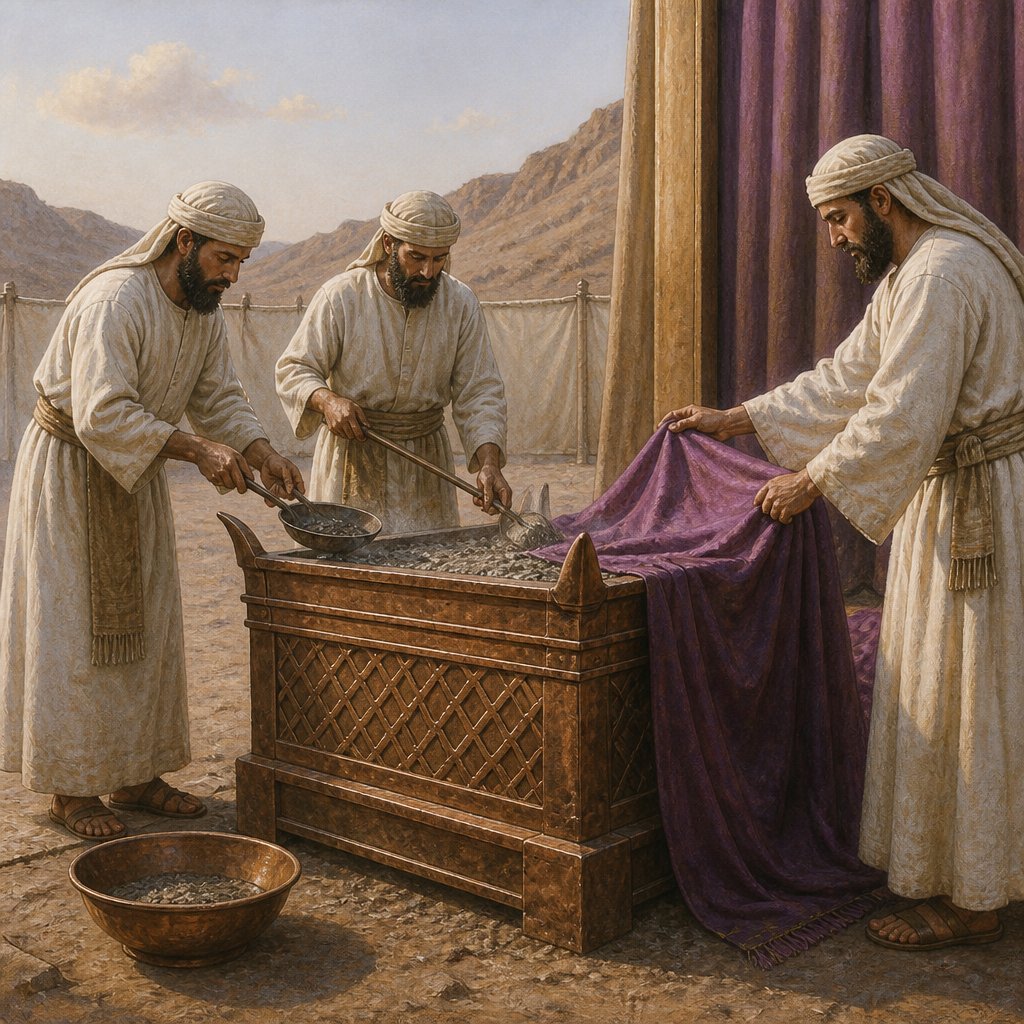
Numbers 4:13 from the King James Version of the Bible reads, "And they shall take away the ashes from the altar, and spread a purple cloth thereon." This verse is part of a larger passage that details the duties of the Levites, who were a tribe of Israel set apart for the service of the tabernacle and later the temple.
In context, this verse is part of a larger section in the book of Numbers that outlines the specific responsibilities and duties of the Levites in their service to the Lord. In this particular verse, the focus is on the removal of ashes from the altar and the spreading of a purple cloth over it. This seemingly mundane task has deeper spiritual and symbolic significance, which we will explore in this commentary.
The act of removing the ashes from the altar was a crucial and regular part of the sacrificial system in ancient Israel. The altar was the place where sacrifices were offered to God, and the burning of the sacrifices left behind ashes that needed to be removed in order to prepare the altar for the next offering. This act of cleaning and maintaining the altar was a physical demonstration of the Levites' dedication to serving the Lord and their commitment to ensuring that the worship of God was carried out with reverence and care.
The spreading of a purple cloth over the altar also holds symbolic meaning. In the Bible, the color purple is often associated with royalty and majesty. It is a color that conveys wealth, power, and authority. In this context, the use of a purple cloth to cover the altar speaks to the holiness and majesty of God. It serves as a visual reminder that the altar is a sacred place, set apart for the worship of the Almighty.
Furthermore, the act of covering the altar with a purple cloth can also be seen as a foreshadowing of the atoning sacrifice of Jesus Christ. In the New Testament, purple is also associated with the suffering and sacrifice of Jesus, as it was the color of the robe mockingly placed on Him during His trial and crucifixion. This connection serves to emphasize the deeper spiritual significance of the Levites' duties in maintaining the altar.
Beyond the specific actions described in this verse, there are broader themes at play that are worth exploring. One such theme is the concept of service and stewardship. The Levites were given the responsibility of caring for the tabernacle and later the temple, and their duties were essential to the proper functioning of the worship of God. This serves as a reminder to believers today that we are called to serve the Lord faithfully, whether in seemingly mundane tasks or in more visible and prominent roles.
Another theme that can be drawn from this verse is the idea of reverence and respect for the things of God. The meticulous care that the Levites were instructed to take in maintaining the altar reflects the importance of approaching God with a spirit of reverence and awe. This is a timeless principle that carries through both the Old and New Testaments, reminding us of the need to honor and respect the holiness of God in our worship and service.
In summary, Numbers 4:13 contains rich spiritual symbolism and practical instruction that can speak to believers today. It serves as a reminder of the importance of faithful service, reverence for God, and the deeper significance of the sacrificial system in the Old Testament. As we meditate on this verse, may we be inspired to serve the Lord with dedication and humility, approaching Him with the honor and respect He deserves.
Get our apps


Artwork for Numbers 4:13

Numbers 4:13 - "And they shall take away the ashes from the altar, and spread a purple cloth thereon:"
"And they shall take away the ashes from the altar, and spread a purple cloth thereon:" - Numbers 4:13

Numbers 13:4 - "And these were their names: of the tribe of Reuben, Shammua the son of Zaccur."

"And these were their names: of the tribe of Reuben, Shammua the son of Zaccur." - Numbers 13:4

Numbers 13:13 - "Of the tribe of Asher, Sethur the son of Michael."

Numbers 23:1-13

"Of the tribe of Asher, Sethur the son of Michael." - Numbers 13:13

Numbers 1:13 - "Of Asher; Pagiel the son of Ocran."

Numbers 13:6 - "Of the tribe of Judah, Caleb the son of Jephunneh."

Numbers 13:10 - "Of the tribe of Zebulun, Gaddiel the son of Sodi."

Numbers 33:13 - "And they departed from Dophkah, and encamped in Alush."

Numbers 13:8 - "Of the tribe of Ephraim, Oshea the son of Nun."

Numbers 4:7

Numbers 13:9 - "Of the tribe of Benjamin, Palti the son of Raphu."

Numbers 13:5 - "Of the tribe of Simeon, Shaphat the son of Hori."

Numbers 13:1 - "And the LORD spake unto Moses, saying,"

Numbers 13:15 - "Of the tribe of Gad, Geuel the son of Machi."

Numbers 13:12 - "Of the tribe of Dan, Ammiel the son of Gemalli."

Numbers 13:7 - "Of the tribe of Issachar, Igal the son of Joseph."

Numbers 13:14 - "Of the tribe of Naphtali, Nahbi the son of Vophsi."

Numbers 4:8

Numbers 26:13 - "Of Zerah, the family of the Zarhites: of Shaul, the family of the Shaulites."

Numbers 4:4 - "This shall be the service of the sons of Kohath in the tabernacle of the congregation, about the most holy things:"

Numbers 13:25 - "And they returned from searching of the land after forty days."

Numbers 11. 4 to 6

Numbers 4:7-8

Numbers 10:13 - "And they first took their journey according to the commandment of the LORD by the hand of Moses."

Numbers 13:11 - "Of the tribe of Joseph, namely, of the tribe of Manasseh, Gaddi the son of Susi."

Numbers 2:13 - "And his host, and those that were numbered of them, were fifty and nine thousand and three hundred."

Numbers 4:24 - "This is the service of the families of the Gershonites, to serve, and for burdens:"