What does Numbers 5:27 mean?
“And when he hath made her to drink the water, then it shall come to pass, that, if she be defiled, and have done trespass against her husband, that the water that causeth the curse shall enter into her, and become bitter, and her belly shall swell, and her thigh shall rot: and the woman shall be a curse among her people.” — Numbers 5:27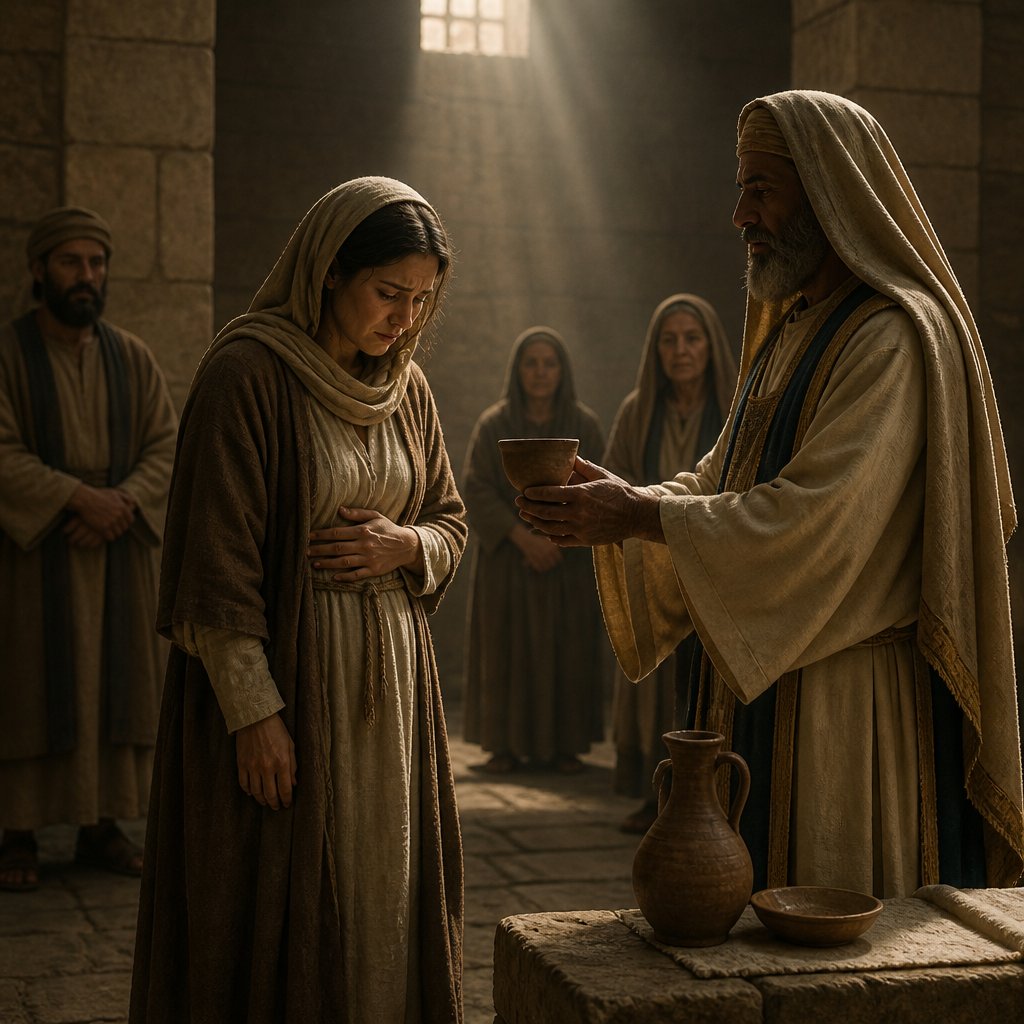
Numbers 5:27 (KJV) states, "And when he hath made her to drink the water, then it shall come to pass, that, if she be defiled, and have done trespass against her husband, that the water that causeth the curse shall enter into her, and become bitter, and her belly shall swell, and her thigh shall rot: and the woman shall be a curse among her people."
This verse comes from the Book of Numbers, which is the fourth book in the Old Testament. The Book of Numbers recounts the Israelites' journey from Mount Sinai to the outskirts of the Promised Land. This particular verse falls within a passage that deals with the ordeal of bitter water in cases of suspected infidelity.
In this passage, God instructs Moses to deal with cases of suspected adultery in a very unconventional manner. If a man becomes jealous of his wife's faithfulness, he is to bring her to the priest, to undergo a unique ritual. The priest is to take holy water, mix it with dust from the tabernacle floor, and the ink from a written curse. The woman is then to drink the bitter water, while the priest offers a prayer to God. If she is guilty of adultery, the water will bring a curse upon her, causing her belly to swell and her thigh to rot. If she is innocent, she will be unharmed and able to conceive children. This unusual method was used to test the woman's faithfulness to her husband and her purity before God.
At first glance, this passage might seem discriminatory and archaic, but it is crucial to understand the cultural and historical context in which it was written. At the time, the Israelites were a nomadic people living in a patriarchal society, with strict laws governing morality and behavior. Adultery was considered a serious offense, not only against a spouse but against God as well. By providing a way for jealous husbands to seek God's judgement without resorting to violence or rash accusations, this ritual served as a means of maintaining social order and protecting the sanctity of marriage within the community.
The symbolism in this verse is quite profound. The bitter water represents the consequences of sin and unfaithfulness. It is a symbol of divine judgement and the power of God to reveal the truth. The act of drinking the bitter water is akin to facing the consequences of one's actions and trusting in the justice of God's judgement. The swelling belly and rotting thigh are physical manifestations of the curse, serving as a warning to others of the consequences of unfaithfulness.
One of the key themes of this verse is the concept of divine justice. The ritual of the bitter water demonstrates God's role as the ultimate judge, able to discern and punish wrongdoing. It emphasizes the importance of remaining faithful and obedient to God's commandments, as there will be consequences for straying from the path of righteousness. Additionally, this passage also speaks to the importance of trust and communication within a marriage, as jealousy and distrust can lead to destructive and divisive consequences.
Another important theme is the concept of purity and sanctity. The ritual of the bitter water was a way to determine a woman's purity before God and her husband. It serves as a reminder that faithfulness and fidelity are essential components of a healthy and righteous society. The consequences of adultery were severe, reflecting the severity with which the Israelites viewed the sanctity of marriage and the importance of maintaining moral purity within the community.
In conclusion, Numbers 5:27 is a challenging and complex verse that requires deeper examination to understand its historical, cultural, and symbolic significance. It reflects the concerns of a patriarchal society grappling with issues of fidelity, trust, and divine justice. While the ritual of the bitter water may seem harsh and archaic by modern standards, it underscores the importance of moral purity, fidelity, and the need for divine justice within the societal context of the time.
Get our apps


Artwork for Numbers 5:27

Numbers 5:27 - "And when he hath made her to drink the water, then it shall come to pass, that, if she be defiled, and have done trespass against her husband, that the water that causeth the curse shall enter into her, and become bitter, and her belly shall swell, and her thigh shall rot: and the woman shall be a curse among her people."
"And when he hath made her to drink the water, then it shall come to pass, that, if she be defiled, and have done trespass against her husband, that the water that causeth the curse shall enter into her, and become bitter, and her belly shall swell, and her thigh shall rot: and the woman shall be a curse among her people." - Numbers 5:27

Numbers 27:5 - "And Moses brought their cause before the LORD."

"And Moses brought their cause before the LORD." - Numbers 27:5

Numbers 27 1

NUMBERS 27:2

Numbers 27:15 - "¶ And Moses spake unto the LORD, saying,"

Numbers 27:6 - "¶ And the LORD spake unto Moses, saying,"

Numbers 33:27 - "And they departed from Tahath, and pitched at Tarah."

Numbers 34:27 - "And the prince of the tribe of the children of Asher, Ahihud the son of Shelomi."

Inheritance issue with The daughters of Zelophehad in Numbers 27

Numbers 26:27 - "These are the families of the Zebulunites according to those that were numbered of them, threescore thousand and five hundred."

Numbers 10:27 - "And over the host of the tribe of the children of Naphtali was Ahira the son of Enan."

Numbers 5:5 - "¶ And the LORD spake unto Moses, saying,"

Genesis 27:5

Numbers 29:27 - "And their meat offering and their drink offerings for the bullocks, for the rams, and for the lambs, shall be according to their number, after the manner:"

Numbers 6:27 - "And they shall put my name upon the children of Israel; and I will bless them."

Numbers 1:27 - "Those that were numbered of them, even of the tribe of Judah, were threescore and fourteen thousand and six hundred."

Numbers 27:16 - "Let the LORD, the God of the spirits of all flesh, set a man over the congregation,"

Numbers 11:5

Numbers 27:9 - "And if he have no daughter, then ye shall give his inheritance unto his brethren."

Numbers 3:27 - "¶ And of Kohath was the family of the Amramites, and the family of the Izeharites, and the family of the Hebronites, and the family of the Uzzielites: these are the families of the Kohathites."

Numbers 7:27 - "One young bullock, one ram, one lamb of the first year, for a burnt offering:"

Numbers 20:27 - "And Moses did as the LORD commanded: and they went up into mount Hor in the sight of all the congregation."

Numbers 21:27 - "Wherefore they that speak in proverbs say, Come into Heshbon, let the city of Sihon be built and prepared:"

Numbers 11:27 - "And there ran a young man, and told Moses, and said, Eldad and Medad do prophesy in the camp."

Numbers 27:10 - "And if he have no brethren, then ye shall give his inheritance unto his father's brethren."

Numbers 27:19 - "And set him before Eleazar the priest, and before all the congregation; and give him a charge in their sight."

"¶ And the LORD spake unto Moses, saying," - Numbers 27:6

"And they departed from Tahath, and pitched at Tarah." - Numbers 33:27