What does Numbers 7:33 mean?
“One young bullock, one ram, one lamb of the first year, for a burnt offering:” — Numbers 7:33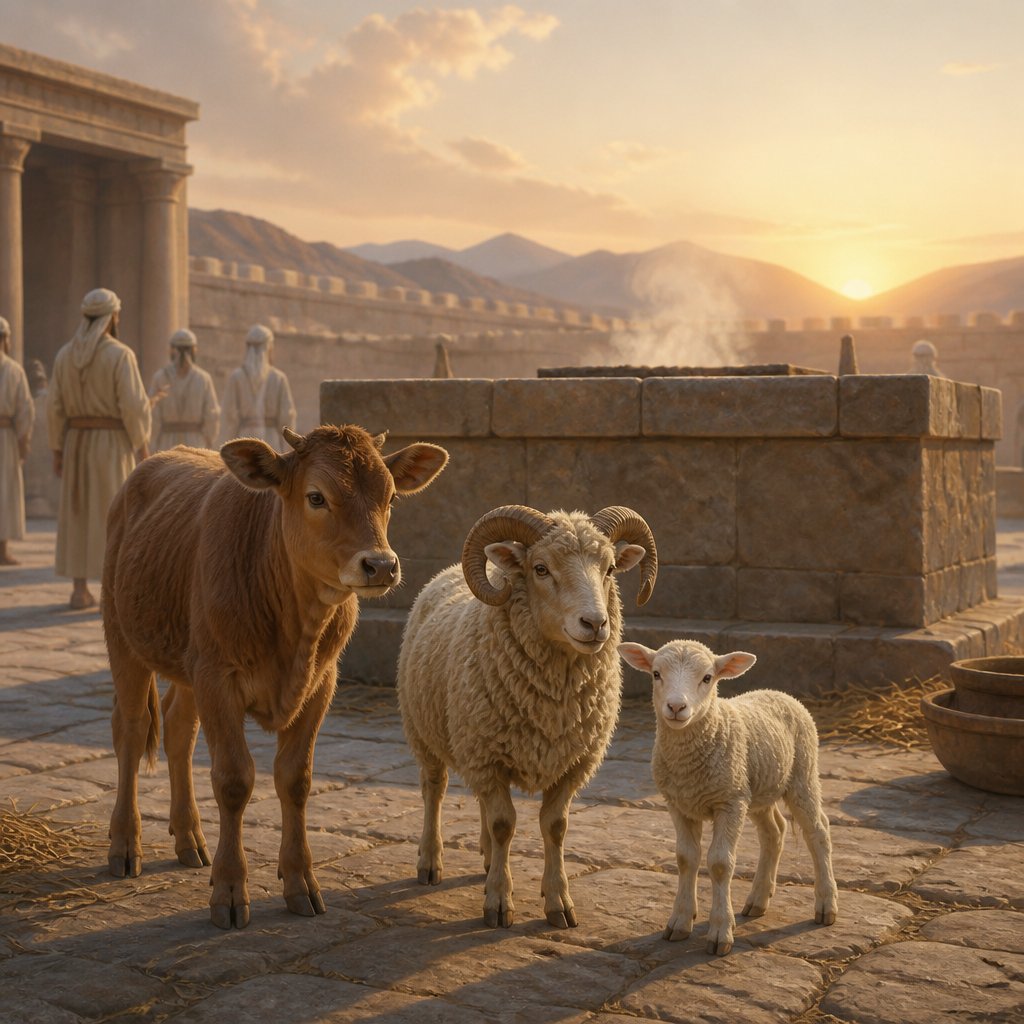
Numbers 7:33 in the King James Version of the Bible reads: "And for a sacrifice of peace offerings, two oxen, five rams, five he goats, five lambs of the first year: this was the offering of Gamaliel the son of Pedahzur."
The book of Numbers is the fourth book of the Bible and is named after the census of the Israelites that is recorded within its pages. The book details the Israelites' journey from Mount Sinai to the Promised Land, as well as their struggles and disobedience along the way.
In this particular verse, we see an offering being made by Gamaliel, the son of Pedahzur. The offering consists of two oxen, five rams, five he goats, and five lambs of the first year. In the context of the book of Numbers, offerings such as these were a crucial aspect of the Israelites' relationship with God. The sacrifices were seen as a way to atone for sins, give thanks, or seek favor from God.
The concept of sacrifice is a recurring theme throughout the Bible, and it holds significant symbolic meaning. In the Old Testament, sacrifices were made as a way to seek forgiveness for sins and to restore harmony between God and the people. The act of sacrificing also required the person offering the sacrifice to give up something of value, symbolizing their devotion and commitment to God. In this way, sacrifices served as a physical and tangible expression of one's faith and obedience.
The specific animals mentioned in this verse also hold symbolic significance. In biblical times, different animals were offered for different reasons. The oxen were often sacrificed for atonement, rams for consecration, he goats for sin offerings, and lambs for peace offerings. Each animal had its own symbolic meaning and represented different aspects of the human experience and relationship with God.
Additionally, the numbers in this verse also carry symbolism. The number two often represents witness or confirmation, while the number five is associated with God's grace and favor. The repetition of the number five in the offerings made by Gamaliel may symbolize an abundance of grace and favor being sought from God.
Gamaliel's act of offering these sacrifices also reflects his understanding of the importance of seeking God's favor and maintaining a right relationship with him. By offering these sacrifices, Gamaliel is demonstrating his obedience and commitment to God, seeking to align himself with God's will and seek forgiveness for any wrongdoing.
In a broader context, this verse serves as a reminder of the importance of sacrifice and obedience in the life of a believer. While the specific practice of offering animal sacrifices is no longer a common aspect of Christian faith, the principles behind it - devotion, commitment, and seeking forgiveness and favor from God - still hold true. The act of sacrifice requires a giving up of something valuable, symbolizing one's commitment and obedience to God.
Overall, Numbers 7:33 speaks to the significance of sacrifice in the context of the Israelites' relationship with God, as well as the symbolic meanings behind the specific offerings mentioned. It serves as a reminder of the importance of seeking forgiveness, maintaining a right relationship with God, and demonstrating one's commitment and obedience in the life of a believer.
Get our apps


Artwork for Numbers 7:33

Numbers 7:33 - "One young bullock, one ram, one lamb of the first year, for a burnt offering:"
"One young bullock, one ram, one lamb of the first year, for a burnt offering:" - Numbers 7:33

Numbers 33:7 - "And they removed from Etham, and turned again unto Pi-hahiroth, which is before Baal-zephon: and they pitched before Migdol."

Numbers 33:33 - "And they went from Hor-hagidgad, and pitched in Jotbathah."

Numbers 32:33

"And they went from Hor-hagidgad, and pitched in Jotbathah." - Numbers 33:33

Numbers 31:33 - "And threescore and twelve thousand beeves,"

Numbers 33:18 - "And they departed from Hazeroth, and pitched in Rithmah."

Numbers 33:42 - "And they departed from Zalmonah, and pitched in Punon."

Numbers 33:43 - "And they departed from Punon, and pitched in Oboth."

Numbers 33:34 - "And they removed from Jotbathah, and encamped at Ebronah."

Numbers 33:21 - "And they removed from Libnah, and pitched at Rissah."

Numbers 33:13 - "And they departed from Dophkah, and encamped in Alush."

Numbers 33:27 - "And they departed from Tahath, and pitched at Tarah."

Numbers 33:22 - "And they journeyed from Rissah, and pitched in Kehelathah."

Numbers 33:28 - "And they removed from Tarah, and pitched in Mithcah."

Numbers 33:26 - "And they removed from Makheloth, and encamped at Tahath."

Numbers 33:29 - "And they went from Mithcah, and pitched in Hashmonah."

Numbers 33:30 - "And they departed from Hashmonah, and encamped at Moseroth."

Numbers 33:25 - "And they removed from Haradah, and pitched in Makheloth."

Numbers 33:24 - "And they removed from mount Shapher, and encamped in Haradah."

Numbers 33:41 - "And they departed from mount Hor, and pitched in Zalmonah."

Numbers 33:17 - "And they departed from Kibroth-hattaavah, and encamped at Hazeroth."

Numbers 33:19 - "And they departed from Rithmah, and pitched at Rimmon-parez."

Numbers 33:31 - "And they departed from Moseroth, and pitched in Bene-jaakan."

Numbers 33:35 - "And they departed from Ebronah, and encamped at Ezion-gaber."
Numbers 33:23 - "And they went from Kehelathah, and pitched in mount Shapher."

Numbers 33:20 - "And they departed from Rimmon-parez, and pitched in Libnah."

Numbers 33:15 - "And they departed from Rephidim, and pitched in the wilderness of Sinai."

Numbers 33:45 - "And they departed from Iim, and pitched in Dibon-gad."