What does Philemon 1:11 mean?
“Which in time past was to thee unprofitable, but now profitable to thee and to me:” — Philemon 1:11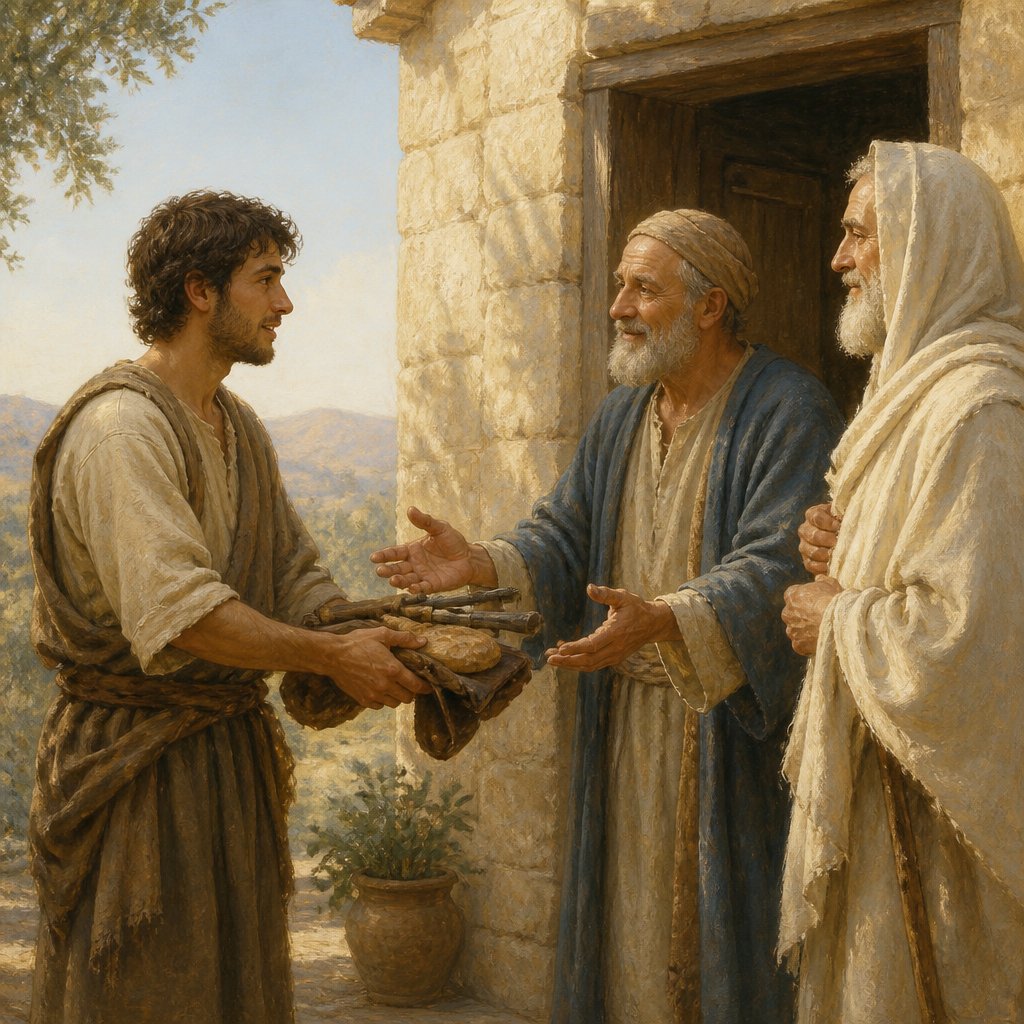
The Bible verse Philemon 1:11 in the King James Version (KJV) reads: "Which in time past was to thee unprofitable, but now profitable to thee and to me." This verse is part of a letter written by the apostle Paul to Philemon, a wealthy Christian in Colossae, regarding a runaway slave named Onesimus. In this verse, Paul is referring to Onesimus, who was once unprofitable to Philemon, but has now become profitable to both Philemon and Paul.
The context of this verse is important in understanding its deeper meaning. Philemon was a believer in Christ and a member of the church in Colossae. That is why, Paul was writing this letter to Philemon to reconcile with his runaway slave, Onesimus, who had become a Christian under Paul's ministry. The relationship between Philemon and Onesimus wasn't just master and slave, but also Christian brotherhood. Paul is urging Philemon to receive Onesimus back, not as a mere slave, but as a beloved brother in Christ. This necessitates a change in perspective, from viewing Onesimus as unprofitable to recognizing him as profitable not only as a worker but also as a brother in Christ.
The theme of forgiveness and reconciliation is central to this verse. Paul is advocating for Philemon to forgive and reconcile with Onesimus, despite his past wrongdoing. This has broader implications for the Christian life, as it speaks to the importance of forgiveness within the community of believers. It also reflects the redemptive power of Christ, in that Onesimus' past unprofitability is transformed into present profitability through his newfound faith in Christ.
Another key theme in this verse is the idea of transformation and new beginnings. Onesimus, who was once unprofitable, has now become profitable. This transformation is not just a change in status, but a change of heart and character brought about by his encounter with the gospel. It is a powerful example of the transformative power of God's grace and the potential for redemption in all people, regardless of their past.
Symbolism can be found in the contrast between unprofitability and profitability. This duality represents the spiritual journey from bondage to freedom, from sin to righteousness, from death to life. It also emphasizes the reversal of fortunes that occurs through the work of Christ. Onesimus' conversion and reconciliation with Philemon symbolize the restoration and healing that can occur through forgiveness and grace.
Furthermore, the verse highlights the interconnectedness of all believers in Christ. The profitability mentioned in the verse is not just for Philemon and Onesimus individually, but also for the greater Christian community. It underscores the idea that our actions and relationships within the body of believers have broader implications and consequences. Through reconciliation and forgiveness, the entire community is strengthened and edified.
In conclusion, Philemon 1:11 is a powerful and thought-provoking verse that addresses themes of forgiveness, reconciliation, transformation, and interconnectedness within the Christian community. It serves as a reminder of the transformative power of the gospel and the call to extend grace and forgiveness to others, just as Christ has done for us. The verse also challenges us to reevaluate our perspectives on others and recognize their inherent value and potential in Christ. It is a testament to the redemptive and unifying work of Christ in the lives of believers.
Get our apps


Artwork for Philemon 1:11

Philemon 1:11 - "Which in time past was to thee unprofitable, but now profitable to thee and to me:"

"Which in time past was to thee unprofitable, but now profitable to thee and to me:" - Philemon 1:11

Philemon 1:1 - "Paul, a prisoner of Jesus Christ, and Timothy our brother, unto Philemon our dearly beloved, and fellowlabourer, 2 And to our beloved Apphia, and Archippus our fellowsoldier, and to the church in thy house:"

Philemon 1:4-7

Philemon 1:24 - "Marcus, Aristarchus, Demas, Lucas, my fellowlabourers."

Philemon 1:23 - "There salute thee Epaphras, my fellowprisoner in Christ Jesus;"

Philemon 1:17 - "If thou count me therefore a partner, receive him as myself."

Philemon 1:25 - "The grace of our Lord Jesus Christ be with your spirit. Amen."

Philemon 1:15 - "For perhaps he therefore departed for a season, that thou shouldest receive him for ever;"

Philemon 1:3 - "Grace to you, and peace, from God our Father and the Lord Jesus Christ."

Philemon 1:4 - "I thank my God, making mention of thee always in my prayers,"

Philemon 1:18 - "If he hath wronged thee, or oweth thee ought, put that on mine account;"

Philemon 1:8 - "Wherefore, though I might be much bold in Christ to enjoin thee that which is convenient,"

Philemon 1:10 - "I beseech thee for my son Onesimus, whom I have begotten in my bonds:"

Philemon 1:12 - "Whom I have sent again: thou therefore receive him, that is, mine own bowels:"

Philemon 1:20 - "Yea, brother, let me have joy of thee in the Lord: refresh my bowels in the Lord."

Philemon 1:5 - "Hearing of thy love and faith, which thou hast toward the Lord Jesus, and toward all saints;"

Philemon 1:14 - "But without thy mind would I do nothing; that thy benefit should not be as it were of necessity, but willingly."

Philemon 1:7 - "For we have great joy and consolation in thy love, because the bowels of the saints are refreshed by thee, brother."

"Marcus, Aristarchus, Demas, Lucas, my fellowlabourers." - Philemon 1:24

Philemon 1:6 - "That the communication of thy faith may become effectual by the acknowledging of every good thing which is in you in Christ Jesus."

"Paul, a prisoner of Jesus Christ, and Timothy our brother, unto Philemon our dearly beloved, and fellowlabourer, 2 And to our beloved Apphia, and Archippus our fellowsoldier, and to the church in thy house:" - Philemon 1:1

Philemon 1:22 - "But withal prepare me also a lodging: for I trust that through your prayers I shall be given unto you."

Philemon 1:16 - "Not now as a servant, but above a servant, a brother beloved, specially to me, but how much more unto thee, both in the flesh, and in the Lord?"

"There salute thee Epaphras, my fellowprisoner in Christ Jesus;" - Philemon 1:23

Philemon 1:9 - "Yet for love's sake I rather beseech thee, being such an one as Paul the aged, and now also a prisoner of Jesus Christ."

Philemon 1:13 - "Whom I would have retained with me, that in thy stead he might have ministered unto me in the bonds of the gospel:"

Philemon 1:21 - "Having confidence in thy obedience I wrote unto thee, knowing that thou wilt also do more than I say."

"If thou count me therefore a partner, receive him as myself." - Philemon 1:17

"The grace of our Lord Jesus Christ be with your spirit. Amen." - Philemon 1:25