What does Philippians 1:6 mean?
“Being confident of this very thing, that he which hath begun a good work in you will perform it until the day of Jesus Christ:” — Philippians 1:6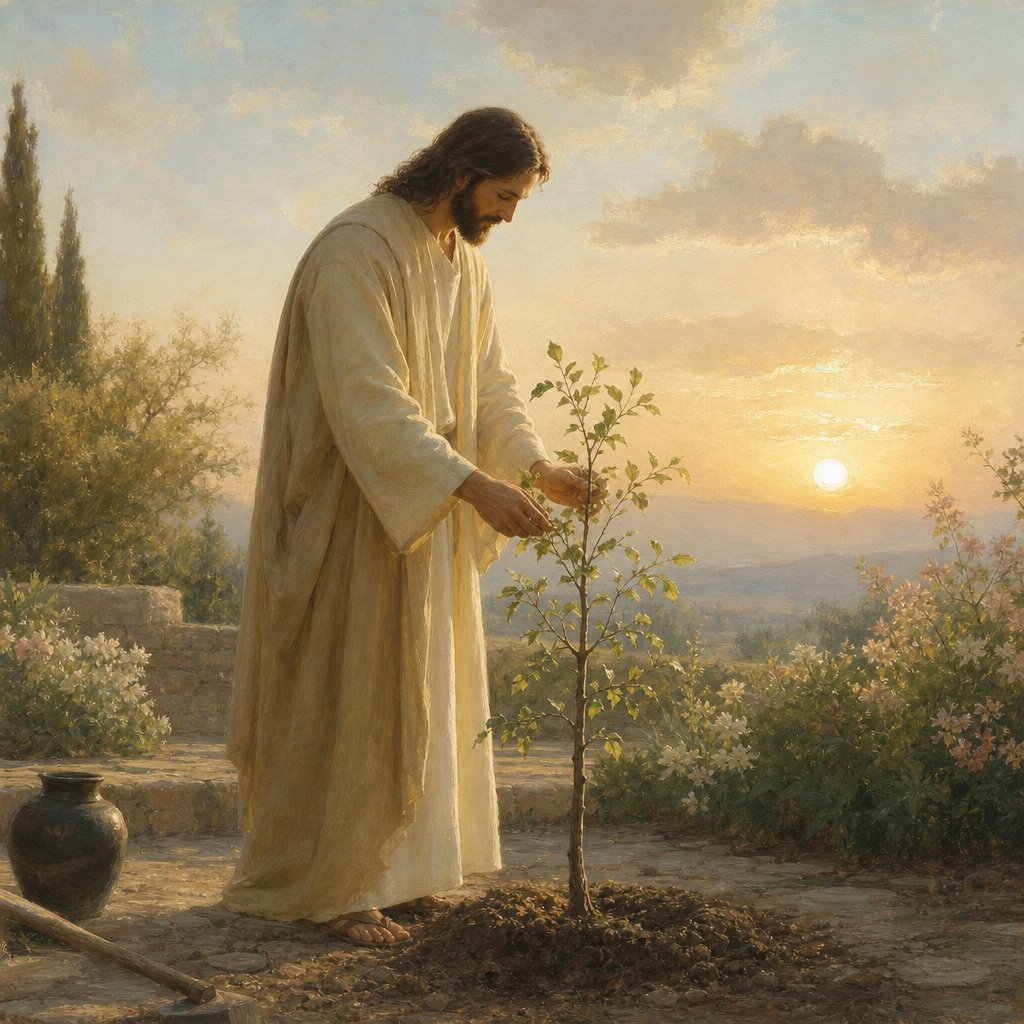
Philippians 1:6 in the King James Version reads, “Being confident of this very thing, that he which hath begun a good work in you will perform it until the day of Jesus Christ.” The verse is a single sentence, but it gathers up the heartbeat of Paul’s opening words to the Philippian church: gratitude, affection, spiritual assurance, and a steady gaze toward the end of the Christian journey. Paul writes as one who loves these believers deeply and who is writing “from” hardship, yet speaks with certainty about God’s continuing purpose in them.
The immediate context begins with Paul’s thanksgiving and prayer. He says, “I thank my God upon every remembrance of you,” and adds that he prays “for your fellowship in the gospel from the first day until now.” That phrase “fellowship in the gospel” frames Philippians 1:6. Paul is not thinking of a vague spiritual feeling, but of a shared participation in God’s saving mission—faith received, love practiced, needs met, the gospel advanced. The “good work” God has begun in them shows itself in their enduring partnership with Paul and the gospel, “from the first day until now.” The verse is therefore not spoken into a vacuum; it is spoken into a real church’s history of perseverance, generosity, and steadfastness, and into Paul’s own bonds, which make the future feel uncertain in human terms. Against that uncertainty stands Paul’s confidence: God’s work is not fragile.
The themes of Philippians 1:6 begin with God as the author and initiator of salvation. Paul does not say the Philippians began the work by their own strength and God merely assists them. He says, “he which hath begun a good work in you.” The beginning is God’s. This aligns with the way Scripture consistently portrays saving grace: God calls, awakens, pardons, and plants new life. The Christian life, in Paul’s view, is not merely self-improvement with religious language attached; it is God’s own undertaking in a person and in a people. The “good work” includes their conversion, their faith in Christ, and the new pattern of life that springs from that faith. It is “good” not because it flatters human virtue, but because it arises from God’s goodness and aims at God’s glory.
A second theme is God’s faithful continuation of what he starts. The KJV says God “will perform it.” The word “perform” carries the sense of carrying through, completing, bringing to full effect. Paul’s confidence is not primarily confidence in the Philippians’ resolve, but confidence in God’s steadfast commitment to his own work. This is a crucial shift in perspective: the Philippians are called to obedience and steadfastness throughout the letter, yet Paul grounds their hope deeper than their own wavering hearts. The same God who began is the God who continues. In other words, Christian perseverance is not portrayed here as human grit alone; it is God’s ongoing action in his people. That does not erase the reality of struggle, temptation, and suffering—Philippians speaks openly about all of those—but it places them inside a larger certainty: God is not abandoning what he has begun.
A third theme is growth toward completion, which touches the Christian doctrine of sanctification without needing technical terms. The verse implies a process. A work begun is not instantly finished; it is advanced, shaped, refined. Paul can see evidences of grace in the Philippians already, but he also expects further ripening. The Christian life is therefore portrayed not as a static moment but as a continuing divine craftsmanship. The “good work” is God’s work within them, and it is also God’s work among them as a church—forming a community that stands together in the gospel, loves in sincerity, and endures pressure without losing joy. Paul’s prayer surrounding the verse includes that their “love may abound yet more and more,” that they might be “sincere and without offence till the day of Christ,” and that they might be “filled with the fruits of righteousness, which are by Jesus Christ, unto the glory and praise of God.” Those surrounding phrases explain what “perform it” looks like: abounding love, growing discernment, real holiness, and fruit that honors God.
The verse is also strongly eschatological, because it sets the horizon: “until the day of Jesus Christ.” Paul anchors God’s performing work in a definite endpoint. “The day of Jesus Christ” is the future moment when Christ’s lordship is openly manifested, when his people stand before him, and when what is presently hidden becomes plain. In symbolic terms, “day” evokes light, disclosure, and completion. What God begins in the dimness of this age will be brought into the full light of Christ’s appearing. The phrase also introduces accountability and hope at once: the Christian life is moving toward meeting Christ, not drifting endlessly. That coming “day” gives shape to the present. It means that God’s work is purposeful and directed; it is not random spiritual activity but preparation for a consummation.
There is also a tender pastoral significance in Paul’s opening words: “Being confident of this very thing.” His confidence is not cold certainty; it is affectionate assurance rooted in relationship. He says later, “I have you in my heart,” and calls God as witness “how greatly I long after you all in the bowels of Jesus Christ.” Philippians 1:6 is therefore not merely a doctrinal statement about God’s perseverance; it is encouragement spoken from a shepherd’s heart. Paul wants the Philippians to understand that their story is held by God. Their fellowship, their love, their hardships, even Paul’s imprisonment, are not signs that God’s work is failing. They are part of the arena in which God continues to “perform” what he began.
Symbolically, the verse presents God as a builder and finisher. A work begun suggests foundations laid and a structure rising. The church at Philippi was not an accident of history; it was a divine project. Paul’s confidence implies that God does not abandon unfinished buildings or half-formed creations. The “good work” is also like a seed planted, because it begins small but is meant to grow until it reaches its intended harvest at “the day of Jesus Christ.” That symbolic movement—beginning, growth, completion—helps a reader grasp why Paul can speak so firmly. The confidence rests in God’s character as one who completes what he initiates.
Taken together, Philippians 1:6 teaches that the Christian life is God-originated, God-sustained, and God-completed, with Christ’s day as its appointed goal. It invites believers to read their present progress and their present struggles in the light of God’s ongoing commitment. It also calls a church to see its shared life and mission as something God has started and will bring to maturity. Paul’s point is not that Christians never stumble or that churches never face danger, but that God’s “good work” is not finally dependent on human stability. The verse places assurance where Paul places it: in the God who begins, who performs, and who will finish his work “until the day of Jesus Christ.”
Get our apps


Artwork for Philippians 1:6

Philippians 1:6 - "Being confident of this very thing, that he which hath begun a good work in you will perform it until the day of Jesus Christ:"

"Being confident of this very thing, that he which hath begun a good work in you will perform it until the day of Jesus Christ:" - Philippians 1:6
"Being confident of this very thing, that he which hath begun a good work in you will perform it until the day of Jesus Christ:" - Philippians 1:6

"Being confident of this very thing, that he which hath begun a good work in you will perform it until the day of Jesus Christ:" - Philippians 1:6

"Being confident of this very thing, that he which hath begun a good work in you will perform it until the day of Jesus Christ:" - Philippians 1:6

“And I am certain that God, who began the good work within you, will continue his work until it is finally finished on the day when Christ Jesus returns.” Philippians 1:6

Philippians 4:6

Philippians 4:6

Philippians 4:6

Philippians 4:6-7

Philippians 4:6-7

Philippians 4:6-7

Philippians 4:6-7

Philippians 4:6-7

Philippians 2:6 - "Who, being in the form of God, thought it not robbery to be equal with God:"

Philippians 3:6 - "Concerning zeal, persecuting the church; touching the righteousness which is in the law, blameless."

Matthew 21:21 Philippians 4:6-7 Ephesians 6:10-18 Put the words on the photo

Matthew 21:21 Philippians 4:6-7 Ephesians 6:10-18

Philippians 1:3

Philippians 1:27

Philippians 4:1

philippians 4:7

philippians 4:4

Philippians 4:13

Philippians 3:8

Philippians 4:13

philippians 4:4

Philippians 4:1

Philippians 4:1

Philippians 4:1