What does Proverbs 13:24 mean?
"He that spareth his rod hateth his son: but he that loveth him chasteneth him betimes." - Proverbs 13:24

Proverbs 13:24 in the King James Version of the Bible states, "He that spareth his rod hateth his son: but he that loveth him chasteneth him betimes." This verse is one that has been at the center of much debate and controversy, especially in modern times, due to its direct reference to corporal punishment. However, in order to understand the true meaning and commentary of this verse, it is important to explore the context, themes, and symbolism present in the Proverbs.
Context:
The book of Proverbs is often attributed to King Solomon, who was known for his wisdom and understanding. The purpose of Proverbs is to provide guidance and instruction for living a righteous and fruitful life. The collection of wise sayings and teachings is meant to help individuals navigate the complexities of life and make decisions that are in line with God's will.
Themes:
One of the central themes in the book of Proverbs is the idea of discipline and correction. Throughout the text, there is an emphasis on the importance of both giving and receiving instruction, as well as the consequences of disregarding wise counsel. The verse in question, Proverbs 13:24, is in line with this theme, as it addresses the role of discipline in the upbringing of children.
Another key theme in Proverbs is the concept of love and its relationship to correction. The verse contrasts the actions of a parent who loves their child with one who does not. It suggests that true love requires proper discipline, while withholding discipline is a form of hatred.
Symbolism:
The symbolism in Proverbs 13:24 is found in the references to the "rod" and "chastening." These terms are symbolic of the tools and methods used for discipline and correction. The "rod" represents a form of physical discipline, while "chastening" encompasses broader forms of correction and training. The use of these symbols emphasizes the importance of proactive and intentional guidance in raising children.
Meaning and Commentary:
The meaning of Proverbs 13:24 is the subject of some controversy, particularly in modern society's attitudes towards corporal punishment. However, the verse is not advocating for harsh or abusive treatment of children. Instead, it is speaking to the importance of discipline and correction in the context of parental love.
The verse begins with a direct statement, "He that spareth his rod hateth his son." This is a challenging statement that demands attention. It suggests that a parent who neglects to provide discipline for their child is actually demonstrating hatred towards them. This can be understood in the sense that without proper correction, a child may not learn the values, boundaries, and life skills necessary for a successful and fulfilling life.
The verse then contrasts this with the statement, "but he that loveth him chasteneth him betimes." This suggests that true love requires correction and discipline. "Chastening" in this case does not necessarily refer to physical punishment, but rather a deliberate and consistent form of teaching, guiding, and correcting a child's behavior. The term "betimes" means early or at the right time, indicating that discipline should be administered proactively and consistently throughout a child's upbringing.
In conclusion, Proverbs 13:24 is a verse that speaks to the importance of discipline and correction in the raising of children. It emphasizes the role of parental love in providing proper guidance and training. While the verse may be challenging to understand and interpret in the context of modern parenting practices, its central message aligns with the overarching themes of Proverbs – the importance of wisdom, instruction, and righteousness. Ultimately, the verse serves as a reminder of the responsibility that parents have in the upbringing of their children and the role that discipline plays in shaping their character and behavior.
Have questions about Proverbs 13:24?
Dive deeper into this scripture with Bible Chat — an AI-powered tool for exploring God's Word through conversation. Ask questions, get context, and grow in your understanding of the Bible.
Get Our Apps


Proverbs 13:24 Artwork

Proverbs 13:24 - "He that spareth his rod hateth his son: but he that loveth him chasteneth him betimes."

"He that spareth his rod hateth his son: but he that loveth him chasteneth him betimes." - Proverbs 13:24

Proverbs 24:13 - "My son, eat thou honey, because it is good; and the honeycomb, which is sweet to thy taste:"
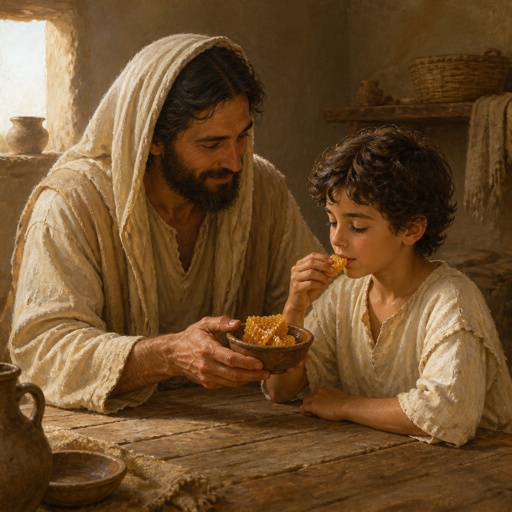
"My son, eat thou honey, because it is good; and the honeycomb, which is sweet to thy taste:" - Proverbs 24:13

Proverbs 24:13-14 KJV (13) My son, eat thou honey, because it is good; and the honeycomb, which is sweet to thy taste: (14) So shall the knowledge of wisdom be unto thy soul: when thou hast found it, then there shall be a reward, and thy expectation shall not be cut off.

Proverbs 24:13-14 KJV (13) My son, eat thou honey, because it is good; and the honeycomb, which is sweet to thy taste: (14) So shall the knowledge of wisdom be unto thy soul: when thou hast found it, then there shall be a reward, and thy expectation shall not be cut off.

Proverbs 24:3 - "Through wisdom is an house builded; and by understanding it is established:"

Proverbs 24:2 - "For their heart studieth destruction, and their lips talk of mischief."

Proverbs 24:24 - "He that saith unto the wicked, Thou art righteous; him shall the people curse, nations shall abhor him:"

Proverbs 24:9 - "The thought of foolishness is sin: and the scorner is an abomination to men."

Proverbs 14:24 - "The crown of the wise is their riches: but the foolishness of fools is folly."

Proverbs 27:24 - "For riches are not for ever: and doth the crown endure to every generation?"

Proverbs 24:10 - "If thou faint in the day of adversity, thy strength is small."

Proverbs 16:24 - "Pleasant words are as an honeycomb, sweet to the soul, and health to the bones."

Proverbs 13:13 - "Whoso despiseth the word shall be destroyed: but he that feareth the commandment shall be rewarded."

Proverbs 24:30 - "I went by the field of the slothful, and by the vineyard of the man void of understanding;"

Proverbs 24:1 - "Be not thou envious against evil men, neither desire to be with them."

Proverbs 24:5 - "A wise man is strong; yea, a man of knowledge increaseth strength."

Proverbs 24:8 - "He that deviseth to do evil shall be called a mischievous person."

Proverbs 30:24 - "There be four things which are little upon the earth, but they are exceeding wise:"

Proverbs 24:4 - "And by knowledge shall the chambers be filled with all precious and pleasant riches."

Proverbs 25:24 - "It is better to dwell in the corner of the housetop, than with a brawling woman and in a wide house."

Proverbs 11:24 - "There is that scattereth, and yet increaseth; and there is that withholdeth more than is meet, but it tendeth to poverty."

Proverbs 24:22 - "For their calamity shall rise suddenly; and who knoweth the ruin of them both?"

Proverbs 24:19 - "Fret not thyself because of evil men, neither be thou envious at the wicked;"

Proverbs 22:24 - "Make no friendship with an angry man; and with a furious man thou shalt not go:"

Proverbs 24:32 - "Then I saw, and considered it well: I looked upon it, and received instruction."

Proverbs 17:24 - "Wisdom is before him that hath understanding; but the eyes of a fool are in the ends of the earth."

Proverbs 24:20 - "For there shall be no reward to the evil man; the candle of the wicked shall be put out."

Proverbs 24:26 - "Every man shall kiss his lips that giveth a right answer."