What does Proverbs 15:1 mean?
“A soft answer turneth away wrath: but grievous words stir up anger.” — Proverbs 15:1
“*A soft answer turneth away wrath: but grievous words stir up anger*” (Proverbs 15:1, KJV) sets a simple contrast before the reader, but it carries the weight of an entire biblical way of understanding human speech. In the world of Proverbs, words are never treated as mere sounds or private feelings expressed outwardly. Speech is power: it can heal, guide, restrain, reconcile, or it can wound, inflame, and multiply conflict. This verse teaches that the manner and spirit in which an answer is given often determines whether a tense moment will dissolve into peace or harden into strife.
The first clause, “*A soft answer turneth away wrath,*” does not describe weakness, dishonesty, or cowardice. “Soft” in this setting is not spinelessness; it is controlled strength. It suggests an answer governed by restraint, humility, and wisdom—speech that is measured rather than impulsive. A “soft answer” is one that refuses to add fuel to an already burning situation. “Wrath” here is not mild irritation but a heat of spirit that is ready to break out and do damage. The proverb assumes what life repeatedly proves: anger seeks a target, and it often looks for a matching tone—an opposing force that will justify its escalation. A soft answer “turneth away” wrath because it interrupts that expected pattern. It de-escalates. It gives no handle for anger to seize. In this, the verse implies that peace is sometimes achieved not by winning a verbal contest but by refusing to let the conflict set the terms of the conversation.
The second clause, “*but grievous words stir up anger,*” provides the counter-image. “Grievous” points to words that are harsh, biting, severe, or deliberately wounding—speech that presses on the sore places in another person. Such words “stir up” anger, as one stirs a pot or agitates embers until flames rise again. The symbolism is vivid even in the plain language: wrath is like a fire that can be turned aside or fanned into greater heat. Grievous words do not merely respond to anger; they cultivate it, intensify it, and often spread it beyond the original issue. The proverb thus warns that the wrong kind of answer does not simply “express” truth; it provokes a reaction that may eclipse truth altogether and leave only damage.
In its immediate context, Proverbs 15 continues a series of sayings about the tongue, instruction, and the outcomes of wisdom versus folly. The surrounding themes repeatedly connect speech with moral character and spiritual posture. Proverbs does not treat communication as a neutral skill; it treats it as a moral act. A person’s words reveal whether the heart is governed by wisdom or by pride, impatience, and self-will. Proverbs 15 as a whole emphasizes that wise living includes teachability, careful speech, and a fear of the LORD that shapes everyday conduct. In that stream of thought, Proverbs 15:1 functions like a doorway into the chapter’s broader lesson: wise people manage their speech because they understand that words shape relationships, redirect outcomes, and either align with righteousness or collude with folly.
The verse also carries an implied theology of human interaction. It assumes that wrath is real and destructive, and that it is not overcome merely by matching it. It assumes that there is a kind of gentleness that has moral force. A soft answer can be an act of patience, an act of mercy, and sometimes an act of courage, because it refuses the ego’s desire to strike back. At the same time, the proverb does not deny that truth must be spoken; rather, it warns that truth spoken in a grievous way can become a weapon. The significance is that Proverbs places responsibility not only on what is said but on how it is said. The tone, timing, and intent of an “answer” matter, because they either invite peace or summon greater conflict.
Seen as wisdom literature, Proverbs 15:1 teaches that the tongue is a steering mechanism. A small shift in the character of one response can change the direction of an entire encounter. The “soft answer” symbolizes a disciplined spirit that values peace and understands human frailty. The “grievous words” symbolize the unchecked impulses of pride and anger that turn conversations into contests and disagreements into battles. In practical terms, the verse calls the reader to recognize that an “answer” is not only a reply to a person’s words, but also a response to their emotional state, and a moment of moral choice. The proverb’s lasting significance is that it frames peacemaking as something that begins at the level of speech: the wise person does not merely avoid conflict, but learns to speak in a way that turns away wrath rather than stirring up anger.
Get our apps


Artwork for Proverbs 15:1

Proverbs 15:1 - "A soft answer turneth away wrath: but grievous words stir up anger."

Proverbs 15:1-2 - "1 A gentle answer turns away wrath, but a harsh word stirs up anger. 2 The tongue of the wise adorns knowledge, but the mouth of the fool gushes folly."
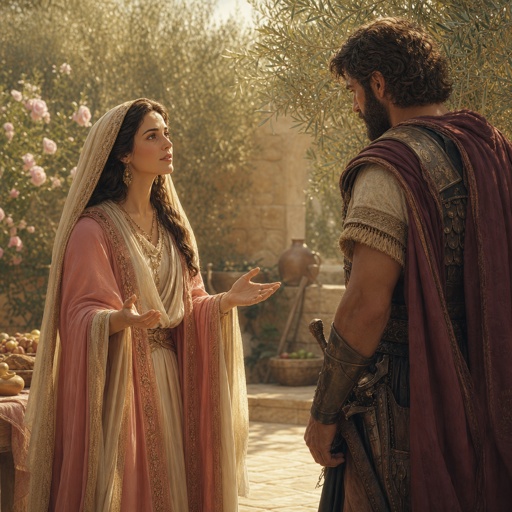
"A soft answer turneth away wrath: but grievous words stir up anger." - Proverbs 15:1

"A soft answer turneth away wrath: but grievous words stir up anger." - Proverbs 15:1

"1 A gentle answer turns away wrath, but a harsh word stirs up anger. 2 The tongue of the wise adorns knowledge, but the mouth of the fool gushes folly." - Proverbs 15:1-2

Proverbs 1:15 - "My son, walk not thou in the way with them; refrain thy foot from their path:"

Proverbs 15:15 - "All the days of the afflicted are evil: but he that is of a merry heart hath a continual feast."

Proverbs 2:15 - "Whose ways are crooked, and they froward in their paths:"

Proverbs 8:15 - "By me kings reign, and princes decree justice."

Proverbs 9:15 - "To call passengers who go right on their ways:"

"My son, walk not thou in the way with them; refrain thy foot from their path:" - Proverbs 1:15

Proverbs 15:33 - "The fear of the LORD is the instruction of wisdom; and before honour is humility."

Proverbs 4:15 - "Avoid it, pass not by it, turn from it, and pass away."

Proverbs 15:22 - "Without counsel purposes are disappointed: but in the multitude of counsellors they are established."

Proverbs 15:3 - "The eyes of the LORD are in every place, beholding the evil and the good."

Proverbs 20:15 - "There is gold, and a multitude of rubies: but the lips of knowledge are a precious jewel."

Proverbs 1:1 - "The proverbs of Solomon the son of David, king of Israel;"

Proverbs 15:31 - "The ear that heareth the reproof of life abideth among the wise."

Proverbs 15:6 - "In the house of the righteous is much treasure: but in the revenues of the wicked is trouble."

Proverbs 13:15 - "Good understanding giveth favour: but the way of transgressors is hard."

Proverbs 25:15 - "By long forbearing is a prince persuaded, and a soft tongue breaketh the bone."

Proverbs 15:8 - "The sacrifice of the wicked is an abomination to the LORD: but the prayer of the upright is his delight."

Proverbs 18:15 - "The heart of the prudent getteth knowledge; and the ear of the wise seeketh knowledge."

Proverbs 15:25 - "The LORD will destroy the house of the proud: but he will establish the border of the widow."

Proverbs 15:7 - "The lips of the wise disperse knowledge: but the heart of the foolish doeth not so."

Proverbs 21:15 - "It is joy to the just to do judgment: but destruction shall be to the workers of iniquity."

Proverbs 11:15 - "He that is surety for a stranger shall smart for it: and he that hateth suretiship is sure."

Proverbs 27:15 - "A continual dropping in a very rainy day and a contentious woman are alike."

Proverbs 15:26 - "The thoughts of the wicked are an abomination to the LORD: but the words of the pure are pleasant words."

Proverbs 15:4 - "A wholesome tongue is a tree of life: but perverseness therein is a breach in the spirit."