What does Proverbs 15:8 mean?
“The sacrifice of the wicked is an abomination to the LORD: but the prayer of the upright is his delight.” — Proverbs 15:8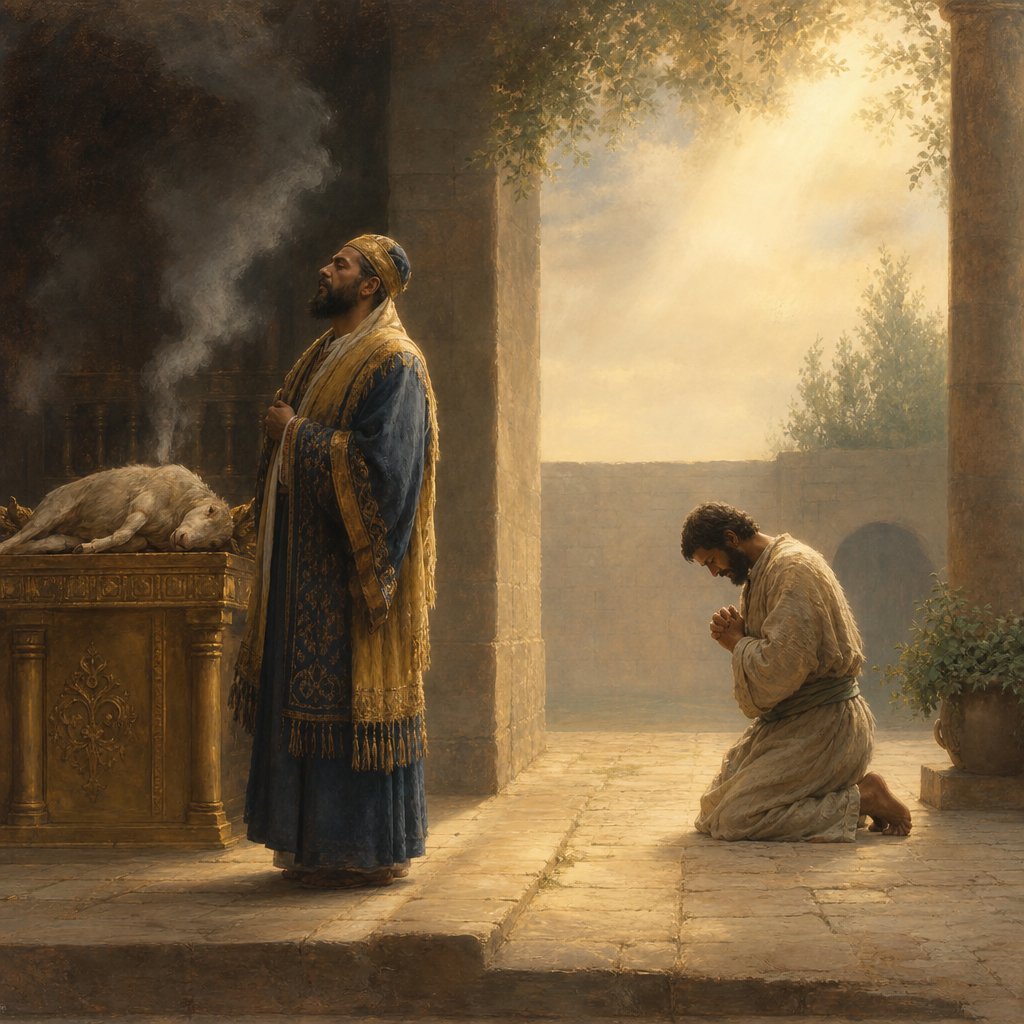
Proverbs 15:8 in the King James Version reads, “The sacrifice of the wicked is an abomination to the LORD: but the prayer of the upright is his delight.” In a single sentence it sets two approaches to God side by side and declares that what pleases or displeases the LORD is not merely the outward act itself, but the moral and spiritual reality of the person who brings it.
In the world of Proverbs, “sacrifice” represents religion in its most public and formal shape. Under the covenant life of Israel, sacrifice was a central, visible act—an offering brought to God according to prescribed forms. Yet the verse speaks of “the sacrifice of the wicked,” meaning a person whose life is characterized by wrongdoing, crookedness, or resistance to God. The sharp word “abomination” is not a mild disapproval; in the KJV it regularly signals something detestable to God, something morally repulsive because it violates his holiness and order. The symbolism is important: sacrifice can symbolize a person’s attempt to approach God while still clinging to sin, as though a ritual could compensate for a corrupt life. Proverbs repeatedly warns against that kind of religious substitution, where external devotion is used to cover internal rebellion. The point is not that sacrifice as such is evil, but that ritual performed by “the wicked” becomes hateful because it is detached from repentance, integrity, and obedience. The offering, in that case, becomes a kind of spiritual fraud—an act that claims honor toward God while the life contradicts it.
Against that, the verse sets “the prayer of the upright.” In Proverbs, “upright” describes a person who is straight, honest, and aligned with what is right before God. Prayer here stands for a direct, sincere turning of the heart toward the LORD, not necessarily adorned with public ceremony. The contrast is striking: sacrifice is costly, visible, and formal; prayer may be quiet, unseen, and simple. Yet God’s valuation reverses what humans might assume. What may look impressive outwardly—religious activity, offerings, the performance of devotion—can be “abomination” if it comes from a wicked life. What may look small outwardly—prayer offered by an upright person—becomes “his delight.” That phrase, “his delight,” portrays God not as reluctantly tolerating the upright, but as taking pleasure in their approach to him. The symbolism suggests acceptance, fellowship, and favor: God receives the person, not merely the words, because the person is walking in integrity.
The broader context of Proverbs 15 supports this inner-versus-outer theme. The chapter repeatedly contrasts the way of the righteous and the way of the wicked, and it emphasizes that the LORD sees beyond appearances. The sayings around it stress that speech, motives, and daily conduct matter before God. In that setting, Proverbs 15:8 functions as a moral test of religious life: it exposes the emptiness of worship that is not matched by character, and it honors devotion that rises from a life seeking what is right. It also reflects a consistent biblical pattern in which God’s concern is not merely that people do religious things, but that they fear him, turn from evil, and live truthfully. The verse is not diminishing sacrifice as a God-given practice; rather, it is rejecting the idea that sacred acts can be used to bypass the demand for righteousness.
A key theme is that God evaluates worship ethically. The “wicked” may bring “sacrifice,” but their wickedness contaminates the act because it implies either hypocrisy or an attempt to bargain with God while refusing to be changed. The “upright” may bring only “prayer,” yet their sincerity and alignment with what is right makes that prayer pleasing. Another theme is relational: sacrifice can be treated as a transaction, but prayer of the upright is communion. The verse teaches that the LORD’s “delight” is not in religious display, but in a heart and life that genuinely seek him. In practical significance, Proverbs 15:8 calls the reader to examine whether devotion is merely outward—performed, impressive, and possibly self-justifying—or whether it is joined to uprightness, humility, and obedience, which make one’s approach to God acceptable and pleasing in his sight.
Get our apps


Artwork for Proverbs 15:8

Proverbs 15:8 - "The sacrifice of the wicked is an abomination to the LORD: but the prayer of the upright is his delight."

"The sacrifice of the wicked is an abomination to the LORD: but the prayer of the upright is his delight." - Proverbs 15:8
"The sacrifice of the wicked is an abomination to the LORD: but the prayer of the upright is his delight." - Proverbs 15:8

Proverbs 8:15 - "By me kings reign, and princes decree justice."

"By me kings reign, and princes decree justice." - Proverbs 8:15

Proverbs 15:15 - "All the days of the afflicted are evil: but he that is of a merry heart hath a continual feast."

Proverbs 19:8

Proverbs 19:8

Proverbs 8:8 - "All the words of my mouth are in righteousness; there is nothing froward or perverse in them."

Proverbs 2:15 - "Whose ways are crooked, and they froward in their paths:"

Proverbs 8:22-36

Proverbs 9:15 - "To call passengers who go right on their ways:"

Proverbs 8:22-31

Proverbs 8:34-36

Proverbs 8:33 - "Hear instruction, and be wise, and refuse it not."

Proverbs 15:33 - "The fear of the LORD is the instruction of wisdom; and before honour is humility."

Proverbs 4:15 - "Avoid it, pass not by it, turn from it, and pass away."

Proverbs 15:22 - "Without counsel purposes are disappointed: but in the multitude of counsellors they are established."

Proverbs 15:3 - "The eyes of the LORD are in every place, beholding the evil and the good."

Proverbs 20:15 - "There is gold, and a multitude of rubies: but the lips of knowledge are a precious jewel."

Proverbs 15:31 - "The ear that heareth the reproof of life abideth among the wise."

Proverbs 15:6 - "In the house of the righteous is much treasure: but in the revenues of the wicked is trouble."

Proverbs 13:15 - "Good understanding giveth favour: but the way of transgressors is hard."

Proverbs 25:15 - "By long forbearing is a prince persuaded, and a soft tongue breaketh the bone."

Proverbs 18:15 - "The heart of the prudent getteth knowledge; and the ear of the wise seeketh knowledge."

Proverbs 15:7 - "The lips of the wise disperse knowledge: but the heart of the foolish doeth not so."

Proverbs 15:25 - "The LORD will destroy the house of the proud: but he will establish the border of the widow."

Proverbs 21:15 - "It is joy to the just to do judgment: but destruction shall be to the workers of iniquity."

Proverbs 27:15 - "A continual dropping in a very rainy day and a contentious woman are alike."

Proverbs 11:15 - "He that is surety for a stranger shall smart for it: and he that hateth suretiship is sure."