What does Proverbs 31:27 mean?
“She looketh well to the ways of her household, and eateth not the bread of idleness.” — Proverbs 31:27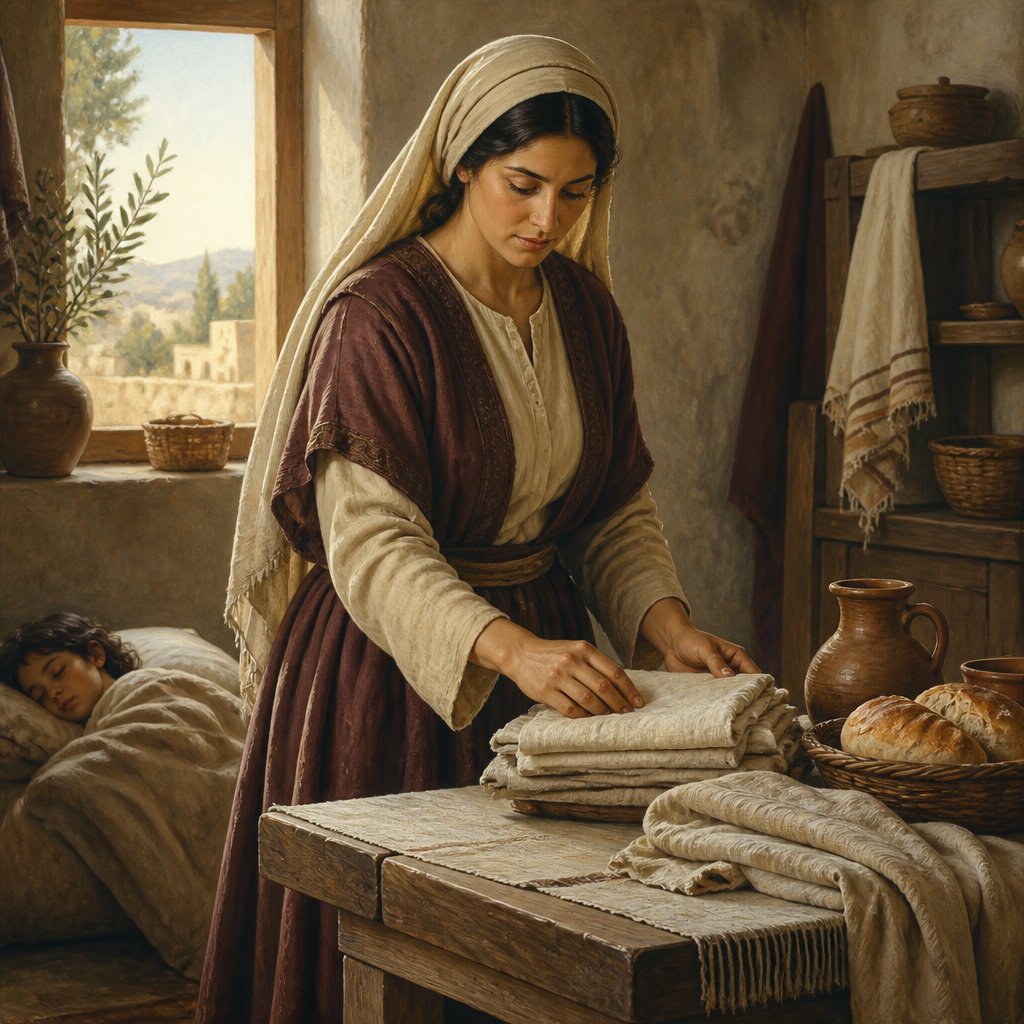
Proverbs 31:27 in the KJV reads, “She looketh well to the ways of her household, and eateth not the bread of idleness.” In its plain sense, the verse portrays a woman whose attention is awake, deliberate, and faithful. She is not drifting through her days, nor is she absent from the practical and moral life of her home. The language is simple, but the picture is weighty: she watches over “the ways” of her household, meaning the patterns, habits, needs, and direction of those under her care, and she refuses the lifestyle described as “the bread of idleness,” a phrase that treats laziness as something one consumes and lives on, as though idleness were daily food.
The immediate context is the closing section of Proverbs, the well-known portrait of “a virtuous woman” in Proverbs 31:10–31. This passage is presented as instruction with a royal setting in Proverbs 31:1, “The words of king Lemuel, the prophecy that his mother taught him.” That framing matters, because it signals that what follows is meant to shape judgment and values, not merely to offer a sentimental domestic scene. The portrait is not of a woman who is praised for charm, ease, or outward appearance, but one whose life produces durable good. Proverbs 31:27 appears near the end of the description, after her diligence, generosity, planning, and strength have already been displayed. By placing this line near the conclusion, the text gathers many earlier traits into a single summary: she is attentive to what is happening in her house, and she does not indulge laziness as a normal provision.
The phrase “She looketh well” expresses careful oversight rather than anxious control. It suggests discernment and watchfulness. In the KJV wording, the object of her attention is not merely “her household” as a group of people, but “the ways of her household.” “Ways” in Proverbs often refers to a manner of life, a course, or a practiced path. The book repeatedly contrasts the way of wisdom with the way of the foolish, the way of the righteous with the way of the wicked. Read against that background, “ways” includes more than chores and schedules; it points to the conduct, order, and moral direction that characterize a home. To “look well” to those ways is therefore both practical and spiritual: she is mindful of provision and management, and she is also mindful of what kind of life is being formed under her roof.
“Her household” in Proverbs 31 has already been depicted as benefiting from her industry and foresight. Earlier the passage says, “She riseth also while it is yet night, and giveth meat to her household” (Proverbs 31:15), and “She is not afraid of the snow for her household” (Proverbs 31:21). Those lines show a home that is cared for in ordinary needs and prepared for hardship. Proverbs 31:27 gathers that idea into a general principle: her care is consistent, not occasional; she watches the household’s “ways,” not just its emergencies. Her attention is habitual faithfulness.
The second clause, “and eateth not the bread of idleness,” uses “bread” as a symbol of sustenance and the ordinary intake of life. In Scripture, bread commonly represents what one lives on day by day. To speak of “the bread of idleness” is to personify laziness as though it were a meal—an unearned, habitual nourishment that dulls the soul and drains responsibility. The verse does not merely say she is busy; it says she refuses to live on the provisions of sloth. In the world of Proverbs, idleness is not neutral rest; it is a moral failure that leads to poverty, decay, and vulnerability. By saying she does not “eat” that bread, the text implies she will not make idleness her portion, her practice, or her identity.
The symbolism also works by contrast with other “bread” in Scripture and in Proverbs. Earlier in Proverbs, “bread of wickedness” and “wine of violence” are images for what the ungodly consume (Proverbs 4:17). Likewise, to avoid the “bread of idleness” is not simply to avoid an unproductive habit; it is to reject a way of life that shapes character. The virtuous woman’s strength is not only in what she accomplishes, but in what she refuses to consume—she will not nourish herself on avoidance, procrastination, or indulgent passivity.
The verse’s significance is heightened when read alongside the closing emphasis of the chapter. The passage ends by locating true praise in reverence toward God: “Favour is deceitful, and beauty is vain: but a woman that feareth the LORD, she shall be praised” (Proverbs 31:30). That context suggests that Proverbs 31:27 is not mere celebration of domestic efficiency. It belongs to a portrayal of wisdom lived out. Her watchfulness over the “ways” of her household is an expression of godly fear in everyday form, and her refusal of idle bread is part of a life ordered by wisdom rather than impulse.
At the same time, Proverbs speaks in patterns and ideals. Proverbs 31:27 is descriptive of the virtuous woman, but it also functions as instruction about what wise stewardship looks like. “Household” can be read literally as a family home, but in the broader wisdom tradition it can also suggest any sphere of responsibility entrusted to a person. The verse commends vigilance, thoughtful oversight, and a work ethic that does not romanticize sloth. It honors the kind of diligence that quietly preserves others, because someone “looketh well” and does not let neglect become normal.
Ultimately, Proverbs 31:27 presents a life of faithful attention. It shows wisdom not as abstract talk, but as steady guardianship over the daily “ways” that shape people, and as a deliberate refusal to make laziness one’s food. The verse dignifies ordinary responsibility as a sacred arena where reverence, love, foresight, and diligence are proved genuine.
Get our apps


Artwork for Proverbs 31:27

Proverbs 31:27 - "She looketh well to the ways of her household, and eateth not the bread of idleness."
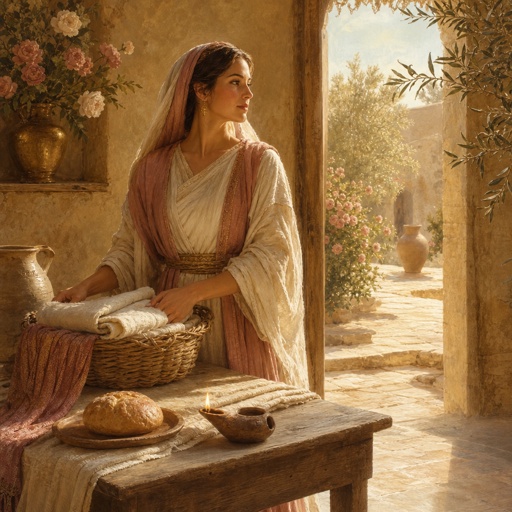
"She looketh well to the ways of her household, and eateth not the bread of idleness." - Proverbs 31:27
"She looketh well to the ways of her household, and eateth not the bread of idleness." - Proverbs 31:27

Proverbs 31:26-27 - "She opens her mouth with wisdom, and the teaching of kindness is on her tongue. She looks well to the ways of her household and does not eat the bread of idleness."

Proverbs:31:28

Proverbs 31:21

Proverbs 31:31 - "Give her of the fruit of her hands; and let her own works praise her in the gates."

Proverbs 8:22-31

Proverbs 27:17

Proverbs 27:17

Proverbs 27:16

Proverbs 17:27-28

Proverbs 17:27-28

Proverbs 7:26-27

Proverbs 17:27-28

Proverbs 21:31 - "The horse is prepared against the day of battle: but safety is of the LORD."

Proverbs 3:31 - "¶ Envy thou not the oppressor, and choose none of his ways."

Proverbs 15:31 - "The ear that heareth the reproof of life abideth among the wise."

Proverbs 16:31 - "The hoary head is a crown of glory, if it be found in the way of righteousness."

Proverbs 27:27 - "And thou shalt have goats' milk enough for thy food, for the food of thy household, and for the maintenance for thy maidens."

Proverbs 31:5 - "Lest they drink, and forget the law, and pervert the judgment of any of the afflicted."

Proverbs 31:1 - "The words of king Lemuel, the prophecy that his mother taught him."

Proverbs 8:22-31 – Wisdom’s role in creation.

Proverbs 31:13 - "She seeketh wool, and flax, and worketh willingly with her hands."

Proverbs 31:17 - "She girdeth her loins with strength, and strengtheneth her arms."

Proverbs 31:8 - "Open thy mouth for the dumb in the cause of all such as are appointed to destruction."
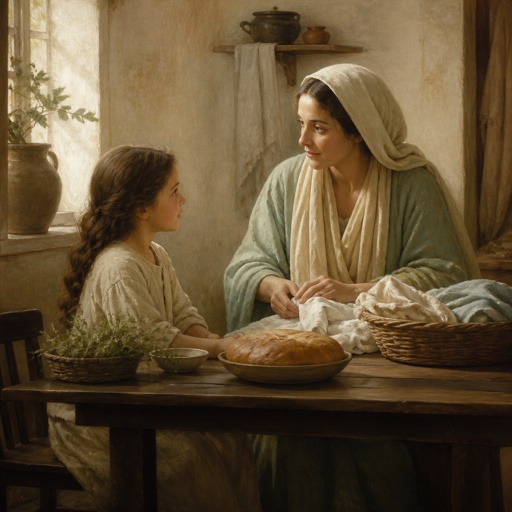
"She opens her mouth with wisdom, and the teaching of kindness is on her tongue. She looks well to the ways of her household and does not eat the bread of idleness." - Proverbs 31:26-27

Proverbs 1:31 - "Therefore shall they eat of the fruit of their own way, and be filled with their own devices."

Proverbs 27:26 - "The lambs are for thy clothing, and the goats are the price of the field."

Proverbs 27:6 - "Faithful are the wounds of a friend; but the kisses of an enemy are deceitful."