What does Proverbs 3:3-4 mean?
“Let not mercy and truth forsake thee: bind them about thy neck; write them upon the table of thine heart: So shalt thou find favour and good understanding in the sight of God and man.” — Proverbs 3:3-4
Proverbs 3:3–4 in the King James Version reads, “Let not mercy and truth forsake thee: bind them about thy neck; write them upon the table of thine heart: So shalt thou find favour and good understanding in the sight of God and man.” In the flow of Proverbs 3, these words come as a fatherly charge in the opening section of the book where wisdom is not treated as a mere skill for success, but as a way of life that must be received, kept, and lived. The surrounding verses speak of “my son” and of keeping commandments, trusting in the LORD, and turning away from evil; thus “mercy and truth” are presented not as occasional virtues but as constant companions that must not “forsake” a person. The counsel assumes that life will exert pressure—temptations, disappointments, rivalries, fears—that can cause one to drop what is right. The instruction is therefore preventative: hold fast to what is godly before circumstances try to pry it loose.
The pair “mercy and truth” gathers up a whole moral and spiritual posture. “Mercy” in this context points to steadfast kindness, compassion, and loyal goodness shown toward others, not a soft sentiment but a practiced, covenant-like benevolence. “Truth” points to faithfulness, reliability, and integrity—what is solid, sincere, and unmixed with deceit. Taken together, they describe a person who is both tender and trustworthy, gracious without being slippery, and honest without being harsh. Proverbs often joins virtues in pairs because wisdom is balanced; it refuses the distortion of one good thing separated from another. “Truth” without “mercy” can become cold correctness; “mercy” without “truth” can become permissiveness. The text calls for a life where kindness is governed by faithfulness, and faithfulness is expressed with kindness.
The imagery is deliberate and deeply symbolic. “Bind them about thy neck” speaks like the language of a visible ornament or a yoke-like constant reminder. In ancient life the neck is where one wears what is seen—chains, seals, marks of identity. To bind “mercy and truth” about the neck is to wear them publicly, to let them be evident in one’s dealings, reputation, and speech. It is also to keep them close, not stored away for special occasions. The verse then presses deeper: “write them upon the table of thine heart.” The “table” is a tablet, a surface meant to be inscribed permanently. This moves from outward display to inward formation. The heart in Proverbs is the center of thought, desire, intention, and moral direction, so writing there signifies internalization: these virtues are not merely performed; they are engraved into the person’s governing self. The combination of “bind” and “write” indicates that wisdom must be both practiced externally and implanted internally, so that conduct flows from character rather than from convenience.
This language also echoes the broader biblical pattern of God’s instruction being written and remembered, not treated as disposable advice. The picture of writing on the heart suggests permanence and intimacy: what is written there shapes reactions before one has time to calculate. When mercy and truth are “upon the table of thine heart,” they become reflexive; the person is not scrambling to decide whether to be faithful or kind, because those qualities have become part of who he is. The verse therefore calls for deliberate spiritual formation. It assumes that virtues can be lost if neglected—“Let not…forsake thee”—and that virtues can be secured by intentional attachment and inscription.
The promised result is stated plainly: “So shalt thou find favour and good understanding in the sight of God and man.” “Favour” is the sense of acceptance, goodwill, and gracious regard; “good understanding” is sound judgment and an esteem that recognizes wisdom as truly wise. The phrase “in the sight of God and man” is significant because it refuses a false divide. Proverbs does not bless hypocrisy that appears righteous to people while being false before God, nor does it commend a piety that neglects righteousness in human relationships. Mercy and truth are virtues that align a person vertically and horizontally: they are pleasing “in the sight of God” because they reflect His moral will, and they are honored “in the sight of…man” because human communities are strengthened by compassion and reliability. The text is not promising effortless popularity, as though every faithful person will be universally admired, but it is declaring a general moral order: a life marked by steadfast kindness and integrity tends toward a reputation of wisdom and toward relationships that bear the imprint of God’s approval.
In context, these verses also prepare the way for what immediately follows in Proverbs 3 about trusting the LORD with all the heart and not leaning on one’s own understanding. Mercy and truth, bound and written, protect a person from self-serving cleverness. They keep one from using “understanding” as mere calculation and from using “favour” as mere social advantage. Instead, they anchor the whole life in the fear of the LORD that Proverbs assumes as the beginning of wisdom. The significance of Proverbs 3:3–4, then, is that it portrays wisdom as covenant-shaped character: visible in conduct, engraved in the inner life, balanced in compassion and faithfulness, and resulting in a life that stands with credibility before both God and the people who witness it.
Get our apps


Artwork for Proverbs 3:3-4

"Let not mercy and truth forsake thee: bind them about thy neck; write them upon the table of thine heart: So shalt thou find favour and good understanding in the sight of God and man." - Proverbs 3:3-4

Proverbs 3:3-4 - "Let not mercy and truth forsake thee: bind them about thy neck; write them upon the table of thine heart: So shalt thou find favour and good understanding in the sight of God and man."

"Let not mercy and truth forsake thee: bind them about thy neck; write them upon the table of thine heart: So shalt thou find favour and good understanding in the sight of God and man." - Proverbs 3:3-4

Proverbs 4:3 - "For I was my father's son, tender and only beloved in the sight of my mother."

Proverbs 3:4 - "So shalt thou find favour and good understanding in the sight of God and man."

Proverbs 24:3-4 - "By wisdom a house is built, and through understanding it is established; through knowledge its rooms are filled with rare and beautiful treasures."

Proverbs 5:3-4 - "For the lips of an adulterous woman drip honey, and her speech is smoother than oil; but in the end she is bitter as gall, sharp as a double-edged sword."

"For I was my father's son, tender and only beloved in the sight of my mother." - Proverbs 4:3
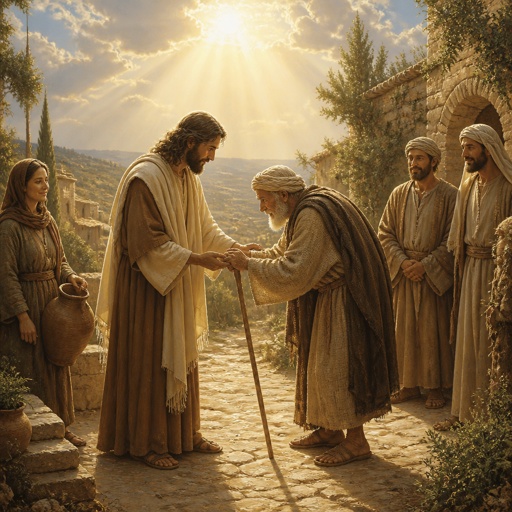
"So shalt thou find favour and good understanding in the sight of God and man." - Proverbs 3:4

Proverbs 3:9-10

Proverbs 3:5-6

Proverbs 3:5-6

Proverbs 3:3 - "Let not mercy and truth forsake thee: bind them about thy neck; write them upon the table of thine heart:"

Proverbs 23:3 - "Be not desirous of his dainties: for they are deceitful meat."

Proverbs 1:3 - "To receive the instruction of wisdom, justice, and judgment, and equity;"

Proverbs 24:3 - "Through wisdom is an house builded; and by understanding it is established:"

Proverbs 3:32 - "For the froward is abomination to the LORD: but his secret is with the righteous."

Proverbs 3:8 - "It shall be health to thy navel, and marrow to thy bones."

Proverbs 3:31 - "¶ Envy thou not the oppressor, and choose none of his ways."

Proverbs 15:3 - "The eyes of the LORD are in every place, beholding the evil and the good."
![1 son, forget not my law; But let thine heart keep my commandments: [2] For length of days, and long life, And peace, shall they add to thee. [3] Let not mercy and truth forsake thee: Bind them about thy neck; Write them upon the table of thine heart: [4] So shalt thou find favour and good understanding In the sight of God and man.
Proverbs 3:1-4 KJV](https://media.bible.art/4ea2f661-ef60-4ff8-8306-7410207e9e83-thumbnail.jpg)
1 son, forget not my law; But let thine heart keep my commandments: [2] For length of days, and long life, And peace, shall they add to thee. [3] Let not mercy and truth forsake thee: Bind them about thy neck; Write them upon the table of thine heart: [4] So shalt thou find favour and good understanding In the sight of God and man. Proverbs 3:1-4 KJV

Proverbs 25:3 - "The heaven for height, and the earth for depth, and the heart of kings is unsearchable."

Proverbs 3:13 - "¶ Happy is the man that findeth wisdom, and the man that getteth understanding."

Proverbs 26:3 - "A whip for the horse, a bridle for the ass, and a rod for the fool's back."

Proverbs 8:3 - "She crieth at the gates, at the entry of the city, at the coming in at the doors."

Proverbs 3:9 - "Honour the LORD with thy substance, and with the firstfruits of all thine increase:"

Proverbs 17:3 - "The fining pot is for silver, and the furnace for gold: but the LORD trieth the hearts."

Proverbs 3:33 - "¶ The curse of the LORD is in the house of the wicked: but he blesseth the habitation of the just."

Proverbs 21:3 - "To do justice and judgment is more acceptable to the LORD than sacrifice."

Proverbs 18:3 - "When the wicked cometh, then cometh also contempt, and with ignominy reproach."