What does Psalms 30:11-12 mean?
"Thou hast turned for me my mourning into dancing: thou hast put off my sackcloth, and girded me with gladness; To the end that [my] glory may sing praise to thee, and not be silent. O LORD my God, I will give thanks unto thee for ever." - Psalms 30:11-12
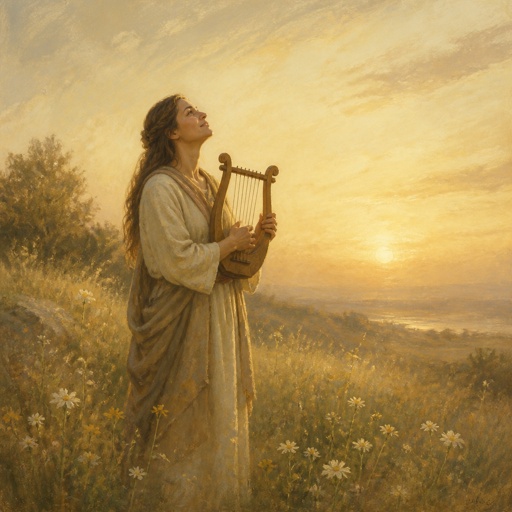
!["Thou hast turned for me my mourning into dancing: thou hast put off my sackcloth, and girded me with gladness;
To the end that [my] glory may sing praise to thee, and not be silent. O LORD my God, I will give thanks unto thee for ever." - Psalms 30:11-12](https://media.bible.art/7a511460-dde7-4558-b804-cd122d985ce3-compressed.jpg)
Psalm 30 is a psalm of David “at the dedication of the house,” and it reads like the testimony of a man who has been brought down to the edge of death and then raised up again by the LORD. Earlier in the psalm David remembers how God “brought up my soul from the grave,” how a season of confident ease was shattered, and how the hiding of God’s face turned his strength into trouble. He then recalls his crying, his pleading, and the mercy that spared him. When you arrive at Psalm 30:11–12, you are hearing the conclusion of that rescue: not merely that David survived, but that God transformed the whole meaning of his sorrow into worship.
The verses say, “Thou hast turned for me my mourning into dancing: thou hast put off my sackcloth, and girded me with gladness; To the end that my glory may sing praise to thee, and not be silent. O LORD my God, I will give thanks unto thee for ever.” In this closing movement, David speaks directly to God, and the grammar matters. He does not say his circumstances happened to improve; he confesses that the LORD actively did it: “Thou hast turned,” “thou hast put off,” “and girded.” The change is personal and covenantal, something done “for me,” which keeps the focus on divine mercy rather than human resilience.
The first image, “mourning into dancing,” compresses a whole reversal of condition. Mourning is the language of bereavement, calamity, and the felt nearness of death; it is what the psalm has been describing—crying, weeping that may “endure for a night,” and the fear of being “cut off.” Dancing, in the KJV’s world, is not frivolity but a physical expression of deliverance and celebration before God, the kind of embodied joy that follows salvation. The symbolism is of grief not merely ending, but being transfigured: the very place where sorrow sat is now occupied by joyful movement. It is not that David forgets the pain; it is that the LORD’s intervention changes the outcome so completely that grief no longer has the final word.
The next phrase interprets that transformation in the idiom of repentance and lament: “thou hast put off my sackcloth, and girded me with gladness.” Sackcloth was the rough garment worn in humiliation, grief, fasting, and public sorrow. It was a visible sign that a person had stepped away from ordinary comfort because life had been shattered or because sin and judgment were being acknowledged. To have sackcloth “put off” by God is to have the season of affliction brought to its appointed close. Yet David does not then describe himself as merely clothed in ordinary clothes; he says God has “girded” him. To be girded is to be wrapped and secured, prepared and strengthened, as one might gird oneself for work or for movement. Gladness is therefore not just a passing emotion; it is pictured as a garment fastened onto him by the LORD, something stable enough to wear, something that equips him to live and to worship. The symbolism suggests restoration with purpose: God does not simply remove pain; He outfits the delivered person with joy that enables renewed life.
Verse 12 gives the reason for the reversal: “To the end that my glory may sing praise to thee, and not be silent.” The phrase “to the end that” shows intent. Deliverance is not an end in itself; it aims at doxology. David’s rescue results in a particular outcome: praise that refuses silence. In the psalm’s earlier argument David had pleaded that death would end his ability to thank God: “Shall the dust praise thee? shall it declare thy truth?” Now the LORD has answered that logic by preserving him so that praise may continue. The word “my glory” is significant. In Scripture, “glory” can refer to what is weighty and honorable, and in the language of the psalms it can also point to the innermost self—the seat of expression that can be “awake” and can sing. David is saying that the most noble part of him, the core of his being, is now directed toward praise. The opposite of praise here is not merely sadness; it is silence. Silence can mean the hush of the grave, the muteness of despair, or the speechlessness of one who has no testimony to tell. God has replaced silence with song.
The final sentence seals the psalm as a vow and a lifelong posture: “O LORD my God, I will give thanks unto thee for ever.” David addresses God personally—“my God”—because the experience has deepened relationship, not just altered circumstances. “For ever” does not have to mean that the immediate crisis never returns; it means that gratitude becomes the permanent orientation of the rescued life. The moment of deliverance becomes a foundation for enduring worship, stretching beyond the night of weeping into a sustained thanksgiving.
Taken together, Psalm 30:11–12 is a compact theology of reversal: God turns lament into rejoicing, removes the signs of affliction, clothes His servant with joy, and does it with the purpose that praise might continue and not be silenced by death or despair. The significance of the passage lies in its insistence that suffering is not the final definition of God’s people; the LORD is the One who can change the garment, change the music, and change the end of the story, so that the delivered heart becomes a living witness: “I will give thanks unto thee for ever.”
Have questions about Psalms 30:11-12?
Dive deeper into this scripture with Bible Chat — an AI-powered tool for exploring God's Word through conversation. Ask questions, get context, and grow in your understanding of the Bible.
Get Our Apps


Psalms 30:11-12 Artwork
!["Thou hast turned for me my mourning into dancing: thou hast put off my sackcloth, and girded me with gladness;
To the end that [my] glory may sing praise to thee, and not be silent. O LORD my God, I will give thanks unto thee for ever." - Psalms 30:11-12](https://media.bible.art/70b4c7b3-4210-4273-a52c-937aa52bc3ff-thumbnail.jpg)
"Thou hast turned for me my mourning into dancing: thou hast put off my sackcloth, and girded me with gladness; To the end that [my] glory may sing praise to thee, and not be silent. O LORD my God, I will give thanks unto thee for ever." - Psalms 30:11-12

Psalms 30:11 - "Thou hast turned for me my mourning into dancing: thou hast put off my sackcloth, and girded me with gladness;"

Psalm 30:11

"Thou hast turned for me my mourning into dancing: thou hast put off my sackcloth, and girded me with gladness;" - Psalms 30:11

Psalms 30:6 - "And in my prosperity I said, I shall never be moved."

Psalms 30:12 - "To the end that my glory may sing praise to thee, and not be silent. O LORD my God, I will give thanks unto thee for ever."

Psalm 30:11-12 - "You turned my wailing into dancing; you removed my sackcloth and clothed me with joy, that my heart may sing your praises and not be silent. Lord my God, I will praise you forever."

Psalms 30:10 - "Hear, O LORD, and have mercy upon me: LORD, be thou my helper."

The Plague on the Firstborn - Exodus 11, 12:1-30

The Plague on the Firstborn - Exodus 11, 12:1-30
"I will praise the name of God with a song, and will magnify him with thanksgiving." - Psalms 69:30

"They were not estranged from their lust. But while their meat was yet in their mouths," - Psalms 78:30

"Then stood up Phinehas, and executed judgment: and so the plague was stayed." - Psalms 106:30

Psalms 37:11 - "But the meek shall inherit the earth; and shall delight themselves in the abundance of peace."

"Then believed they his words; they sang his praise." - Psalms 106:12

Psalms 12:7 - "Thou shalt keep them, O LORD, thou shalt preserve them from this generation for ever."

Psalms 105:30 - "Their land brought forth frogs in abundance, in the chambers of their kings."

"I cried to thee, O LORD; and unto the LORD I made supplication." - Psalms 30:8

Psalms 60:12 - "Through God we shall do valiantly: for he it is that shall tread down our enemies."

Psalms 37:30 - "The mouth of the righteous speaketh wisdom, and his tongue talketh of judgment."

Psalms 22:30 - "A seed shall serve him; it shall be accounted to the Lord for a generation."

Psalms 106:30 - "Then stood up Phinehas, and executed judgment: and so the plague was stayed."

Psalms 69:30 - "I will praise the name of God with a song, and will magnify him with thanksgiving."

Psalms 89:30 - "If his children forsake my law, and walk not in my judgments;"

Psalms 78:30 - "They were not estranged from their lust. But while their meat was yet in their mouths,"

Psalms 30:8 - "I cried to thee, O LORD; and unto the LORD I made supplication."

Psalms 107:30 - "Then are they glad because they be quiet; so he bringeth them unto their desired haven."

Psalms 143:11 - "Quicken me, O LORD, for thy name's sake: for thy righteousness' sake bring my soul out of trouble."

Psalms 65:11

Psalms 104:30 - "Thou sendest forth thy spirit, they are created: and thou renewest the face of the earth."