What does Psalms 110:6 mean?
“He shall judge among the heathen, he shall fill the places with the dead bodies; he shall wound the heads over many countries.” — Psalms 110:6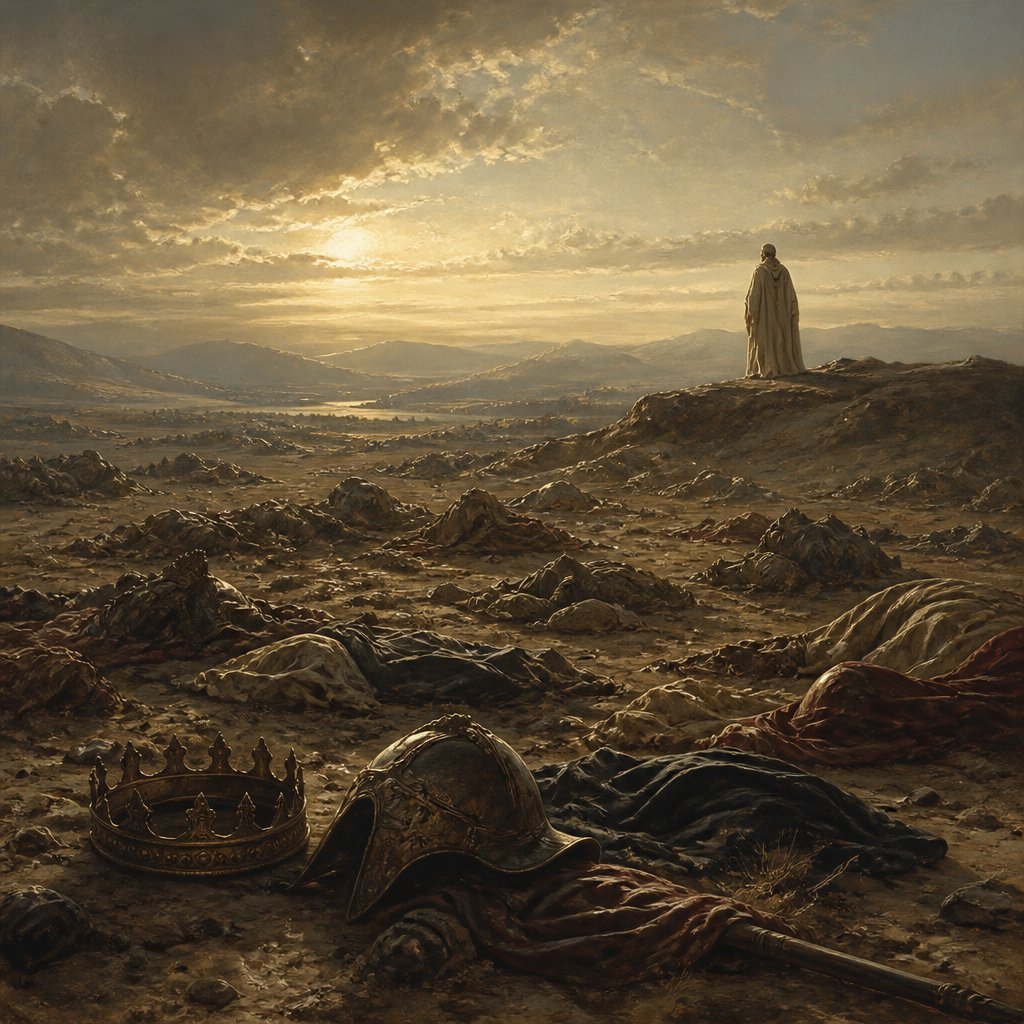
Psalm 110:6 in the King James Version of the Bible reads: "He shall judge among the heathen, he shall fill the places with the dead bodies; he shall wound the heads over many countries." This verse is a part of a larger passage that focuses on the promise of an eternal priesthood and kingship for the Messiah. It is a prophetic psalm that speaks of the victorious and triumphant rule of the Messiah, who is to come and establish a kingdom of righteousness and justice.
This verse is replete with themes of judgment, victory, and authority. It speaks to the ultimate sovereignty and power of the Messiah, who is portrayed as a divine figure with the authority to judge the nations and establish his rule over all the earth. The image of "judging among the heathen" emphasizes the universal nature of the Messiah's reign and the fact that his authority extends beyond the boundaries of Israel to encompass all the nations of the world. This speaks to the inclusivity and expansiveness of the Messiah's rule, as he is not just a regional or local king, but a global and universal ruler.
The image of "filling the places with the dead bodies" is a stark and vivid depiction of the total and complete defeat of the enemies of the Messiah. It conveys the idea of a decisive and final victory over all opposing forces, bringing them to utter ruin and destruction. This speaks to the absolute power and authority of the Messiah to vanquish his enemies and establish his kingdom without any challenge or resistance. It also conveys the idea of the Messiah as a warrior-king, waging a spiritual battle against the forces of evil and triumphing over them through sheer strength and might.
The image of "wounding the heads over many countries" further emphasizes the Messiah's authority and dominion over the entire earth. It conveys the idea of the Messiah as a conquering king, subduing and vanquishing the rulers and powers of the world under his feet. This speaks to the geopolitical dimensions of the Messiah's rule, as he is portrayed as a ruler who exercises his authority over all the nations and peoples of the earth. It also conveys the idea of the Messiah as a liberator and emancipator, breaking the power of tyrants and oppressors and setting the people free from their domination.
The broader context of Psalm 110 further underscores the significance of this verse. The psalm begins with the declaration, "The Lord said unto my Lord, Sit thou at my right hand, until I make thine enemies thy footstool" (Psalm 110:1). This sets the tone for the rest of the psalm, emphasizing the exalted position and authority of the Messiah, who is seated at the right hand of God and granted all power and dominion. The psalm goes on to emphasize the eternal priesthood of the Messiah, drawing parallels to the priestly order of Melchizedek and highlighting the unending nature of the Messiah's rule and intercession for his people.
In terms of symbolism, Psalm 110:6 conveys the image of the Messiah as a triumphant and victorious king, exercising his regal authority over the entire earth. The imagery of judgment, victory, and dominion all point to the absolute sovereignty of the Messiah and his ability to establish a kingdom of peace and righteousness. The verse also conveys the motif of the suffering servant, as the Messiah is portrayed as a conqueror who achieves victory through suffering and sacrifice, ultimately bringing salvation and redemption to the world.
In conclusion, Psalm 110:6 in the King James Version of the Bible offers a powerful and majestic portrayal of the Messiah as a triumphant and victorious ruler, exercising his authority and dominion over the nations of the world. It conveys the themes of judgment, victory, and sovereignty, emphasizing the universal and eternal nature of the Messiah's rule. The verse also conveys the symbolism of the Messiah as a conquering king, defeating his enemies and establishing a kingdom of righteousness and justice. It ultimately points to the hope and expectation of the coming of the Messiah, who will bring about the fulfillment of God's purposes and the establishment of his kingdom on earth.
Get our apps


Artwork for Psalms 110:6

Psalms 110:6 - "He shall judge among the heathen, he shall fill the places with the dead bodies; he shall wound the heads over many countries."

"He shall judge among the heathen, he shall fill the places with the dead bodies; he shall wound the heads over many countries." - Psalms 110:6

Psalms 110:4 - "The LORD hath sworn, and will not repent, Thou art a priest for ever after the order of Melchizedek."

Psalms 110:7 - "He shall drink of the brook in the way: therefore shall he lift up the head."

Psalms 119:110 - "The wicked have laid a snare for me: yet I erred not from thy precepts."

Psalms 110:5 - "The Lord at thy right hand shall strike through kings in the day of his wrath."

Psalms 110:2 - "The LORD shall send the rod of thy strength out of Zion: rule thou in the midst of thine enemies."

Psalms 110:3 - "Thy people shall be willing in the day of thy power, in the beauties of holiness from the womb of the morning: thou hast the dew of thy youth."

Psalms 110:1 - "The LORD said unto my Lord, Sit thou at my right hand, until I make thine enemies thy footstool."

"The LORD said unto my Lord, Sit thou at my right hand, until I make thine enemies thy footstool." - Psalms 110:1

"The wicked have laid a snare for me: yet I erred not from thy precepts." - Psalms 119:110

"He shall drink of the brook in the way: therefore shall he lift up the head." - Psalms 110:7

"The LORD hath sworn, and will not repent, Thou art a priest for ever after the order of Melchizedek." - Psalms 110:4

"The Lord at thy right hand shall strike through kings in the day of his wrath." - Psalms 110:5

Psalms 126:6

"The LORD shall send the rod of thy strength out of Zion: rule thou in the midst of thine enemies." - Psalms 110:2
Psalms 115:6 - "They have ears, but they hear not: noses have they, but they smell not:"
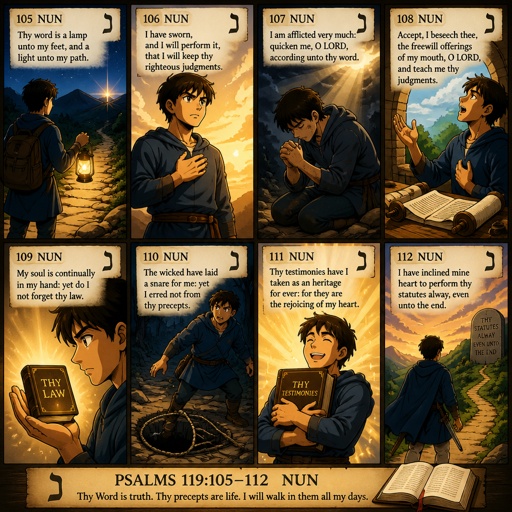
Psalms 119:105 NUN. Thy word is a lamp unto my feet, and a light unto my path. Psalms 119:106 I have sworn, and I will perform it, that I will keep thy righteous judgments. Psalms 119:107 I am afflicted very much: quicken me, O LORD, according unto thy word. Psalms 119:108 Accept, I beseech thee, the freewill offerings of my mouth, O LORD, and teach me thy judgments. Psalms 119:109 My soul is continually in my hand: yet do I not forget thy law. Psalms 119:110 The wicked have laid a snare for me: yet I erred not from thy precepts. Psalms 119:111 Thy testimonies have I taken as an heritage for ever: for they are the rejoicing of my heart. Psalms 119:112 I have inclined mine heart to perform thy statutes alway, even unto the end.

Psalms 30:6 - "And in my prosperity I said, I shall never be moved."

Psalms 114:6 - "Ye mountains, that ye skipped like rams; and ye little hills, like lambs?"

Psalms 129:6 - "Let them be as the grass upon the housetops, which withereth afore it groweth up:"

"Thy people shall be willing in the day of thy power, in the beauties of holiness from the womb of the morning: thou hast the dew of thy youth." - Psalms 110:3

Psalms 144:6 - "Cast forth lightning, and scatter them: shoot out thine arrows, and destroy them."

Psalms 74:6 - "But now they break down the carved work thereof at once with axes and hammers."

Psalms 6:6

Psalms 80:6 - "Thou makest us a strife unto our neighbours: and our enemies laugh among themselves."

Psalms 118:6 - "The LORD is on my side; I will not fear: what can man do unto me?"

"They slay the widow and the stranger, and murder the fatherless." - Psalms 94:6

Psalms 130:6 - "My soul waiteth for the Lord more than they that watch for the morning: I say, more than they that watch for the morning."

"In the morning it flourisheth, and groweth up; in the evening it is cut down, and withereth." - Psalms 90:6