What does Psalms 119:4 mean?
“Thou hast commanded us to keep thy precepts diligently.” — Psalms 119:4
Psalms 119:4 from the King James Version of the Bible reads, "Thou hast commanded us to keep thy precepts diligently."
The entire psalm 119 is a celebration of the word of God and a testimony to the value of following His commandments. The verse 4 specifically emphasizes the importance of diligently following God's precepts, or instructions. The psalmist views these precepts as a command from God, something that is not optional or negotiable but required. This verse also implies that keeping God's precepts is not merely a matter of lip service, but requires diligence and effort on the part of believers.
The theme of obedience is central to this verse and the entire psalm. The psalmist believes that it is not enough to simply acknowledge God's commandments; they must be followed diligently and with unwavering commitment. This echoes the sentiments of other parts of the Old Testament, where obedience to God's commandments is seen as a sign of faith and devotion.
The context of Psalms 119 is important to understanding the full implications of this verse. The psalm is the longest chapter in the entire Bible and is a work of love and devotion to God's law. It is an acrostic poem, with each section of eight verses beginning with a consecutive letter of the Hebrew alphabet. This structure emphasizes the completeness and comprehensiveness of the psalmist's devotion to God's word.
The psalmist expresses a deep love for God's law, using various synonyms throughout the chapter such as "law," "testimonies," "ways," "precepts," "statutes," and "commandments," to demonstrate the multifaceted nature of God's instruction. The psalmist does not view God's law as a burden, but rather as a source of joy and guidance. This context is crucial to understanding the mindset of the psalmist and the significance of the command to keep God's precepts diligently in verse 4.
The symbolism in this verse lies in the word "precepts" itself. The term "precepts" refers to authoritative rules or instructions, particularly those given by a religious or moral authority. In the context of the Bible, God's precepts represent His divine will and guidance for His people. By commanding believers to keep His precepts diligently, God is setting a standard for them to live by and a path for them to follow.
The word "diligently" also carries symbolic weight in this verse. It implies careful and persistent effort, reflecting the idea that following God's precepts requires unwavering dedication and attention. It signifies a wholehearted commitment to living in accordance with God's will and an active pursuit of righteousness.
In a broader theological context, this verse speaks to the nature of God's relationship with His people. By giving them His precepts and commanding them to keep them diligently, God demonstrates His care for His creation and His desire for them to live in righteousness. It also underscores the idea that obedience to God's commandments is not just a matter of personal fulfillment, but a foundational aspect of one's relationship with God.
In conclusion, Psalms 119:4 from the King James Version of the Bible is a powerful testament to the importance of obeying God's precepts with diligence and commitment. The verse is deeply rooted in the context of a larger psalm that celebrates the value of God's law and underscores the importance of faithful obedience. Its themes of obedience, devotion, and the significance of God's precepts provide timeless truths for believers seeking to understand and apply the Word of God in their lives.
Get our apps


Artwork for Psalms 119:4

Psalms 119:4 - "Thou hast commanded us to keep thy precepts diligently."

"Thou hast commanded us to keep thy precepts diligently." - Psalms 119:4
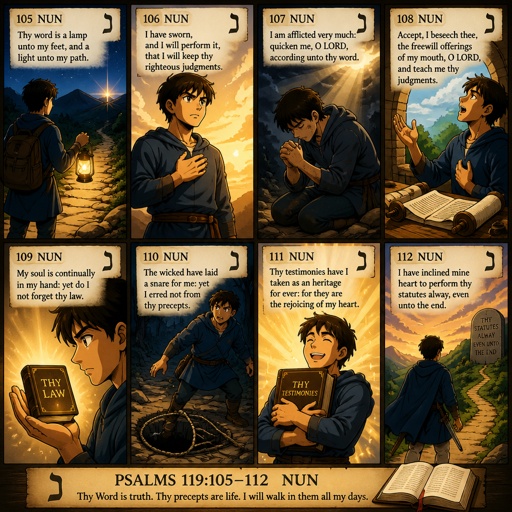
Psalms 119:105 NUN. Thy word is a lamp unto my feet, and a light unto my path. Psalms 119:106 I have sworn, and I will perform it, that I will keep thy righteous judgments. Psalms 119:107 I am afflicted very much: quicken me, O LORD, according unto thy word. Psalms 119:108 Accept, I beseech thee, the freewill offerings of my mouth, O LORD, and teach me thy judgments. Psalms 119:109 My soul is continually in my hand: yet do I not forget thy law. Psalms 119:110 The wicked have laid a snare for me: yet I erred not from thy precepts. Psalms 119:111 Thy testimonies have I taken as an heritage for ever: for they are the rejoicing of my heart. Psalms 119:112 I have inclined mine heart to perform thy statutes alway, even unto the end.

Psalms 119:11

Psalms 119:153 - "Consider mine affliction, and deliver me: for I do not forget thy law."

Psalms 119:174 - "I have longed for thy salvation, O LORD; and thy law is my delight."

Psalms 119:61 - "The bands of the wicked have robbed me: but I have not forgotten thy law."

Psalms 119:32 - "I will run the way of thy commandments, when thou shalt enlarge my heart."

Psalms 119:15

"For ever, O LORD, thy word is settled in heaven." - Psalms 119:89

Psalms 119:176 - "I have gone astray like a lost sheep; seek thy servant; for I do not forget thy commandments."

"Salvation is far from the wicked: for they seek not thy statutes." - Psalms 119:155

Psalms 119:119 - "Thou puttest away all the wicked of the earth like dross: therefore I love thy testimonies."

"I beheld the transgressors, and was grieved; because they kept not thy word." - Psalms 119:158

"Righteous art thou, O LORD, and upright are thy judgments." - Psalms 119:137

Psalms 119:3 - "They also do no iniquity: they walk in his ways."

"Thy testimonies that thou hast commanded are righteous and very faithful." - Psalms 119:138

Psalms 119:24 - "Thy testimonies also are my delight and my counsellors."

Psalms 119:70 - "Their heart is as fat as grease; but I delight in thy law."

Psalms 119:36 - "Incline my heart unto thy testimonies, and not to covetousness."

Psalms 119:56 - "This I had, because I kept thy precepts."

Psalms 119:45 - "And I will walk at liberty: for I seek thy precepts."

Psalms 119:60 - "I made haste, and delayed not to keep thy commandments."

"It is time for thee, LORD, to work: for they have made void thy law." - Psalms 119:126

"Thy statutes have been my songs in the house of my pilgrimage." - Psalms 119:54

"The proud have digged pits for me, which are not after thy law." - Psalms 119:85

Psalms 119:103 (KJVA) 103 How sweet are thy words unto my taste! yea, sweeter than honey to my mouth!

"And I will delight myself in thy commandments, which I have loved." - Psalms 119:47

"The entrance of thy words giveth light; it giveth understanding unto the simple." - Psalms 119:130

Psalms 119:140 - "Thy word is very pure: therefore thy servant loveth it."