What does Psalms 146:4 mean?
“His breath goeth forth, he returneth to his earth; in that very day his thoughts perish.” — Psalms 146:4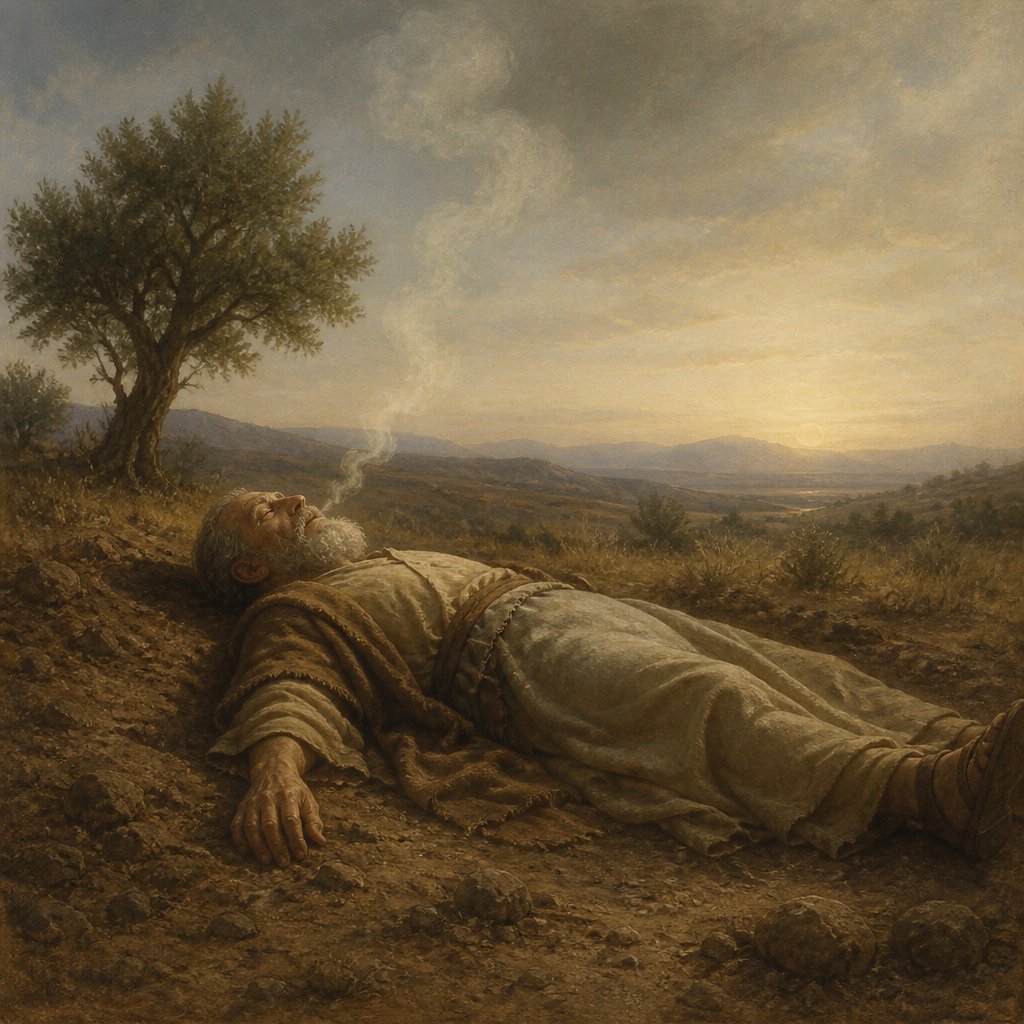
The verse Psalms 146:4 in the King James Version of the Bible states: "His breath goeth forth, he returneth to his earth; in that very day his thoughts perish." This verse is part of a larger psalm, which is a song of praise and thanksgiving for the goodness and faithfulness of God. Psalm 146 is the first of five psalms (146-150) that constitute the close of the Book of Psalms and are known collectively as the Hallelujah Psalms, for their inclusion of the word "hallelujah" at the beginning and end of each psalm.
The verse "His breath goeth forth, he returneth to his earth; in that very day his thoughts perish" expresses the idea of the transience of human life. It reflects the brevity and fragility of human existence and serves as a reminder of the inevitability of death. The imagery of "his breath goeth forth" conveys the idea of the passing away of life itself, while "he returneth to his earth" emphasizes the connection between humans and the earth from which they were formed. The phrase "his thoughts perish" further emphasizes the fleeting nature of human life, as it suggests the cessation of conscious awareness and mental activity at the point of death.
In its broader context, this verse is part of a larger theme found throughout the Book of Psalms, which is the contrast between the limitations of human existence and the enduring nature of God. In Psalm 146, the psalmist exhorts the reader to put their trust in God, rather than in human beings, because God alone is the one who can provide lasting help and salvation. The imagery of the brevity of human life serves to emphasize the contrast between mortal limitations and the eternality of God.
This verse can be seen as a reflection on the human condition, reminding the reader of the temporary nature of life and the ultimate fate of all people. In its stark portrayal of the mortality of human beings, the verse serves as a call to humility and a recognition of the transitory nature of human accomplishments and endeavors. It directs the reader's focus towards the eternal and unchanging nature of God, encouraging a shift in perspective from the temporal to the eternal.
The symbolic significance of this verse can be understood in the broader theological context of the Bible. Throughout the biblical narrative, the theme of mortality and the brevity of life is a recurring motif that serves as a reminder of the fallen nature of humanity and the need for redemption. The verse in Psalm 146:4 reinforces the biblical teaching that human life is finite and fleeting, and that the fate of every individual is to return to the dust from which they were formed (Genesis 3:19).
In the New Testament, the transience of human life is similarly emphasized, with the apostle James likening human life to a vapor that appears for a little time and then vanishes away (James 4:14). The brevity of life serves as a reminder of the need for a deeper and more enduring hope, one that transcends the limitations of human mortality. This hope is found in the redemptive work of Christ, who offers the promise of eternal life to those who believe in him (John 3:16).
In conclusion, Psalm 146:4 presents a poignant reflection on the transient nature of human life, providing a sobering reminder of the brevity and fragility of human existence. This verse is part of a larger theme in the Book of Psalms that contrasts the limitations of human life with the enduring nature of God. It serves as a call to humility and a recognition of the ultimate dependence on God for lasting help and salvation. The verse carries symbolic significance within the broader theological context of the Bible, reinforcing the biblical teaching on the mortality of human beings and the need for a hope that transcends the temporal. Ultimately, Psalm 146:4 prompts the reader to consider the eternal perspective and to place their trust in the unchanging and everlasting God.
Get our apps


Artwork for Psalms 146:4

"His breath goeth forth, he returneth to his earth; in that very day his thoughts perish." - Psalms 146:4

"Praise ye the LORD. Praise the LORD, O my soul." - Psalms 146:1

Psalms 146:7 - "Which executeth judgment for the oppressed: which giveth food to the hungry. The LORD looseth the prisoners:"

Psalms 146:1 - "Praise ye the LORD. Praise the LORD, O my soul."

Psalms 146:8 - "The LORD openeth the eyes of the blind: the LORD raiseth them that are bowed down: the LORD loveth the righteous:"

Psalms 146:3 - "Put not your trust in princes, nor in the son of man, in whom there is no help."

Psalms 119:146 - "I cried unto thee; save me, and I shall keep thy testimonies."

Psalms 146:6 - "Which made heaven, and earth, the sea, and all that therein is: which keepeth truth for ever:"

Psalms 146:5 - "Happy is he that hath the God of Jacob for his help, whose hope is in the LORD his God:"

Psalms 146:9 - "The LORD preserveth the strangers; he relieveth the fatherless and widow: but the way of the wicked he turneth upside down."

"The LORD openeth the eyes of the blind: the LORD raiseth them that are bowed down: the LORD loveth the righteous:" - Psalms 146:8

"The LORD shall reign for ever, even thy God, O Zion, unto all generations. Praise ye the LORD." - Psalms 146:10

Psalms 146:10 - "The LORD shall reign for ever, even thy God, O Zion, unto all generations. Praise ye the LORD."

Psalms 146:2 - "While I live will I praise the LORD: I will sing praises unto my God while I have any being."

"Which made heaven, and earth, the sea, and all that therein is: which keepeth truth for ever:" - Psalms 146:6

"I cried unto thee; save me, and I shall keep thy testimonies." - Psalms 119:146

"Put not your trust in princes, nor in the son of man, in whom there is no help." - Psalms 146:3

"Happy is he that hath the God of Jacob for his help, whose hope is in the LORD his God:" - Psalms 146:5

"Which executeth judgment for the oppressed: which giveth food to the hungry. The LORD looseth the prisoners:" - Psalms 146:7

"Happy is he that hath the God of Jacob for his help, whose hope is in the LORD his God:" - Psalms 146:5

"The LORD preserveth the strangers; he relieveth the fatherless and widow: but the way of the wicked he turneth upside down." - Psalms 146:9

"While I live will I praise the LORD: I will sing praises unto my God while I have any being." - Psalms 146:2

Psalms 114:4 - "The mountains skipped like rams, and the little hills like lambs."

"For this was a statute for Israel, and a law of the God of Jacob." - Psalms 81:4

"For there are no bands in their death: but their strength is firm." - Psalms 73:4

Psalms 104:4 - "Who maketh his angels spirits; his ministers a flaming fire:"

Psalms 63:4 - "Thus will I bless thee while I live: I will lift up my hands in thy name."

"Offer the sacrifices of righteousness, and put your trust in the LORD." - Psalms 4:5

"They wandered in the wilderness in a solitary way; they found no city to dwell in." - Psalms 107:4

"As arrows are in the hand of a mighty man; so are children of the youth." - Psalms 127:4